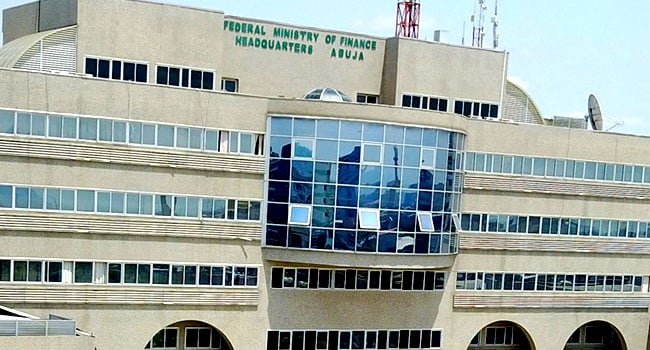
A policy debate is brewing in Nigeria’s fiscal circles over whether revenue-generating agencies such as the Federal Inland Revenue Service (FIRS), Nigeria Customs Service (NCS), and the Nigerian Upstream Petroleum Regulatory Commission (NUPRC) should continue to retain a portion of the revenues they collect as a “cost of collection.”
Although the federal ministry of finance has denied reports that it intends to abolish the practice, the question remains whether such deductions still make economic sense in a country struggling to expand its fiscal space for development spending.
EDITOR’S PICKS
World Bank raises efficiency concerns
At the launch of the October 2025 edition of the World Bank’s Nigeria Development Update (NDU), titled “From Policy to People: Bringing the Reform Gains Home,” on Wednesday, the Bank’s Lead Economist for Nigeria, Samer Matta, acknowledged the country’s progress in boosting revenue mobilisation but warned that a significant portion of these revenues never make it to the Federation Account due to mounting deductions.
Matta noted that while gross revenue collections surged in 2025, driven by stronger oil receipts and improved non-oil taxes, a large chunk was being lost to various statutory deductions, many of which do not directly contribute to national development.
“Nigeria’s revenues have increased, but so have deductions,” Matta said. “The key issue is ensuring that these funds are used for measurable development impact rather than administrative overheads.”
According to the NDU, revenues distributed through the Federation Accounts Allocation Committee (FAAC) rose from about 5 percent of GDP in 2023 to nearly 9.5 percent in the first eight months of 2025. Yet, Matta observed that “a big component of these deductions goes to revenue-collecting agencies for their own spending, while another chunk flows back as subnational refunds and interventions,” a trend he said blurs fiscal efficiency.
Under Nigeria’s fiscal structure, agencies such as FIRS, NCS, and NUPRC are permitted to deduct between 4 and 7 percent of the revenues they generate to fund their operations — a practice defended as an incentive for efficiency and autonomy.
Critics, however, argue that it encourages waste, inflates administrative expenses, and reduces the amount distributable to the federal, state, and local governments through FAAC. They also note that in many other jurisdictions, the costs of running revenue agencies are appropriated through annual budgets, not deducted at source.
Finance ministry denies policy change
Following remarks of the Minister of Finance and Coordinating Minister of the Economy, Wale Edun, at the World Bank event, reports emerged suggesting that the federal government might have decided to halt the deductions. But the Federal Ministry of Finance promptly denied this, describing such claims as “inaccurate and misleading.”
In a statement on Friday, the ministry’s spokesperson Mohammed Manga clarified that Edun had made no announcement or implication of any change to the existing framework.
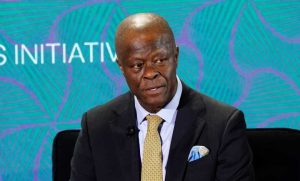
“For the avoidance of doubt, there has been no policy change regarding the deduction of costs of collection at source by revenue-generating agencies. The current framework remains in effect,” Manga said.
He, however, confirmed that discussions are ongoing in line with President Bola Tinubu’s directive to review the cost-of-collection structure “as part of efforts to improve transparency, efficiency, and value-for-money in public financial management.”
The Road Ahead
While the finance ministry insists that no final decision has been made, the debate highlights a deeper issue: how to balance revenue mobilisation incentives with accountability and fiscal equity.
FURTHER READING
For now, the cost-of-collection policy remains unchanged, but as government reforms continue to reshape Nigeria’s fiscal architecture, pressure may grow for a new approach, one that rewards performance without undermining transparency or the equitable sharing of national resources.
Philip Ibitoye is a Special Correspondent with EKO HOT BLOG. Click here to find daily analysis and critical insight on trending issues in Lagos and other parts of Nigeria.
Click here to watch the video of the week below: