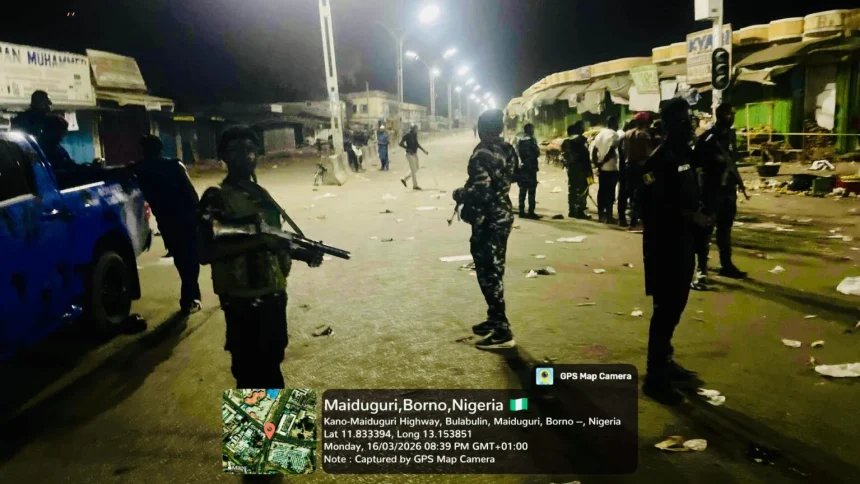
On Monday evening, as residents of Maiduguri, the Borno State capital, broke their Ramadan fast, three bombs went off almost simultaneously.
The targets — the University of Maiduguri Teaching Hospital gate, Maiduguri Monday Market, and the Post Office Flyover — were packed with people. Bodies were left on the ground. The injured were rushed to the State Specialist Hospital. The Borno State Police Command confirmed the attacks and said explosive ordnance disposal teams were still clearing the sites.
EDITOR’S PICKS
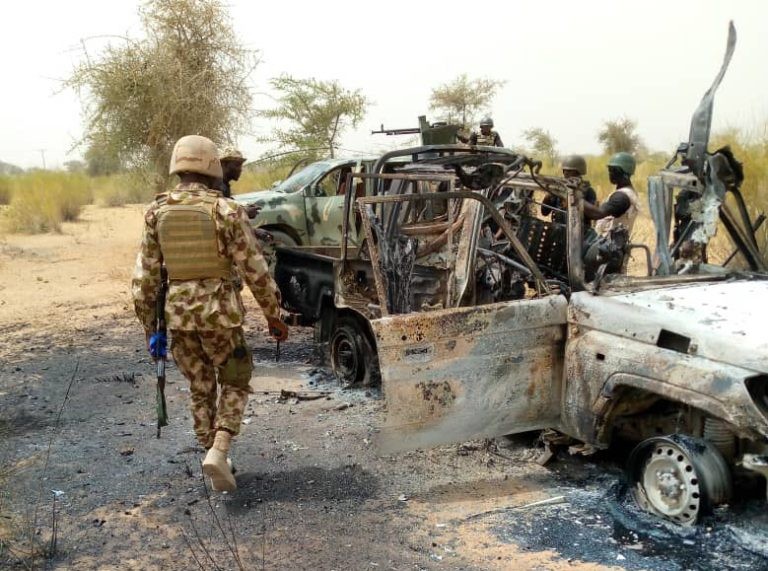
It was not even the first attack that day. Hours earlier, terrorists had raided a military facility in Ajilari on the outskirts of Maiduguri, burnt it down, and driven off with a military patrol vehicle. Soldiers repelled the attack and killed some of the assailants, but the damage was done.
Monday’s events were not isolated. They were the latest chapter in a surge of insurgent activity that has been building for weeks.
A Pattern of Base Raids
The violence did not begin on Monday. In the first week of March alone, armed groups launched at least six coordinated attacks across Borno, Yobe, and the Lake Chad region, looting military hardware and killing at least 12 soldiers and three civilians. Security analysts described the level of coordination as remarkable.
In Kukawa, ISWAP fighters overran a military base in a three-hour gun battle, killing four soldiers including a commander. In Ngoshe, a Boko Haram attack on a base near the Cameroon border killed seven soldiers and 11 civilians. In Dalwa, attackers killed two soldiers, four civilians, and burned over 200 homes.
By the time of Monday’s bombings, seven military commanding officers had been killed in the northeast since January — a figure that alone signals how aggressive the insurgency has become in 2026.
Why They Keep Hitting Bases
The base raids are not random. They are deliberate resupply operations.
Taiwo Adebayo of the Institute for Security Studies described the pattern: attackers hit a camp, strip it of weapons, burn it down, and retreat into the forest.
“When they hit those camps, they strip the base of weapons, burn it down and retreat into the forests,” Adebayo said.
Security researcher Malik Samuel of Good Governance Africa was more direct. “As long as military bases can be overrun, ISWAP does not need to spend money buying arms,” he said.
The Nigerian military has recorded genuine successes in Sambisa Forest and other hideouts. But analysts say it lacks the capacity to sustain operations in one location without pulling back, giving insurgents room to regroup and strike elsewhere.
A separate problem is reintegration. Investigations have found that several Boko Haram and ISWAP commanders who previously surrendered returned to the battlefield after the government allegedly failed to fulfil promises made to them — including housing and vocational support.
Maiduguri as a Deliberate Target
Monday’s choice of timing was not accidental. Iftar — the fast-breaking meal — is the moment when markets, hospital gates, and public spaces are most crowded. Hitting three locations in the same city within minutes of each other points to planning, not desperation.
Governor Babagana Zulum framed the attacks as a sign that military pressure on insurgent hideouts is working, that the bombings are retaliation. That reading is possible.
But another reading is harder to dismiss: that Maiduguri’s urban perimeter was breached at three points in a single evening, hours after a military base was attacked on the city’s outskirts. That is not the picture of a contained insurgency.
A Crisis Without National Attention
Despite the scale of the violence, the northeast remains a peripheral issue in national political conversation. With attention focused on the 2027 election cycle, many Nigerians — and many in government — have seemed to look away.
FURTHER READING
The people of Borno have not had that option.
Philip Ibitoye is a Special Correspondent with EKO HOT BLOG. Click here to find daily analysis and critical insight on trending issues in Lagos and other parts of Nigeria.
Click to watch the video of the week below: