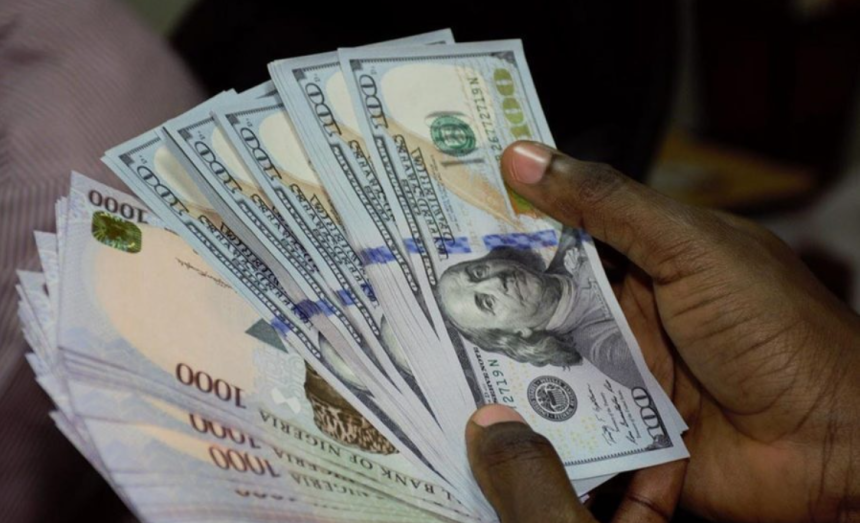
Nigeria’s total public debt has climbed to ₦152.39 trillion as of June 30, 2025, according to new figures released by the Debt Management Office (DMO), highlighting the country’s deepening reliance on borrowing to fund its budgets and bridge fiscal gaps.
EKO HOT BLOG gathered that the figure represents an increase of ₦3 trillion, or 2.01 percent, from the ₦149.39 trillion recorded in March. The DMO said the total covers both domestic and external debt of the federal government, the 36 states, and the Federal Capital Territory (FCT).
EDITOR’S PICKS
Of the total, ₦80.55 trillion (about $52.67 billion) is owed domestically, while ₦71.84 trillion (about $46.98 billion) represents external borrowings. The agency attributed part of the rise to the weakening naira, which magnified the local currency value of foreign loans when converted at the Central Bank’s exchange rate of ₦1,529.21/$ as of June 30.
Federal Government Dominates Debt Portfolio
The DMO breakdown shows that the federal government accounted for ₦141.08 trillion, or 92.6 percent of the total debt stock, comprising ₦76.59 trillion in domestic debt and ₦64.49 trillion in external obligations.
Subnational governments, including the 36 states and the FCT, owed a combined ₦11.32 trillion, made up of ₦3.96 trillion in domestic liabilities and $4.81 billion (₦7.36 trillion) in external debts.
On the domestic side, the DMO reported that the total stock rose by ₦1.79 trillion between March and June. Federal Government bonds dominated the portfolio, accounting for ₦60.65 trillion, or 79.2 percent, of total domestic debt. This included ₦36.52 trillion in naira-denominated bonds, ₦22.72 trillion in securitised Ways and Means advances, and ₦1.40 trillion in dollar bonds.
Other domestic instruments included ₦12.76 trillion in Treasury bills, ₦1.29 trillion in Sukuk, and smaller holdings in savings bonds, green bonds, and promissory notes.
The growing stock of securitised Ways and Means advances — loans from the Central Bank to the government — highlights the persistent fiscal pressure and dependence on debt to finance recurrent and capital obligations.
Speaker Abbas Warned of Debt Limit Breach in September
Amid the rising debt profile, Speaker of the House of Representatives Tajudeen Abbas sounded a stern warning over Nigeria’s fiscal trajectory in September, describing the nation’s borrowing as a potential threat to economic stability.
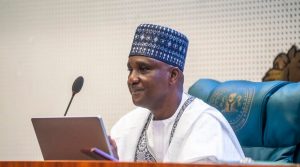
Speaking at the 11th Annual Conference and General Assembly of the West Africa Association of Public Accounts Committees (WAAPAC) held at the National Assembly in Abuja, Abbas said Nigeria’s debt had reached “a critical point” and that its debt-to-GDP ratio, now at roughly 52 percent, had breached the statutory ceiling of 40 percent set by law.
“This is not just a budgetary concern but a structural crisis that demands urgent parliamentary attention and coordinated reform,” he declared.
The Speaker lamented that debt servicing continues to consume a disproportionate share of government revenue, crowding out vital expenditure on infrastructure, healthcare, and education. Fiscal experts have also warned that Nigeria now spends more on repaying loans than on social services, a situation that could push the country toward unsustainable debt levels.
Calling the breach of the debt limit “a signal of strain on fiscal sustainability,” Abbas urged stronger oversight, transparent borrowing practices, and measurable economic returns for every naira borrowed.
He also announced Nigeria’s readiness to champion a West African Parliamentary Debt Oversight Framework under WAAPAC, which would harmonise debt reporting, improve transparency, and build regional capacity for fiscal risk analysis.
Exchange Rate Impact and Sustainability Risks
The DMO’s report highlights how the weakening naira continues to inflate the naira value of external borrowings, even when new loans are limited. This exchange-rate effect, combined with large-scale domestic borrowing, keeps Nigeria’s debt trajectory on an upward path.
Although the agency maintains that the country’s debt-to-GDP ratio remains within international thresholds, analysts argue that the pace of debt growth and the rising cost of servicing pose mounting challenges to fiscal stability.
The DMO itself has acknowledged the need for stronger revenue mobilisation and fiscal consolidation, warning that without significant progress in expanding the tax base and cutting expenditure inefficiencies, debt servicing could continue to crowd out investment in critical sectors.
A Persistent Pattern
Earlier in January, the DMO assured that Nigeria had made adequate budgetary provisions to meet its obligations following the issuance of a $2.2 billion Eurobond, but public debt has continued to rise since then.
By comparison, the nation’s total public debt was ₦142.3 trillion in September 2024, rising to ₦149.39 trillion by March 2025, and now ₦152.39 trillion by mid-year, a clear indication of a persistent upward trend.
FURTHER READING
With the federal government responsible for more than 90 percent of total liabilities and exchange rate volatility inflating foreign obligations, Nigeria’s debt spiral shows no signs of easing soon, even as policymakers face growing calls for reform and transparency in fiscal management.
Philip Ibitoye is a Special Correspondent with EKO HOT BLOG. Click here to find daily analysis and critical insight on trending issues in Lagos and other parts of Nigeria.
Click here to watch the video of the week below: