-
Nigeria Exits FATF Grey List After Major Anti-Money Laundering Reforms
-
The move follows stronger financial transparency and improved anti-money-laundering oversight.
-
The government says the development boosts investor confidence and institutional credibility.
Nigeria has been officially removed from the Financial Action Task Force (FATF) “grey list” after meeting all requirements under its Action Plan, marking a major milestone in the country’s anti-money-laundering (AML) and counter-terrorism-financing (CFT) efforts.
EDITOR’S PICKS
- Trump Pushes for ‘Golden Fleet’ Warships to Counter China’s Growing Threat
- Former Oyo Catholic Bishop Julius Adelakun is Dead
- Nigeria to Deliver 4,000MW Renewable Energy Capacity Under ‘Nigeria First’ Policy
EKO HOT BLOG reports that the announcement was made during the FATF plenary held in Paris in October 2025. The global financial watchdog cited Nigeria’s improved inter-agency coordination, stronger regulatory oversight, and enhanced transparency systems as the key reasons for the country’s removal from the list.
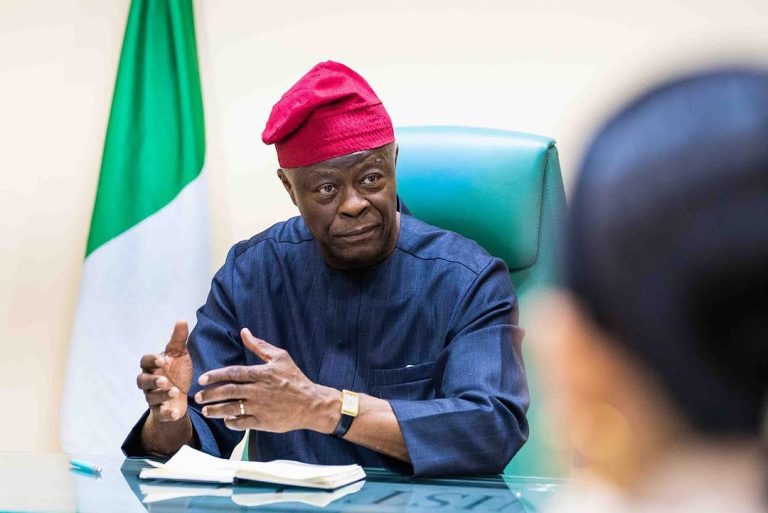
Speaking on behalf of Nigeria’s delegation, the Coordinating Minister of the Economy, Wale Edun, described the development as both a validation and a starting point for broader institutional reforms.
“Nigeria’s ambition was never limited to simply completing the Action Plan and exiting the grey list,” Edun said. “Our focus has been on driving reforms and strengthening institutions to ensure Nigeria effectively counters money laundering and terrorist financing. For us, the Action Plan was not the ceiling but the floor of our aspirations.”
He further described the delisting as a “vote of confidence in our economy and the integrity of our monetary and financial systems,” adding that the decision sends a strong message to global investors that Nigeria’s institutions are “transparent, reliable, and internationally trusted.”
Nigeria was initially placed on the FATF grey list in February 2023 following identified weaknesses in its AML/CFT framework. Since then, the country has introduced several critical reforms, including:
-
Enactment of the Money Laundering (Prevention and Prohibition) Act 2022 and the Terrorism (Prevention and Prohibition) Act 2022
-
Launch of a Beneficial Ownership Register to improve transparency in corporate ownership
-
Stronger supervision of financial and non-financial institutions
-
Improved intelligence sharing among key agencies such as the NFIU, EFCC, and other regulators
At the plenary, FATF acknowledged Nigeria’s “strong political commitment” and noted that the country had moved from partially compliant to largely compliant in several core technical areas.
FURTHER READING
- Obasanjo Explains Why He Rejected El-Rufai as Successor
- NOA Launches ₦22m Animation Contest to Promote National Values
- Gombe Commissioner Dies in Road Accident