- Tinubu’s Blue Economy Agenda to Bridge Nigeria’s 2.2m Tonne Fish Deficit
- Oyetola noted that Nigeria currently produces only about 38.9 per cent of its annual fish requirement
- Identifies areas where mechanical engineers have already made contributions to the blue economy value chain
The Federal Ministry of Marine and Blue Economy has partnered with the National Institute for Policy and Strategic Studies (NIPSS) to accelerate national fish production and close Nigeria’s estimated 2.2 million metric tonne supply gap through a coordinated policy framework.
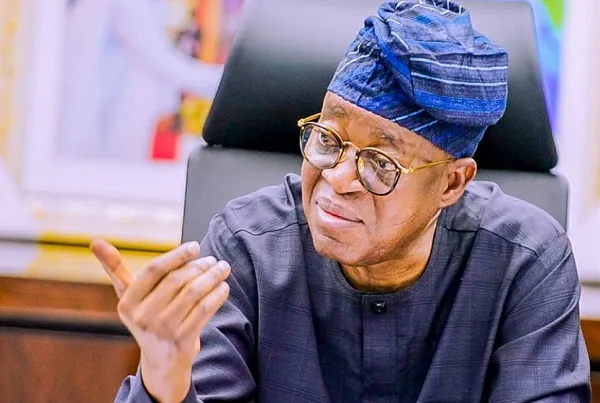
Eko Hot Blog reports that while speaking on Wednesday at the opening of a two-day Round Table Discussion on Accelerating National Fish Production in Lagos, the Minister of Marine and Blue Economy, Dr Adegboyega Oyetola, said the initiative forms a key part of President Bola Tinubu’s Renewed Hope Agenda, which prioritises food security, job creation, and economic diversification.
EDITOR’S PICK
- Tinubu Secures Lawmakers’ Nod for $2.35bn Loan
- Wole Soyinka and Trump’s America: From Torn Green Card to Revoked Visa
- Disciples of Jagaban Defend Tinubu, Say Atiku, Obi Lack Northern Influence
Oyetola noted that Nigeria currently produces only about 38.9 per cent of its annual fish requirement of 3.6 million metric tonnes, leaving a deficit of more than 2.2 million metric tonnes that is met through imports, a situation he described as “economically, nutritionally, and environmentally unsustainable.”
The minister said the discussions would produce a National Fish Production Acceleration Roadmap to guide strategic investments and reforms across the fisheries and aquaculture subsectors.
“We are working on new policy and legal frameworks, including the Fisheries Bill and the National Fisheries and Aquaculture Policy, to strengthen governance and sustainability within the sector,” Oyetola stated.
He also highlighted ongoing digital reforms within the ministry, such as the automation of fisheries operations and the establishment of a Blue Data Bank in partnership with the World Bank’s PROBLUE Programme.
Oyetola added that initiatives like the Green Money Project are already empowering youth and women through aquaculture training and access to inputs, fostering inclusive growth within the blue economy.
On his part, the Director-General of NIPSS, Professor Ayo Omotayo, reaffirmed the Institute’s commitment to supporting evidence-based policies that would help Nigeria achieve fish self-sufficiency.
“NIPSS will continue to work closely with the Ministry to ensure that the outcomes of this round table translate into actionable strategies capable of transforming the fisheries sector,” Omotayo said.
Meanwhile, Oyetola has called on mechanical engineers to harness opportunities within Nigeria’s vast marine ecosystem by developing critical technologies that can drive sustainable growth in the blue economy.
Delivering his address at the 38th International Conference and Exhibition of the Nigerian Institution of Mechanical Engineers (NIMechE) in Ikeja, Lagos, the Minister represented by the Director of Marine Conservation, Innovation and Technology, Hussaini Shettima urged stronger collaboration between government, academia, and professional bodies to train young Nigerians in marine engineering, subsea design, and green energy systems.
He identified areas where mechanical engineers have already made contributions to the blue economy value chain and challenged them to innovate further to boost efficiency, lower costs, and enhance Nigeria’s global competitiveness.
“Our goal is to ensure that technology becomes a driving force for a sustainable, profitable, and inclusive blue economy,” Oyetola said.
FURTHER READING
- FG Outlines Benefits of Nigeria’s Exit from FATF Gray List
- Sean ‘Diddy’ Combs to Leave Prison in May 2028
- Sanwo-Olu Disburses ₦2.7bn to 10,000 Lagos Residents
Click here to watch video of the week