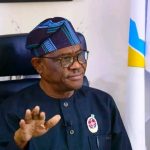
On Wednesday, Bayo Ojulari, the group chief executive officer (GCEO) of the Nigerian National Petroleum Company Limited (NNPCL) ruled out a sale of the Port Harcourt Refining Company (PHRC).
Speaking at a company-wide town hall meeting at the national oil firm’s headquarters in Abuja, reaffirmed the company’s commitment to completing the high-grade rehabilitation and retention of the plant.
EDITOR’S PICKS
This announcement was a shift for Ojulari who in June said the company was considering the sale of state-owned refineries due to complications in repairing the facilities.
That statement was seen as a welcome development by those opposed to the rehabilitation of the old refineries that have not functioned optimally for decades despite billions of dollars spent on their rehabilitation. Ojulari’s turnaround then raises serious questions about the NNPC’s refusal to consider selling a refinery that continues to consume money without results.
With some history to the ineffectiveness of the Port Harcourt refinery, EKO HOT BLOG digs into the dynamics of the potential sale of the facility and whether the NNPC is making a mistake with its latest decision.
Billions spent, little to show
In 2021, the Federal Executive Council (FEC), led by the late Muhammadu Buhari, approved $1.5 billion for the rehabilitation of the Port Harcourt refinery, one of Nigeria’s key state-owned refineries. The mechanical phase of the turnaround maintenance was declared completed in December 2023, and the old plant resumed operations briefly in November 2024 after several delays.
However, just six months later, it was shut down again for further maintenance.
NNPC said the shutdown, which began on May 24, 2025, was for “sustainability assessment”, yet another chapter in a cycle of repair and relapse that has defined the refinery’s recent history.
Sources within the project have cited serious technical challenges, including corrosion, obsolescence, and a lack of structural integrity data. These problems have made it nearly impossible for the engineering, procurement, and construction contractors to complete a successful revamp. There is no evidence the continued efforts to spend more billions to rehabilitate the facility will solve those technical issues.
Dangote’s stark warning
Aliko Dangote, president of Dangote Group, was blunt in his assessment. Speaking to members of the Global CEO Africa group at the Lagos Business School in earlier this month, he cast doubt on the future of NNPC refineries, describing the years-long rehabilitation efforts as futile.
“(The turnaround maintenance) is like you trying to modernise a car that was built 40 years ago, when technology and everything have changed,” he said. “Even if you change the engine, the body will not be able to take the shock of that new technology engine.”

Dangote claimed that despite consuming $18 billion over the years, the NNPC refineries—including Port Harcourt, Warri, and Kaduna—have failed to return to reliable production.
In contrast, his privately-owned Lekki refinery, with a capacity of 650,000 barrels per day, is already dedicating more than half of its output to petrol, far exceeding the 22 percent once produced by government-run refineries.
Calls for privatisation grow louder
The recent shutdown of the Port Harcourt refinery and a similar closure of the Warri facility just one month after its 2023 re-commissioning have further eroded public confidence.
Industry stakeholders, including the Manufacturers Association of Nigeria and independent crude refiners, have called on the federal government to sell the refineries or scrap them altogether.
They argue that the resources sunk into reviving these aged plants would be better spent on supporting modular refineries that can be built faster, run more efficiently, and help solve Nigeria’s persistent fuel supply crisis.
NNPC’s position: Stay the course
Despite the mounting criticism, NNPC has shown no indication it is considering privatising the refinery. The company reaffirmed its commitment to maintaining the PHRC and continuing its partnership with regulatory authorities to ensure energy security.

However, critics say the company’s approach is more about preserving state control than delivering results.
Objectively, NNPC’s refusal to consider selling the Port Harcourt refinery appears increasingly indefensible. With billions spent and little progress to show, continuing to rehabilitate what may ultimately be an unfixable asset not only burdens the national treasury but also undermines Nigeria’s broader energy reform goals.
FURTHER READING
Dangote’s analogy of modernising a 40-year-old car captures the core issue: at some point, persistent repairs become wasteful, and a full replacement—or sale—becomes the only rational option.
Philip Ibitoye is a Special Correspondent with EKO HOT BLOG. Click here to find daily analysis and critical insight on trending issues in Lagos and other parts of Nigeria.
Click here to watch the video of the week below: