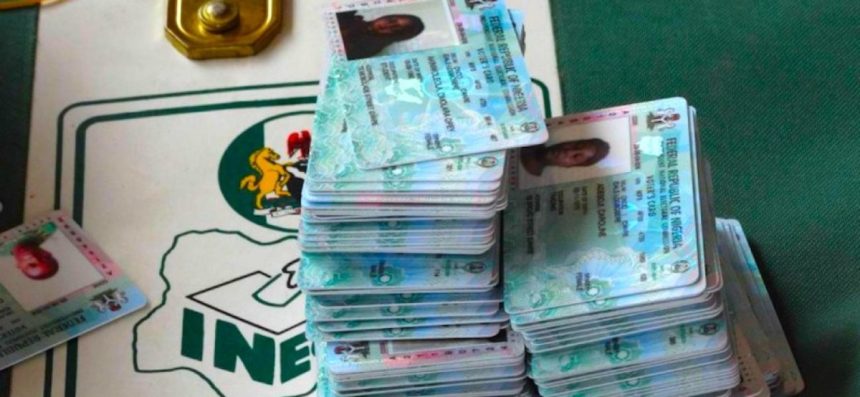
The Independent National Electoral Commission (INEC) is asking millions of registered voters to prove, again, that they exist. The question worth asking is: what, then, was the Permanent Voter Card (PVC) for?
INEC will begin a nationwide voter revalidation exercise on April 13, 2026, targeting those who registered between 2011 and 2024, the entire lifespan of the current voter register, which as of the 2023 general election contained 93,469,008 voters.
EDITOR’S PICKS
The commission’s stated justification is administratively coherent: persistent anomalies in the register, including duplicate registrations, underage entries, registration by non-citizens, and records of deceased persons, continue to generate legitimate public concern.
Nobody disputes the register needs cleaning. The controversy is whether the mechanism chosen is the right one, at the right time, for the right people.
The Irony of ‘Permanent’
The PVC was introduced precisely to eliminate the chaos of temporary voter cards to create a stable, biometric-linked identity that a citizen registers once and holds indefinitely.
The ADC captured the contradiction bluntly: “It is already difficult enough to get citizens to register to vote in the first place. To now require them to return and ‘revalidate’ their registration is, in effect, to ask them not to bother at all.”
That is the core tension. Revalidation, as designed, places the burden of correcting systemic administrative failures on the individual voter.
The duplicates, ghost entries, and underage records in INEC’s register were not put there by the voters themselves, they are largely products of registration malpractice and weak data management. A credible register is INEC’s institutional obligation; what is unfolding, however, looks like outsourcing that obligation back to citizens.
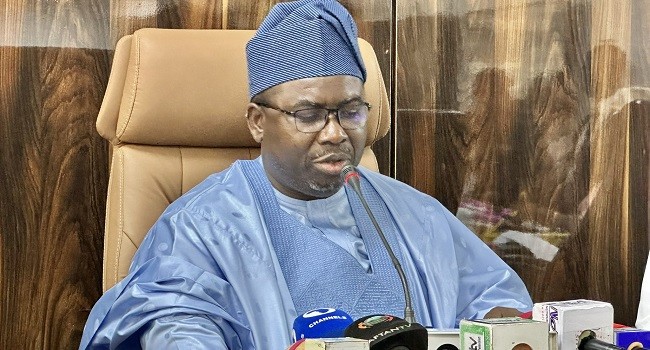
INEC maintains that the revalidation is not targeted at any region, political party, or demographic group, and insists it predates the appointment of its Chairman, Joash Amupitan. That defence addresses the partisanship charge but sidesteps the structural one.
A Compressed Calendar, an Overstretched System
Yiaga Africa’s Executive Director, Samson Itodo, acknowledged the register’s need for urgent clean-up but described the timing as deeply problematic, noting that the framework, scope, procedures, and implications remain unknown to the public.
“This is a case of a good policy implemented at the wrong time,” he said, pointing out that the 2027 electoral cycle already has the most compressed timelines for electoral activities, with continuous voter registration still ongoing and political party primaries set to begin within weeks.
IPAC reinforced this concern, warning that introducing a major nationwide exercise without broad consultation — at a moment when parties are already managing mandatory NIN-linked membership registration under the new Electoral Act — risks disenfranchising millions of eligible voters rather than protecting them.
The timeline compounds the anxiety. The final voter registration list for the 2027 general elections is slated for release on December 15, 2026, with the presidential election following on January 16, 2027.
That is an extremely thin window for appeals, corrections, and PVC collection if the revalidation exercise generates disputes or exclusions.
The Real Test
INEC has made online participation available via its CVR portal, with in-person centres operating from 9am to 3pm. The commission has also deployed a hybrid model across 774 LGA offices, 8,809 registration areas, and 176,846 polling units.
On paper, the reach is adequate. In practice, Nigeria’s rural voter, the market woman in Kano, the farmer in Benue, the artisan in Ajegunle will decide whether INEC’s assurances translate into access.
FURTHER READING
Revalidating a register is legitimate governance. But a PVC that requires periodic revalidation to remain valid is not, strictly speaking, permanent. INEC must demonstrate through execution, not press releases, that this exercise expands the integrity of democracy rather than quietly narrowing the electorate. The country will be watching from April 13.
Philip Ibitoye is a Special Correspondent with EKO HOT BLOG. Click here to find daily analysis and critical insight on trending issues in Lagos and other parts of Nigeria.
Click to watch the video of the week below: