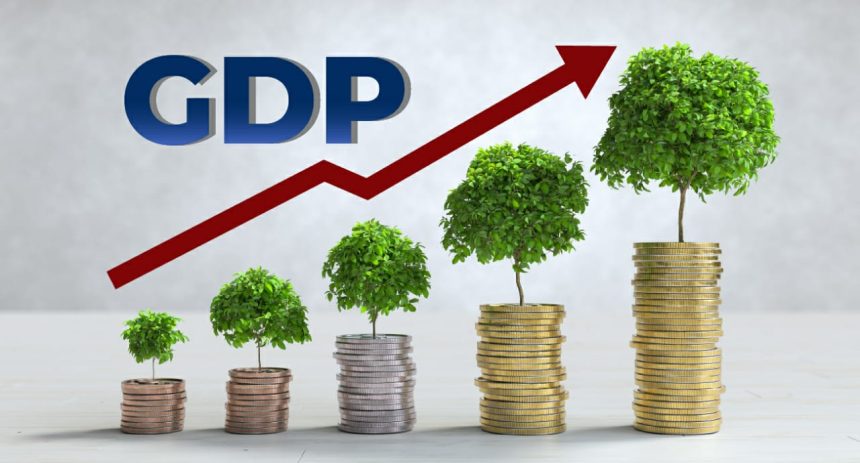
Nigeria’s economy recorded stronger-than-expected growth in the second quarter of 2025, with fresh figures from the National Bureau of Statistics (NBS) showing a 4.23 percent expansion in real Gross Domestic Product (GDP) year-on-year.
The report, released on Monday, signals a rebound compared to the 3.48 percent growth posted in the same quarter of 2024.
EDITOR’S PICKS
Breaking Down the Numbers
EKO HOT BLOG gathered that the Q2 2025 performance was underpinned by higher oil output, a rebound in the industrial sector, and steady gains across services. Agriculture grew by 2.82 percent, up from 2.60 percent in the same period last year.
The industrial sector expanded by 7.45 percent, a significant jump from 3.72 percent in Q2 2024, while services grew by 3.94 percent, only slightly better than the 3.83 percent recorded a year earlier.
Overall, the economy’s size at basic prices reached ₦100.73 trillion in nominal terms, compared to ₦84.48 trillion in Q2 2024—translating to 19.23 percent nominal growth. Oil production averaged 1.68 million barrels per day, higher than both the previous quarter’s 1.62 mbpd and the 1.41 mbpd recorded in Q2 2024. Meanwhile, the non-oil economy, which continues to anchor most of Nigeria’s growth, expanded by 3.64 percent and contributed nearly 96 percent of GDP in real terms.
Exceeding IMF and World Bank Expectations
The stronger growth comes just weeks after the International Monetary Fund (IMF) projected a 3.4 percent GDP expansion for Nigeria in 2025, broadly in line with the World Bank’s forecast of 3.6 percent. By delivering 4.23 percent growth in the second quarter alone, the latest data slightly exceeds those annual expectations.
Still, there is a need for caution against drawing firm conclusions too early.
With two more quarters left in the year, much depends on whether oil production sustains recent gains, whether inflationary pressures ease, and whether the non-oil economy maintains momentum.
Tinubu’s 7% Growth Target Looms Large
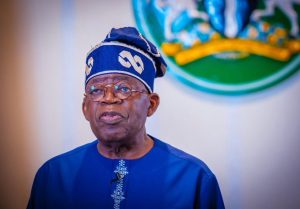
Despite the stronger Q2 figures, Nigeria remains far from President Bola Tinubu’s ambitious target of 7 percent annual growth by 2027. In August, the president tied this goal to a broader vision of quadrupling the economy by 2030 and lifting millions out of poverty.
Minister of Finance and Coordinating Minister of the Economy, Wale Edun, echoed President Tinubu the next day, saying the medium-term goal is to achieve 7 percent in annual GDP growth, driven by critical investments by government, private investment, job creation, and higher incomes.
Edun said that to achieve this, Nigeria needed to invest in critical sectors and expand Public Private Partnership (PPP) arrangements across agriculture, educational, health, manufacturing, technology, and infrastructure.
However, recent trends show how steep the climb will be. The economy grew by just 3.13 percent in the first quarter of 2025, even after a GDP rebasing boosted the country’s official output size to ₦372.82 trillion ($243.55 billion). With growth hovering in the 3–4 percent range over the past decade—barely ahead of population growth of about 2.5–3 percent—the pace of expansion remains insufficient to achieve transformative change.
The Bigger Picture
Nigeria’s Q2 2025 results show that the economy is moving in the right direction, supported by oil sector recovery and resilience in non-oil industries like telecoms, financial services, and construction. But they also highlight the gap between external forecasts, which remain cautious, and government ambitions, which are more optimistic.
FURTHER READING
The months ahead will determine whether the momentum holds and whether Nigeria can convert a quarter of encouraging data into a sustained growth path that narrows the gap between aspiration and reality.
Philip Ibitoye is a Special Correspondent with EKO HOT BLOG. Click here to find daily analysis and critical insight on trending issues in Lagos and other parts of Nigeria.
Click here to watch the video of the week below: