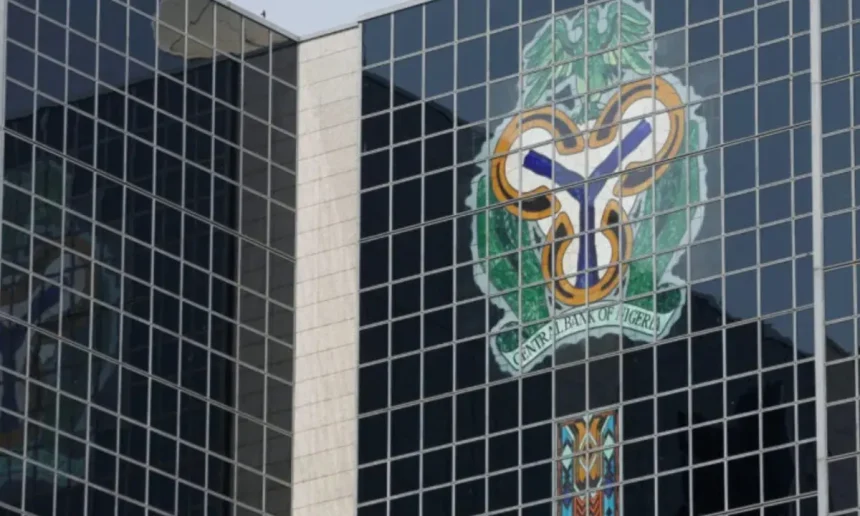
The Monetary Policy Committee (MPC) of the Central Bank of Nigeria (CBN) has cut its monetary policy rate (MPR) from 27.5 percent to 27 percent — the first reduction in five years.
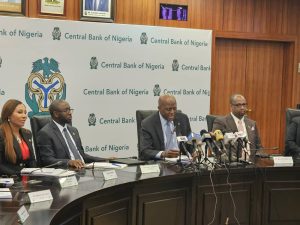
The move, announced by Governor Olayemi Cardoso after the MPC’s 302nd meeting in Abuja on Tuesday, comes on the back of five consecutive months of disinflation and what the bank describes as “improvements in several macroeconomic indicators.”
EDITOR’S PICKS
While the reduction signals a shift from the aggressive tightening cycle of recent years, the practical question is what it means for Nigerians trying to borrow money in an economy where lending rates remain among the highest in the world. EKO HOT BLOG explores the question below:
A Modest Relief for Borrowers
The MPR serves as the benchmark interest rate on which banks build their own lending rates. A reduction of 50 basis points theoretically lowers borrowing costs across the economy.
The CBN also reduced the cash reserve ratio (CRR) for commercial banks from 50 percent to 45 percent, a measure designed to free up more funds for lending.
In practice, however, the relief will be modest. Nigerian banks typically price loans well above the policy rate once risk premiums and operational costs are added.
That means consumers and small businesses are unlikely to see dramatic drops in the cost of mortgages, credit facilities or consumer loans in the near term.
Is 27 Percent Still Too High?
Even with the latest cut, Nigeria’s interest rate remains exceptionally high by global standards. For comparison:
- United States: 4.0–4.25 percent, after the Federal Reserve delivered its first rate cut since September 2024. The move followed slowing growth and came amid political pressure from President Donald Trump, who has repeatedly urged the Fed to ease policy.
- United Kingdom: 4.0 percent, after earlier cuts in 2025.
- South Africa: 7.0 percent.
- Kenya: 9.5 percent.
- Egypt: 22-23 percent.
Nigeria’s 27 percent is far above both advanced economies and many African peers, highlighting the scale of its inflation problem. Headline inflation stood at 20.33 percent in August, a sharp fall from earlier peaks but still high enough to justify caution.
Positive Signal, Limited Impact
The decision to cut the interest rate by only 50 basis points may be more about signalling than immediate transformation.
By cutting rates, the CBN is acknowledging progress in bringing down inflation, stabilising the exchange rate, and strengthening reserves. It is also attempting to support growth after years of tight monetary conditions.
Still, transmission risks remain. The CBN governor himself noted that excess liquidity is building up in the banking system and that effective functioning of the interbank market is crucial for policy changes to reach households and firms.
“Be mindful of the need to preserve the prevailing macroeconomic stability. The MPC noted the risk posed by the excess liquidity in the banking system. Members noted that effective vomiting of the interbank market remains critical to enhance translation of monetary policy,” Cardoso said.
“This, therefore, informed the decision to adjust the width of the standing facilities corridor to boost interbank market transactions and enhance the stability of the market.”
Without structural reforms in the financial sector, a modest reduction in benchmark rates may not translate into cheaper credit for ordinary Nigerians.
More to Be Done
The September cut may prove to be only the first step. The CBN has left the door open for further easing if disinflation continues and exchange-rate stability holds. But easing alone will not be enough. Stronger competition in banking, deeper capital markets, and fiscal discipline are also needed to make credit more accessible and affordable.
For now, Nigerian borrowers will welcome the symbolic shift. But with rates still set at 27 percent, the cost of credit remains daunting. The small cut represents the beginning of a possible new chapter in monetary policy, one that borrowers will hope to eventually bring meaningful relief.
FURTHER READING
According to the CBN governor, the next MPC meeting is scheduled for November 24 and November 25, 2025.
Philip Ibitoye is a Special Correspondent with EKO HOT BLOG. Click here to find daily analysis and critical insight on trending issues in Lagos and other parts of Nigeria.
Click here to watch the video of the week below: