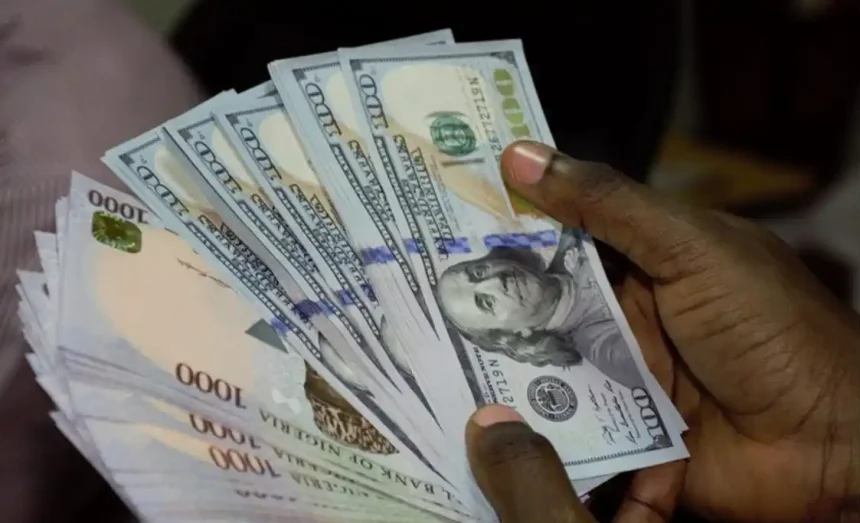
- Dollar to Naira Rate Today: 24 September 2025.
-
Official CBN/NFEM rate steady at ₦1,493 per USD.
-
Wide gap shows strong demand, limited forex supply persists.
The Naira held relatively steady on 24 September 2025, as black market and official exchange rates showed little movement. Market watchers say the marginal shift reflects ongoing dollar demand tempered by cautious foreign exchange allocation by the Central Bank of Nigeria (CBN).
EDITOR’S PICKS
- Details Of Atiku’s Meeting With El-Rufai Emerge
- Tinubu’s Administration Prioritising Northern Development – Housing Minister
- JUST IN: Badagry West Vice Chairman Dies, Joins List of Female Council Leaders Dead in Two Months
EKO HOT BLOG reports that in the parallel (black) market, dollar-to-naira trading remains active, with dealers quoting slightly softer rates compared with previous days. Meanwhile, the CBN’s official rate continues to lag behind, constrained by controlled supply and foreign exchange policy.
| Market Type | Buy Rate (USD → NGN) | Sell Rate (USD → NGN) |
|---|---|---|
| Black Market / BDC | ₦1,505 | ₦1,518 |
| Official / CBN (NFEM) | ₦1,493 | ₦1,493 |
What These Rates Mean
-
Black market dominance: In the informal market, dealers are buying dollars for around ₦1,505 and selling at about ₦1,518.
-
Official rate unchanged: The official NFEM (Nigerian Foreign Exchange Market) rate remains at ₦1,493 per USD, unchanged from recent days.
-
Spread remains wide: The difference between black market and official rates reflects systemic pressure: official channels remain tight, while demand remains strong outside them.
Implications & Outlook
For many Nigerians—businesses, importers, travellers—the black market rate remains more relevant than official quotes. The wide divergence means that actual dollar costs for goods, services, and education abroad may remain inflated.
However, unless the CBN improves liquidity or eases foreign exchange bottlenecks, the spread is unlikely to narrow soon. Further rate stability or appreciation will depend on increased foreign inflows, remittance flows, and policy adjustments.
If you like, I can also provide the week’s trend and forecast for the naira versus dollar.
FURTHER READING
- Ebola? What To Know About Suspected Viral Haemorrhagic Fever Cases in Abuja
- Why Africa Must Cut Investment Risks to Attract Capital – EFCC
- Trump Places Harvard on Strict Financial Monitoring