-
FG pledges full NHIA integration for armed forces, families, retirees.
-
Defence minister says military health is vital to national security.
-
Partnership with Walter Reed has saved lives, strengthened facilities.
The Federal Government has pledged that members of the Nigerian Armed Forces will be fully integrated into the National Health Insurance Authority (NHIA), ensuring comprehensive healthcare for service members, their families, and eligible retirees.
EDITOR’S PICKS
- Details Of Atiku’s Meeting With El-Rufai Emerge
- Tinubu’s Administration Prioritising Northern Development – Housing Minister
- JUST IN: Badagry West Vice Chairman Dies, Joins List of Female Council Leaders Dead in Two Months
EKO HOT BLOG reports that the Minister of State for Defence, Bello Matawalle, gave the assurance on Tuesday in Abuja during the 20th anniversary of the Ministry of Defence Health Implementation Programme’s partnership with the Walter Reed Army Institute of Research Africa.
Matawalle said the initiative would strengthen Nigeria’s defence health system while extending the same health safeguards enjoyed by other citizens to military personnel and their dependents.
“We must shape the next 20 years with national security and the National Health Insurance Authority, ensuring that our forces are covered by national health and well-being safeguards for service members, their families, and eligible civilians—extending across postings and into retirement,” he said.
The minister stressed that military health is inseparable from national security, adding that preventive care and insurance coverage would guarantee operational readiness. He noted that the defence health partnership had already impacted more than half a million Nigerians, saving lives, building infrastructure, and improving public trust in military-led healthcare.
The Chief of Defence Staff, General Christopher Musa, described NHIA integration as a vital step to keeping soldiers fit for duty. He praised the two-decade collaboration with Walter Reed as a model of international partnership, saying it had strengthened 32 military health facilities and supported both soldiers and civilians during HIV, COVID-19, and other disease responses.
U.S. Ambassador to Nigeria, Richard Mills Jr., hailed the programme as proof of mutual trust, while Major General Paula Lodi of the U.S. Army Medical Research and Development Command noted that it had grown into a global health policy influencer.
Since inception, the programme has tested over 1.6 million clients for HIV, enrolled 77,162 on treatment, and provided therapy to more than 13,000 pregnant women to prevent mother-to-child transmission.
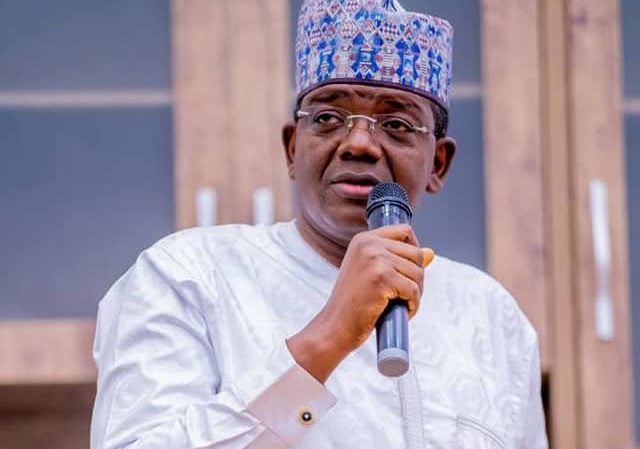
Matawalle concluded that integrating armed forces personnel into the NHIA would sustain these gains and guarantee the long-term operational effectiveness of Nigeria’s military.
FURTHER READING
- Ebola? What To Know About Suspected Viral Haemorrhagic Fever Cases in Abuja
- Why Africa Must Cut Investment Risks to Attract Capital – EFCC
- Trump Places Harvard on Strict Financial Monitoring