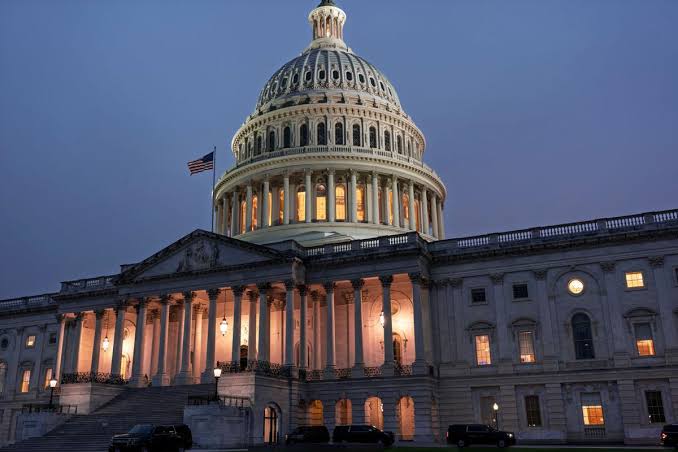
- U.S. Government Parts Ways with Funding, Enters Shutdown Phase
- Military operations, and certain public safety functions, will continue during the shutdown
- Federal employees and the public wait anxiously, hoping Congress will avert further disruption
After high-pressure talks collapsed without consensus, the United States officially entered a government shutdown at 12:01 a.m. EDT on October 1, 2025, because Congress failed to agree on stopgap funding.
EDITOR’S PICKS
- The Past Is Gone, I Forgive and Move On – Jonathan
- Spotify Names Ayra Starr Top Female Force in Afrobeats
- Fela Didn’t Inspire Me – Burna Boy
EKO HOT BLOG reports that in the days leading up to the deadline, President Donald Trump and Congressional leaders met at the White House, but the deep divide over spending policies proved impossible to bridge.
Republicans pressed for a “clean” continuing resolution to maintain existing spending levels, while Democrats demanded inclusion of policy riders—particularly related to health care and protections for Medicaid and the Affordable Care Act. The inability to reconcile these differences sealed the fate of the shutdown.
Essential services deemed critical, like law enforcement, military operations, and certain public safety functions, will continue during the shutdown. However, many federal workers considered nonessential will be furloughed or work without pay. Agencies such as the FAA, national parks, and regulatory bodies expect widespread service disruptions.
Thousands of air traffic control staff may remain on duty, but without compensation until funding returns. Research grants, inspections, and licensing operations may all stall pending resolution. Economists warn that daily economic losses could climb into the billions if a prolonged shutdown follows.
Both parties are trading accusations: Republicans claim Democrats overreached with policy demands, while Democrats say Republicans refuse to negotiate in good faith.
Labor groups have already filed lawsuits claiming the Office of Management and Budget and the Office of Personnel Management threatened mass firings ahead of the shutdown.
Historically, the longest U.S. shutdown stretched 34 days between December 2018 and January 2019. For now, federal employees and the public wait anxiously, hoping Congress will avert further disruption and resolve the impasse soon.
In the coming days, attention will focus on whether bipartisan agreement emerges, how the economic fallout spreads, and how the shutdown affects public confidence in federal governance.