-
Six days of youth-led protests in Madagascar have left 22 dead.
-
Demonstrators demand water, electricity, reforms, and Rajoelina’s resignation.
-
Despite government concessions, unrest spreads nationwide with mounting casualties.
Madagascar has entered its sixth day of mass protests, with youth-led demonstrations escalating nationwide despite President Andry Rajoelina’s move to dissolve his government in a bid to calm unrest.
EDITOR’S PICKS
- Trump Gives Hamas Ultimatum on Gaza Peace Plan
- Women’s Political Underrepresentation in Nigeria Will Soon End – Abbas
- Car Prize, Applause as District IV Celebrates Teachers, Students at 2025 Merit Awards
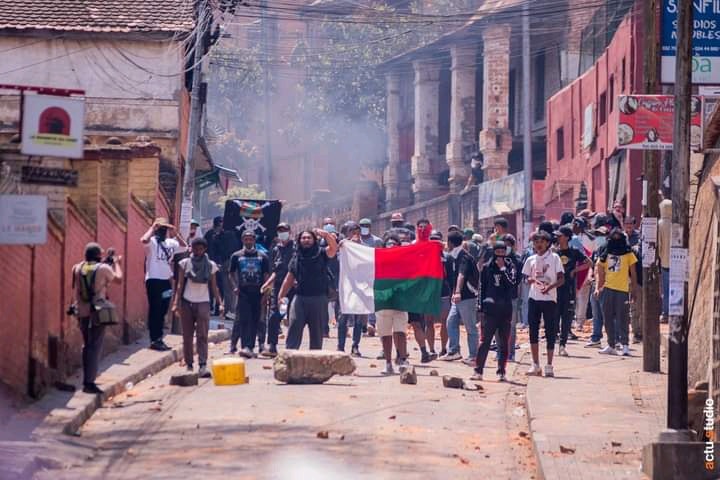
EKO HOT BLOG reports that on Tuesday, hundreds of young protesters poured into the streets of Antananarivo, demanding clean water, steady electricity, an end to corruption, and justice for victims of police brutality. Security forces responded with tear gas, but the rallies quickly spread to towns including Fenoarivo, Mahajanga, and Diego Suarez, signalling the depth of nationwide frustration.
Protesters, many inspired by recent Gen Z-led uprisings in Kenya and Nepal, carried placards reading: “We need water, we need electricity, Rajoelina out.” Organisers insist that only Rajoelina’s resignation and genuine democratic reforms can bring meaningful change.
In a televised address on Monday, Rajoelina announced the dissolution of his government, promising dialogue, compensation for looted businesses, and measures to tackle chronic power outages. But protest leaders dismissed his speech as “too little, too late,” demanding a public apology from Rajoelina and his dismissed prime minister, the removal of Antananarivo’s city administrator, and concrete reforms instead of vague promises.
The demonstrations have already turned deadly. According to United Nations figures, at least 22 people have been killed and more than 100 injured since the protests erupted last week. The government has rejected the UN’s report as “rumours and misinformation.” Local broadcaster Real TV Madagasikara showed footage of swelling crowds in the capital, while reports suggest rural protests are gaining strength.
This unrest represents the gravest challenge to Rajoelina since his disputed 2023 re-election. Having first taken power in a 2009 coup before winning elections in 2018 and 2023, his political career has long been dogged by controversy. Now, amid worsening living conditions and mounting public anger, Rajoelina faces his most uncertain future yet.
FURTHER READING
- Anambra Launches 25 Free Public WiFi Sites Under Soludo’s Digital Agenda
- Wike Flags Off Light Up Abuja Project, Assures Improved Security
- Lagos Govt Pledges to Build Climate Change Ecosystem through E1 Lagos GP Series