The World Bank on Wednesday projected that Nigeria’s economy will grow by 4.4 percent in 2027, compared to 4.2 percent forecasted for 2025, with the expansion largely driven by services and supported by agriculture and non-oil industries.
The new projection, contained in the Bank’s October 2025 Nigeria Development Update (NDU) themed “From Policy to People: Bringing the Reform Gains Home,” contrasts sharply with President Bola Tinubu’s 7 percent growth target by 2027, a goal tied to his administration’s broader ambition of building a $1 trillion economy by 2030.
EDITOR’S PICKS
EKO HOT BLOG examines which of the contrasting vision and target will win out by 2027.
Conflicting Projections, Shared Optimism
While the World Bank described Nigeria’s economic outlook as “cautiously optimistic,” its 4.4 percent growth estimate reflects a more conservative view than the administration’s own projections.
The Bank’s senior economist for Nigeria, Samer Matta, said inflation would “gradually ease but remain elevated,” warning that sustained monetary discipline and structural reforms would be critical to curbing food inflation — described as “the biggest tax on the poor.”
According to the NDU, Nigeria’s economy expanded by 3.9 percent year-on-year in the first half of 2025, up from 3.5 percent in the same period of 2024. The report also highlighted a stronger external position, with foreign reserves surpassing $42 billion and the current account surplus rising to 6.1 percent of GDP, supported by higher non-oil exports and lower oil imports.

However, the World Bank noted that the macroeconomic gains have not yet translated into better living conditions. It warned that many households still face severe hardship, with food prices having risen fivefold between 2019 and 2024.
Tinubu’s Ambitious Path to 7% Growth
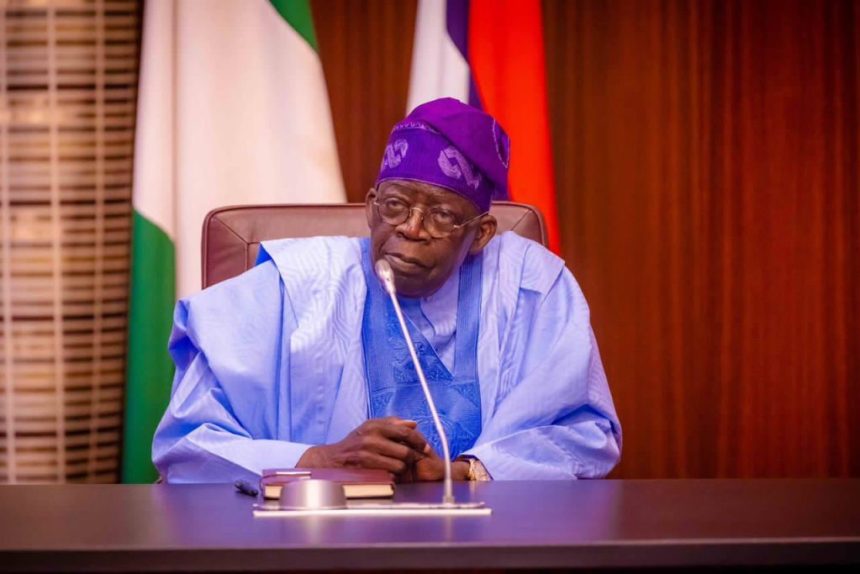
In contrast, President Tinubu, speaking to his cabinet in August, credited his administration’s “bold and difficult reforms” — including fuel subsidy removal and exchange rate unification — for dismantling longstanding distortions and restoring policy credibility.
He said these measures have enhanced economic resilience, boosted investor confidence, and created a more transparent and competitive business environment.
The President declared that Nigeria must now accelerate growth to 7 percent by 2027, calling it “not just an economic target, but a moral imperative,” as higher growth is the “only sustainable path to solving the poverty challenge.”
Analysts, however, point out that achieving such rapid expansion would require not only policy consistency but also deep structural transformation in agriculture, manufacturing, and energy.
The World Bank’s own prescriptions — removing trade barriers, improving fiscal discipline, and expanding social protection — mirror the kind of reforms that could make the government’s target attainable if sustained.
Between Promise and Reality
The gap between the World Bank’s 4.4 percent projection and Tinubu’s 7 percent ambition points to the tension between reform optimism and the practical limits of policy execution. If Tinubu’s target is achieved, Nigeria could move closer to lifting millions out of poverty, attract stronger private investment, and push the economy toward middle-income status.
Yet, with inflation still eroding purchasing power and food insecurity persisting, experts caution that growth on paper must translate into growth that matters for ordinary Nigerians. As World Bank Country Director Mathew Verghis noted, “Macroeconomic stability alone is not enough. The true measure of success will be how these reforms improve the daily lives of Nigerians — especially the poor and vulnerable.”
FURTHER READING
In the coming years, whether Tinubu’s 7% vision or the World Bank’s 4.4% realism prevails will depend on how effectively Nigeria can turn reform headlines into household relief.
Philip Ibitoye is a Special Correspondent with EKO HOT BLOG. Click here to find daily analysis and critical insight on trending issues in Lagos and other parts of Nigeria.
Click here to watch the video of the week below: