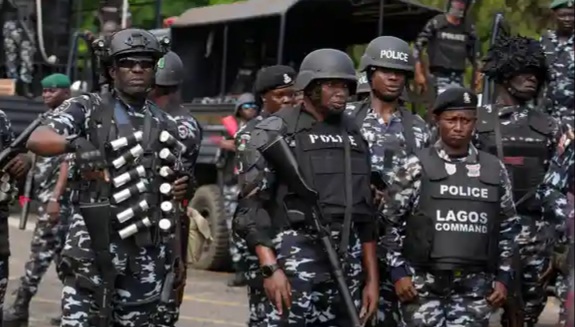
Since the #EndSARS protests of 2020, five years ago, the Nigeria Police Force has faced persistent criticism over its handling of demonstrations.
Observers say the Force now appears more focused on preventing protests than on protecting those who take part in them, a pattern that raises questions about its constitutional and democratic obligations.
EDITOR’S PICKS
A Familiar Pattern
EKO HOT BLOG observes that the latest controversy surrounds the planned #FreeNnamdiKanu protest in Abuja. On Friday, the Federal High Court granted organisers permission to hold the rally but prohibited them from approaching sensitive government sites, including Aso Rock Villa, the National Assembly, and Eagle Square.
In a statement the next day, the police said they would obey the court’s order and allow the protest but warned that anyone who “hijacks” the rally or causes a disturbance would face “decisive action.” The Force followed up with a lengthy reminder to protesters and counter-protesters to “respect the court order” and stay within designated areas, cautioning that offenders could face prosecution for violent conduct or terrorism.
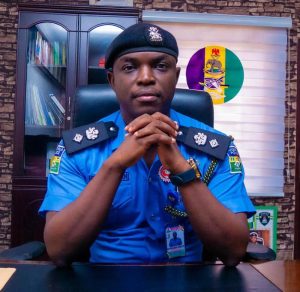
While the police’s emphasis on law and order is consistent with its mandate, critics say such statements often sound more like threats than reassurances. Rather than outlining measures to protect demonstrators from potential hijackers, police communications tend to focus on preventing the protests altogether.
Judicial Pushback in Kaduna
This policing approach was recently challenged in Kaduna, where the State High Court struck out a controversial suit filed by the state’s Commissioner of Police seeking to suspend all political rallies and meetings by opposition parties.
Justice Murtala Zubairu in his ruling last Wednesday described the move as unconstitutional and “an abuse of statutory powers.” He ruled that the attempt to impose a blanket ban on political activities violated Section 40 of the 1999 Constitution, which guarantees freedom of assembly and association.
The Social Democratic Party (SDP), one of the respondents, was awarded ₦15 million in damages for breach of fundamental rights. The court also criticised the police for basing their claims on “vague intelligence reports” and “speculative fears” instead of concrete evidence, a judicial rebuke of the habit of restricting rights on anticipatory grounds.
From Protection to Prevention
The 2020 #EndSARS protests marked a turning point in public trust.
Since then, the police have frequently resorted to preemptive bans or heavy warnings before demonstrations, citing fears of violence or “criminal hijacks.” But rights advocates say these warnings, while presented as security measures, often serve to deter citizens from exercising their lawful freedoms.
The Nigeria Police Act (2020) clearly outlines the Force’s duty to maintain law and order and to safeguard lawful assemblies, not to suppress them.
Yet, official rhetoric has increasingly portrayed protests as security threats rather than legitimate civic expressions.
Constitutional and Legal Context
In Inspector-General of Police v. ANPP (2007), the Court of Appeal ruled that the police cannot prohibit peaceful assemblies and that their role is to provide security for such gatherings. This precedent remains binding.
Nevertheless, recent police actions and statements suggest an unresolved tension between national security concerns and civil liberties. While the police must prevent violence, equating protest itself with disorder undermines democratic participation and accountability.
The Real Duty
Policing a democracy requires balance: ensuring security while protecting free expression. When police officers threaten protesters before a rally rather than assure them of protection, they blur the line between law enforcement and suppression.
FURTHER READING
As Nigeria continues to grapple with insecurity and political tension, rebuilding public trust in the police will require a shift in focus, from stopping protests to safeguarding them. Protecting protesters from hijackers, not protests from happening, remains the true constitutional duty of the Force.
Philip Ibitoye is a Special Correspondent with EKO HOT BLOG. Click here to find daily analysis and critical insight on trending issues in Lagos and other parts of Nigeria.
Click here to watch the video of the week below: