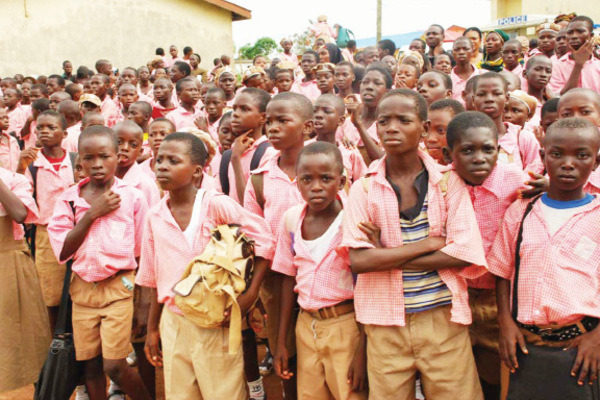
- 24 Million Pupils Missing Between Primary and Secondary Levels – Tunji Alausa
- Out of 30 million pupils recorded from 21 states, only six million advanced to senior secondary school
- Reveals that more than 60,000 tablets have been distributed to schoolchildren in Adamawa, Oyo, and Katsina States
The Federal Government has raised alarm over the rising number of school dropouts nationwide, revealing that about 24 million pupils who began primary education failed to reach the senior secondary level, Eko Hot Blog reports.
Minister of Education, Dr Tunji Alausa, disclosed this in Abuja during a ministerial roundtable on zero-rated data and devices for Nigerian teachers. He cited data from the digitised Nigeria Education Management Information System (NEMIS), which showed that out of 30 million pupils recorded from 21 states, only six million advanced to senior secondary school.
EDITOR’S PICK
- Tinubu Approves Tenure Extension for Surveyor-General to 2026
- ‘If Tinubu Fails, His Successor Will Struggle’ – Shehu Sani
- Princess Surah Animashaun Empowers Epe Pupils with Thousands of Notebooks
According to him, the statistics paint a worrying picture that threatens Nigeria’s educational progress and long-term human capital development.
“The information we’re seeing on that digital platform is frightening,” Alausa said. “From the 21 states that have uploaded their data, about 30 million children are in primary schools. From primary to junior secondary, that figure drops to 10 million—20 million children missing. Then from junior to senior secondary, another four million disappear. It’s alarming. But now that we can see this data, we can begin evidence-based interventions and track outcomes.”
He emphasised the urgent need for targeted policies to keep children in school, particularly those from disadvantaged communities.
The NEMIS platform is a web-based system designed to collect, process, and deliver reliable real-time education data to support decision-making at all government levels. With its full implementation, Nigeria joins countries like Kenya and Sri Lanka, which use similar systems to strengthen education management.
Alausa further explained that the biometrics of every pupil are being uploaded onto the digital platform to enable effective tracking and data-driven policy implementation. Starting in 2026, the annual school census will become fully digital, eliminating manual processes.
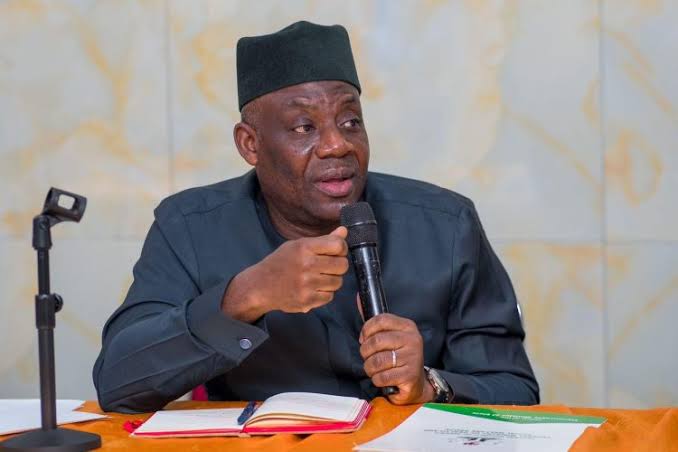
“It’s no longer manual. Paper will be phased out completely,” he said, adding that the Ministry also plans to integrate WAEC and JAMB data into the platform.
The Minister appreciated the United Nations Children’s Fund (UNICEF) for its technical support and President Bola Tinubu for providing financial and political backing for the initiative.
He also revealed that more than 60,000 tablets have been distributed to schoolchildren in Adamawa, Oyo, and Katsina States under the Airtech (Amazon Web Services) and BESDA programmes, with another 30,000 devices expected soon.
“We’ve also launched a smartboard just two weeks ago,” he said. “Our goal is that by 2027, every school in Nigeria will have one. This is how we will deliver high-quality education to every child, regardless of their location, background, or parents’ social status.”
Alausa noted that interactive smartboards would gradually replace traditional chalkboards in public schools, enabling a more engaging, technology-driven learning experience. These devices, he explained, would allow teachers to use multimedia, digital textbooks, and real-time tools, helping students not only to listen but to explore, interact, and participate actively in lessons.
FURTHER READING
- Lagos Leads Push for Business-Friendly Justice System at ADR Forum
- Tinubu’s Support Strengthening Security Architecture
- Tinubu’s Reforms Restored Economic Stability – Sen. Abiru
Click here to watch video of the week