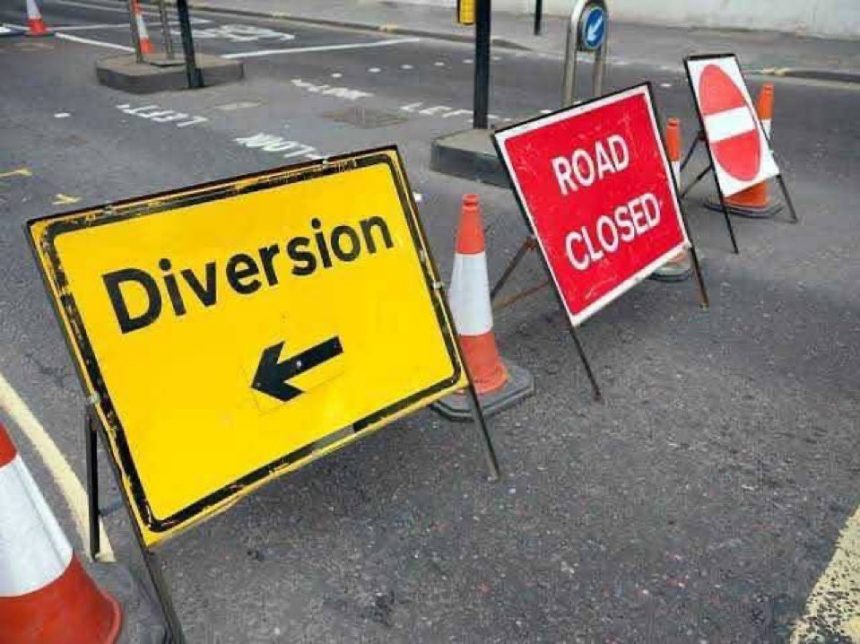
The Lagos State Government announced on Wednesday plans to commence extensive road rehabilitation works along the Lekki–Ajah corridor, one of the busiest stretches of road in the state.
The project, which begins Saturday, November 15, 2025, and is scheduled to last until July 15, 2026, will span eight months and involve phased lane closures to allow for repairs.
EDITOR’S PICKS
According to the statement signed by Mr. Oluwaseun Osiyemi, the Commissioner for Transportation, the works will be executed in two phases: from the Lekki First Toll Gate to the Second Toll Gate, and from the Second Toll Gate to the Ajah Under-Bridge. The commissioner assured that “motorists will have continuous movement” and urged residents to be patient, describing the intervention as part of the government’s broader effort to improve road quality and ease traffic flow.
*LASG Announces Traffic Diversion Plan for Road Rehabilitation Works on Lekki-Ajah Corridor*
The Lagos State Government has announced road rehabilitation works on Lekki-Ajah corridor commencing from *Saturday 15th November, 2025 to Wednesday 15th July, 2026*, a period of 8… pic.twitter.com/45FXOhfsDR
— Oluwaseun Osiyemi (@seunosiyemi_) November 12, 2025
However, the announcement has been met with sharp criticism from residents, particularly because of its timing and the short notice given before commencement. To many, the project symbolizes a deeper problem that has long plagued Lagos infrastructure policy — a tendency to prioritize execution over timing, and announcement over consultation.
The Timing Question: Planning or Impulse?
Few government decisions in recent months have attracted as much public frustration as this one.
The reactions from Lagos residents on social media were immediate and scathing. One X user, Jola, accused the government of chronic short-sightedness, writing: “The Lagos State Government HATES thinking. They HATE it. Short-term, medium-term, long-term. They dislike thinking and planning.”
The Lagos state government HATES thinking. They HATE it. Short-term, medium-term, long-term. They dislike thinking and planning.
— Jola (@Jollz) November 13, 2025
Another user, Cardi C, questioned the logic of choosing November: “December that will see an inflow of people, that’s when you want to do road. Sawdust for brains.”
You people in Alausa don’t think. December that will see an inflow of people that’s when you want to do road. Sawdust for brains.
— C (@Ceefour__) November 13, 2025
For Bisola, the announcement merely three days before commencement highlights the absence of strategic foresight: “‘We are closing parts of a major road for 8 months,’ announced three days before the work starts. Masterclass in planning, congrats to all involved.”
“We are closing parts of a major road for 8 months” announced 3 days before the work starts. Masterclass in planning, congrats to all involved. https://t.co/vgU17iz6xh
— Bisola (@Bisolaaa) November 13, 2025
Indeed, the Lekki–Ajah corridor is not just another Lagos road, it is a vital urban artery linking residential and commercial hubs across the peninsula.
It serves thousands of daily commuters, linking Victoria Island to Lekki, Chevron, Sangotedo, Ajah, and beyond. The decision to close portions of this road during the festive period, when vehicular movement peaks, has naturally raised concerns about congestion, economic losses, and the capacity of traffic management agencies to handle the fallout.
Festive Pressure and Urban Realities
Every Lagosian knows that the months of November to January bring an almost ritual surge in road use.
The “Detty December” culture of concerts, shopping, and family visits turns even minor repairs into potential gridlocks. In this context, the decision to begin an eight-month project in mid-November appears detached from the rhythm of the city it seeks to serve.
One resident, Ugo, captured this frustration aptly: “It’s phenomenally insane that they do these things on critical roads with such short notice and piss-poor plans to alleviate the problems.”
I think it's phenomenally insane that they do these things on critical roads with such short notice and piss poor plans to alleviate the problems. You'd think we're the only country in the world that does road maintenance. https://t.co/O8Qkd3dW7v
— Ugo (@UgoTalksAlot) November 13, 2025
Others, like Bobo and Ajibola Grey, questioned whether any genuine thought process preceded the timing: “I’ve never seen a group of people so obsessed with mediocrity and anyhowness like Nigerian leaders… 300+ days in the year and someone thought November is the perfect time for this?!”
I've never seen a group of people so obsessed with mediocrity & anyhowness like Nigerian leaders
Like you go just read somethings dey wonder if any thought process whatsoever follow
300 + fucking days in the year and someone thought November is the perfect time for this?! https://t.co/kMk56IU08F
— Bọbọ. (@Dxyinbobo) November 13, 2025
Nigerian leaders, what a concept. 😂😂😂😂
The wisdom and thought process behind this is incredibly good.
Detty December ko 😂 https://t.co/Z1UVq9Pevr
— ODINAKA. El Toro. (@TheAjibolaGrey) November 13, 2025
The criticism extends beyond timing to planning and communication. Ideally, successful urban infrastructure projects, especially in megacities like Lagos, require months of advance notice, detailed diversion maps, public engagement, and visible alternatives. Without these, such interventions risk being viewed not as development efforts but as avoidable disruptions.
Lessons in Urban Management
The Lekki–Ajah traffic diversion controversy speaks to a larger governance challenge in Lagos: the struggle to synchronize policy execution with public experience. Infrastructure upgrades are necessary and commendable, yet their benefits are often undermined by poor scheduling, inadequate coordination among agencies, and limited public communication.
A more strategic approach would involve aligning project timelines with traffic data, considering the city’s seasonal travel patterns, and investing in alternate routes before embarking on major repairs. Transparent engagement with residents could also build public trust and reduce the resentment that often greets such announcements.
FURTHER READING
Ultimately, Lagos’ aspiration to be a global city demands planning discipline. Road rehabilitation is essential, but so too is timing — and November, the threshold of the busiest travel season of the year, may be the worst possible moment to start an eight-month disruption on one of the state’s most vital corridors.
Philip Ibitoye is a Special Correspondent with EKO HOT BLOG. Click here to find daily analysis and critical insight on trending issues in Lagos and other parts of Nigeria.
Click here to watch the video of the week below: