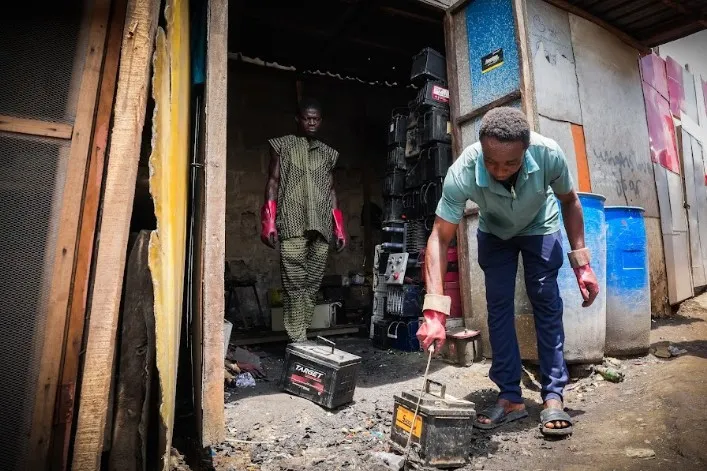
The Ogun State government has shut down seven used lead-acid battery recycling factories in Ogijo, Sagamu Local Government Area, after growing evidence and public alarm over alleged lead contamination affecting residents living near the industrial cluster.
EKO HOT BLOG gathered that the move follows an investigative report that linked elevated lead levels in locals — some living barely 100 to 500 metres from the factories — to operations of major recyclers in the area.
EDITOR’S PICKS
Investigative Report Sparks Official Action
Concerns escalated earlier this week when an investigation revealed that residents who tested positive for lead poisoning live around True Metals Nigeria Limited and Everest Metal Nigeria Ltd, two of the most prominent used lead-acid battery (ULAB) recyclers in Ogijo, whose operations reportedly take place near tightly packed residential communities.
Lead poisoning, especially when airborne or leached into soil and water, poses severe long-term health dangers, including neurological damage, organ failure, developmental problems in children, and reproductive challenges. The clustering of multiple ULAB plants within a densely populated area has raised questions about oversight and environmental compliance over the years.
The report detailed how families, including young children and pregnant women, have been exposed to potentially dangerous levels of lead through air particulates, contaminated soil, and possibly leached groundwater.
According to community accounts referenced in the investigation, dust from smelting activities allegedly settles on rooftops, farmlands, and open water containers, while several residents complained of persistent headaches, fatigue, unexplained illnesses, and developmental challenges in children — symptoms consistent with lead exposure.
What made the findings especially alarming was the pattern: most of the affected residents did not work inside the factories but were ordinary households whose only “risk factor” was proximity.
Environmental experts quoted in the report warned that ULAB operations typically require strict containment, filtration, and waste management systems — measures that may not have been properly implemented or monitored in Ogijo.
The investigation also suggested inconsistencies in previous environmental assessments, hinting that earlier evaluations might not have captured the scale or severity of the contamination. This raised questions about enforcement lapses and whether regulators had underestimated the environmental pressure posed by the concentration of battery recyclers in one community.
Ogun Government Orders Shutdown, Audit, and Export Suspension
Reacting to the revelations, Ola Oresanya, the Commissioner for Environment, led a government inspection team to Ogijo on Friday.
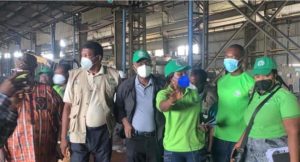
Speaking during the tour, he announced the immediate closure of seven recycling plants and ordered a temporary halt to lead ingot exportation from the state as part of what he described as urgent remedial steps.
Oresanya said the shutdown would allow the government to conduct a comprehensive health and process audit of the affected companies. The review will include testing lead levels in humans, soil, air, and major water sources within and around Ogijo.
He added that experts from the ministries of environment and health, the Ogun State Environmental Protection Agency (OGEPA), and the National Environmental Standards and Regulations Enforcement Agency (NESREA) are already collaborating on the assessment.
FURTHER READING
Crucially, the commissioner pledged that results of the tests will be made public and that the government will re-examine methodologies and conclusions of earlier studies cited in media reports, some of which residents claim had previously been downplayed.
Philip Ibitoye is a Special Correspondent with EKO HOT BLOG. Click here to find daily analysis and critical insight on trending issues in Lagos and other parts of Nigeria.
Click here to watch the video of the week below: