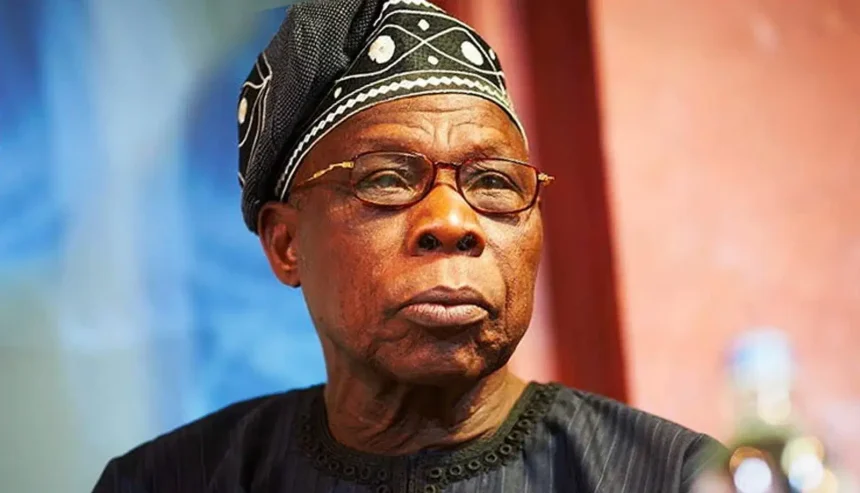
Former President Olusegun Obasanjo’s comments on Sunday added fresh pressure to the long-running suspicion that Nigeria’s insecurity has not simply dragged on — it has been allowed to.
EDITOR’S PICKS
Speaking during The Toyin Falola Interviews, Obasanjo noted that the Boko Haram insurgency “has lasted almost 15 years,” compared with a civil war that lasted only 30 months. “That should worry anybody,” he said, warning that leadership must understand the combination of “training, equipment, intelligence, and technology” needed to end insurgency.
He also questioned why those elements have failed to align, arguing that equipment procurement, intelligence-sharing and specialised training have been poorly handled. “It is not done. The whole thing is an industry,” Obasanjo declared, suggesting that Nigeria’s insecurity continues partly because those meant to solve it profit from its continuation.
Only days earlier, specifically last Monday, former Chief of Defence Staff Lucky Irabor made the startling allegation that “some politicians” are funding or encouraging insecurity for political advantage. Coming from a former military chief who directly oversaw counter-terror operations, it is a serious charge.
Individually, these statements may sound familiar. Nigerians have heard claims about terrorism sponsors for a decade. But coming from a former president and a former CDS, they raise a more uncomfortable question: if highly placed Nigerians are involved in fueling terrorism, why are they never publicly named? Why does government consistently promise “lists” of financiers, yet produce few high-profile prosecutions?
When allegations repeatedly come from individuals who have run the state and commanded the armed forces, the question is no longer whether people are involved but why the system never seems willing or capable of exposing them. Is the government, at some level, complicit in letting the situation persist?
Several factors help explain this pattern.
One is the political economy of violence. Conflict generates money through defence procurement, ransom networks, political bargaining and the control of territory. Insecurity can also weaken opponents, shape elections and justify swollen security spending. When powerful individuals benefit, dismantling their networks becomes politically dangerous, especially if they sit inside or close to the ruling establishment.
Second, Nigeria’s security architecture is tied to elite patronage. Powerful individuals often control networks that reach into the police and security agencies. Even when intelligence points to sponsors, moving from suspicion to prosecution requires investigators who are institutionally independent, a condition Nigeria rarely guarantees. Irabor himself admitted that some individuals had been questioned and even prosecuted, but said the details were “not for public consumption,” leaving the public with allegations but little evidence.
Third, secrecy and classification mean important cases disappear from public scrutiny. Officials frequently argue that disclosures could compromise operations. Sometimes that is true. But selective secrecy easily becomes a shield that prevents accountability and encourages suspicion that politically connected players are being protected.
Fourth, the practical difficulty of tracing terrorism financing should not be underestimated. Proving intent, following money across borders and obtaining cooperation from international banks and intelligence partners takes time. However, that technical difficulty does not explain why, fifteen years into the insurgency, transparency remains limited and politically exposed suspects are almost never put on public trial.
Finally, governments fear political destabilisation. Naming powerful sponsors could fracture ruling coalitions, trigger reprisals or expose past complicity. Yet democracy depends on confronting exactly such uncomfortable questions.
What makes Obasanjo and Irabor’s interventions notable is not merely that they are alarming, but that they come from insiders with knowledge of how Nigeria’s security decisions are made. When a former head of state and a former defence chief both suggest that Nigeria’s insecurity has political backers, their words demand more than polite acknowledgement.
If government wants the public to believe it is serious, it must move beyond vague assurances and adopt a transparent approach to naming, prosecuting and asset-tracing alleged financiers. Where investigations are ongoing, summaries can be released; where evidence exists, indictments should follow regardless of rank.
FURTHER READING
Until that happens, many Nigerians will continue to assume the worst: that insecurity has become an industry not simply because criminals profit, but because elements within the political class tolerate or even enable it. And unless those individuals are confronted openly, the allegations made by Obasanjo and Irabor will hang in the air, raising a question the government has avoided for too long: if insecurity has become an industry, who benefits and why are they still allowed to?
Philip Ibitoye is a Special Correspondent with EKO HOT BLOG. Click here to find daily analysis and critical insight on trending issues in Lagos and other parts of Nigeria.
Click here to watch the video of the week below: