- Court Upholds NCPC, NAHCON Acts, Dismisses Constitutional Challenge
- Judge says no proof of state religion or discrimination
- Suit dismissed for lack of credible evidence
The Federal High Court in Lagos has dismissed a suit seeking to declare the Nigerian Christian Pilgrims Commission and the National Hajj Commission Acts unconstitutional, affirming the legality of government established religious commissions in Nigeria.
Justice Akintayo Aluko delivered the judgment on Friday, holding that the Applicant, Human Rights and Empowerment Project Ltd Gte, failed to present credible evidence showing that the statutes violated Sections 10 and 42 of the 1999 Constitution as amended.
EDITOR’S PICKS
- Two Dead, 10 Injured in Road Crash Along Ikorodu Road
- ‘₦739 Petrol Price Begins Tuesday’ – Dangote Assures Nigerians
- NAF Destroys Terrorist Logistics Hub in Southern Tumbuns Air Strike
EKO HOT BLOG reports that the Applicant had approached the court on October 17, 2024, asking for declarations that the NCPC and NAHCON Acts were inconsistent with the Constitution. It also sought an order restraining the Federal Government from funding or subsidising religious pilgrimages for Christians and Muslims, arguing that such actions amounted to discrimination against adherents of other faiths and the adoption of a state religion.
In support of its case, the Applicant relied mainly on newspaper publications and claimed that public funds allocated to pilgrimages constituted misuse of taxpayers’ money. It also alleged a breach of the constitutional right to freedom from discrimination.
During proceedings held on October 9, 2025, counsel for the Applicant urged the court to hold that restricting pilgrimage funding to Christians and Muslims violated constitutional provisions.
However, the National Hajj Commission, listed as the fourth respondent, countered that all Hajj payments were made directly by intending pilgrims through state Muslim Pilgrims Welfare Boards and not from public funds. Its counsel further argued that the existence of the commissions did not amount to adopting a state religion.
In resolving the issues, Justice Aluko examined Sections 10 and 42 of the Constitution and held that there was no evidence that either Act led to the adoption of a state religion or discrimination.
The judge noted that the Applicant’s own evidence showed that Lagos State saved N4.5 billion over three years after stopping pilgrimage sponsorship and redirected the funds to infrastructure projects.
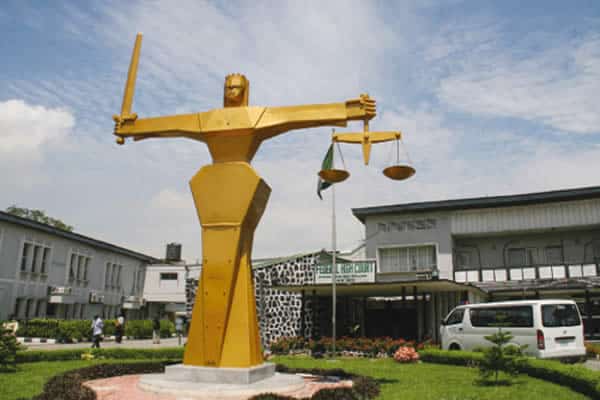
Justice Aluko ruled that reliance on newspaper reports amounted to hearsay and could not support declaratory reliefs, which require strong and convincing proof.
The court consequently dismissed the suit for lacking merit.
FURTHER READING
- Lagos Begins Installation of 22,000 Solar Streetlights Across Major Roads
- ‘Yakubu Gowon Is Alive and in Good Health’ – Aide Debunks Death Rumours
- US, Nigeria Close to Security Framework to Tackle Terrorism