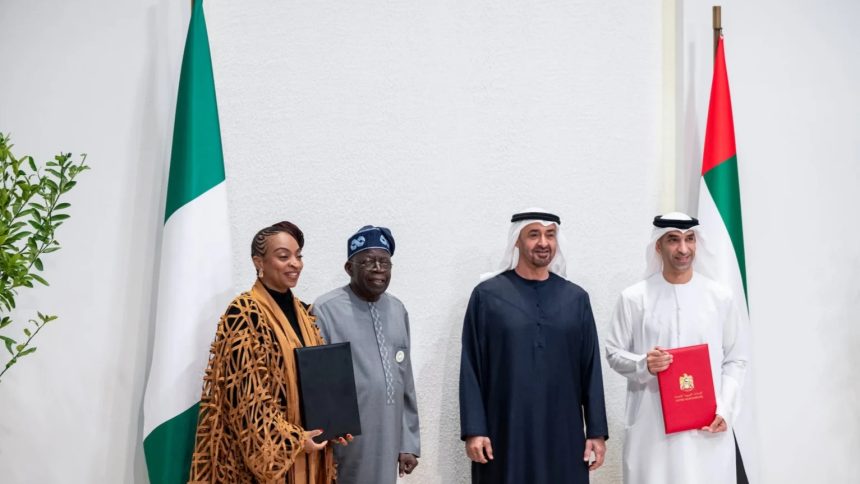
Nigeria’s newly signed Comprehensive Economic Partnership Agreement (CEPA) with the United Arab Emirates marks one of the most ambitious trade openings the country has secured in recent years, with implications that go beyond tariff cuts to touch industrial policy, investment flows and services trade.
Signed on the sidelines of the Abu Dhabi Sustainability Week on Tuesday, the deal grants Nigerian goods unprecedented access to one of the world’s busiest commercial hubs, while committing Nigeria to phased tariff reductions on selected imports critical to domestic production.
EDITOR’S PICKS
EKO HOT BLOG breaks down what the deal means for Nigeria.
Expanded Market Access and Export Upside
At the core of the agreement is the UAE’s commitment to eliminate tariffs on more than 7,000 Nigerian products, giving exporters duty-free entry into the Emirati market.
This covers a broad mix of agricultural and industrial goods, including fish and seafood, oil seeds, cereals, cotton, pharmaceuticals and chemicals. Over the next three to five years, Nigerian machinery, vehicles, electrical equipment, apparel and furniture are also expected to enjoy zero-tariff access.
For Nigeria, the immediate significance lies in diversification. By opening a clear pathway into a global trading hub that serves as a re-export centre to the Middle East, Asia and parts of Europe, the agreement reduces Nigeria’s dependence on crude oil earnings and traditional markets. If effectively utilised, it could help Nigerian manufacturers scale production, improve standards and integrate into global value chains.
However, the benefits will not be automatic. Duty-free access only translates into export growth if Nigerian firms can meet quality, packaging and regulatory standards, and if logistics bottlenecks at ports and borders are addressed.
Investment, Services and Mobility Gains
Beyond goods, the CEPA reshapes Nigeria’s services and investment landscape. Nigeria has made commitments across 99 services in 10 sectors, including business services, transport, finance, construction, health, tourism and communications. In return, Nigerian companies can now establish entities, branches and subsidiaries in the UAE under clearer and more predictable rules.
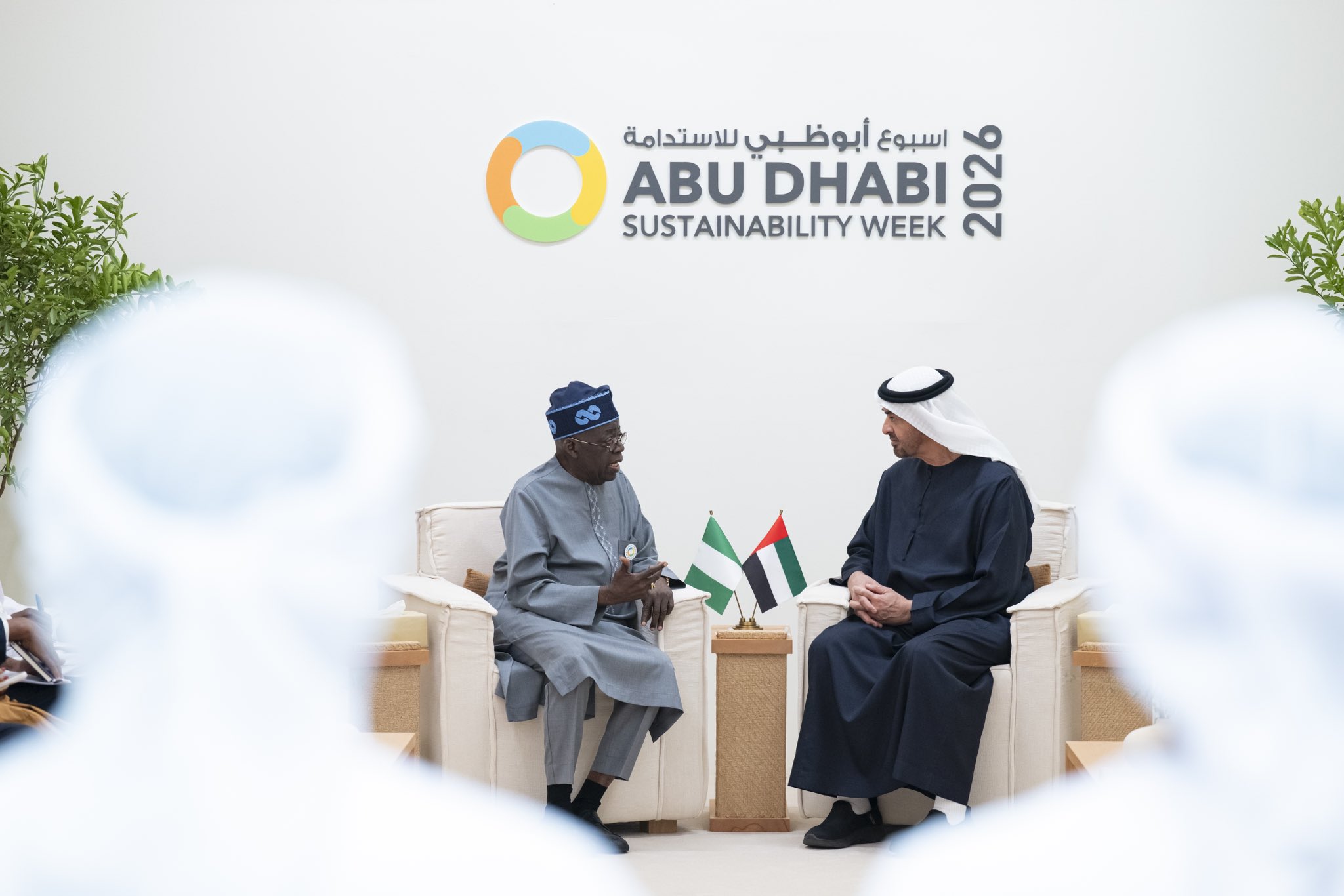
The agreement also introduces mobility provisions that could ease business expansion. Nigerian business visitors can spend up to 90 days within a year in the UAE to explore opportunities, while managers, executives and specialists can relocate under renewable three-year intra-corporate transfer arrangements. These measures are designed to support Nigerian firms seeking regional or global expansion through the UAE.
For foreign direct investment, the deal is positioned as a confidence-building instrument. By clarifying market access and protections, it lowers some of the long-standing uncertainties that have deterred UAE investors from Nigeria’s productive sectors, particularly manufacturing, logistics and infrastructure.
Risks, Trade-offs and the Test of Implementation
Nigeria’s side of the bargain involves eliminating tariffs on around 6,000 products, with about 60 per cent removed immediately and the rest phased out over five years. These imports are largely industrial inputs, capital goods and machinery, which could strengthen domestic productive capacity. Crucially, the government says Nigeria’s Import Prohibition List remains intact, signalling an attempt to balance openness with protection of sensitive sectors.
Still, there are risks. Reduced tariffs can pressure local industries if complementary policies such as access to finance, energy supply and infrastructure do not keep pace. There is also the fiscal question, as tariff reductions may initially affect customs revenue, even if long-term gains are expected from growth and investment.
FURTHER READING
Ultimately, the agreement’s impact will be judged by execution. The promise of coordination among ministries and agencies, including Customs, export promotion and standards bodies, will be tested by how quickly businesses are informed, supported and able to take advantage of the new rules. If implementation matches ambition, the Nigeria–UAE tariff agreement could become a practical tool for industrialisation rather than just another trade announcement.
Philip Ibitoye is a Special Correspondent with EKO HOT BLOG. Click here to find daily analysis and critical insight on trending issues in Lagos and other parts of Nigeria.
Click here to watch the video of the week below: