Nigeria’s decision to spend $9 million on a Washington lobbying firm has sparked political controversy at home and renewed scrutiny abroad, coming amid heightened United States interest in allegations of Christian persecution in the country.
The contract, signed on December 17, 2025, places Nigeria directly in a lobbying contest in Washington, where pro-Biafra lobbyists are also pushing competing narratives.
EKO HOT BLOG breaks down the dynamics of the deal.
EDITOR’S PICKS
The deal: terms, scope and payment structure
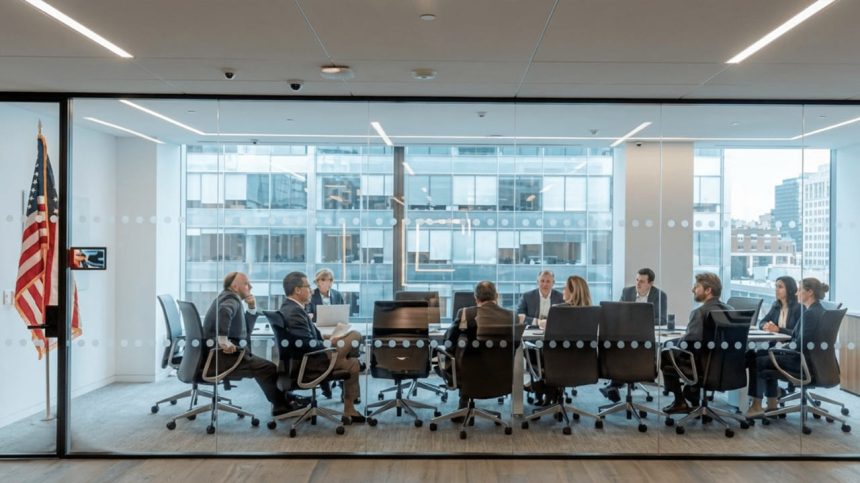
A document filed under the US Foreign Agents Registration Act shows that the federal government, acting through Aster Legal, a Kaduna-based law firm, hired DCI Group, a US public affairs and lobbying firm, to engage American officials on Nigeria’s security efforts.
The agreement, signed on December 17, 2025, was executed by Oyetunji Olalekan Teslim, managing partner of Aster Legal, and Justin Peterson, managing member of DCI Group, on behalf of the national security adviser, Nuhu Ribadu.
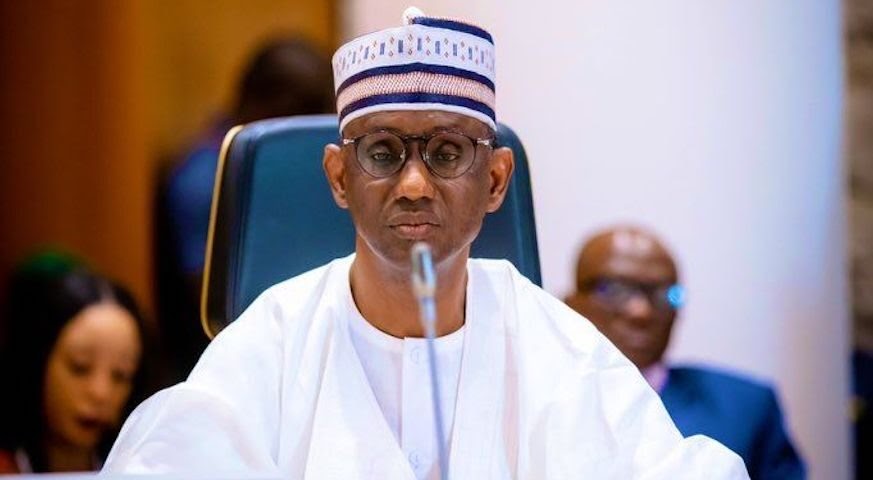
Under the contract, DCI Group is to “assist the Nigerian government through Aster Legal in communicating its actions to protect Nigerian Christian communities and maintaining U.S support in countering West African jihadist groups and other destabilizing elements.”
The initial term runs for six months, ending June 30, 2026, with automatic renewal for another six months unless terminated by either party with 60 days’ written notice. The cost is steep: $750,000 per month, amounting to $4.5 million for each six-month period. Nigeria paid the first $4.5 million upfront on December 12 as a retainer.
The engagement came after the United States, under President Donald Trump, redesignated Nigeria in October as a “country of particular concern” (CPC) over claims of systematic violations of religious freedom, allegations the Nigerian government has consistently denied.
Countering Biafra’s lobbying push in Washington
Beyond responding to US government pressure, the contract also sits within a broader lobbying battle in Washington involving pro-Biafra groups.
In January, barely a month after Nigeria engaged DCI Group, the Biafra Republic Government in Exile (BRGIE) announced its own lobbying deal with Washington & Madison, a DC-based firm led by Elias Gerasoulis. Gerasoulis is a former partner and vice president at Moran Global Strategies, where he previously advanced pro-Biafra interests within Trump-aligned political circles.
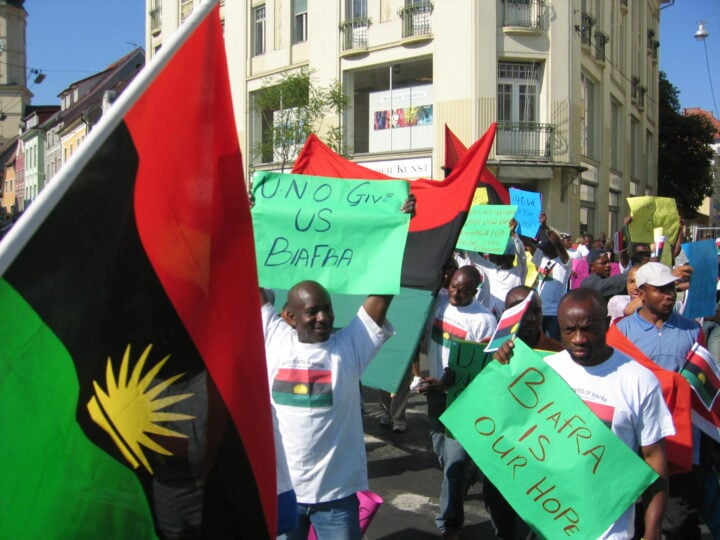
According to an Africa Confidential report, BRGIE is paying Washington & Madison $66,000 monthly to push for US sanctions against Nigerian officials at federal, state and local levels; encourage US engagement with a putative Biafran administration; and canvass support for military strikes and favourable future oil arrangements.
The contract is also expected to accuse south-east governors of being “complicit in Christian genocide” and of allowing “malign foreign influence” into the oil-rich Gulf of Guinea. Against this backdrop, Nigeria’s engagement of DCI Group appears aimed at blunting separatist influence in Washington and reinforcing Abuja’s counter-narrative that insecurity is driven by terrorism rather than religious targeting.
Political backlash and questions at home
The opposition Peoples Democratic Party (PDP) has emerged as one of the critics of the lobbying deal. In a statement, the party’s spokesperson, Ini Ememobong, described the contract as “defective, shameful and deceptive”.
Ememobong said it was “disturbing” that the government would hire a foreign firm to manage Nigeria’s international image despite having a fully staffed ministry of information. He argued that the move suggested a lack of confidence in local professionals and demanded clarification on whether the contract was captured in the 2025 budget and why it was executed through a private law firm rather than the ministry of justice.
“No lobbying or strategic communication firm can create narratives that replace people’s lived experiences,” he said, adding that if the government truly wanted to change Nigeria’s image abroad, it should focus on protecting lives rather than what he called “deceptive communication”.
“The undeniable truth is that Nigerians have not felt this insecure, even during the civil war,” Ememobong said, urging President Bola Tinubu to prioritise security outcomes over “ephemeral optics”.
What DCI Group brings to the table
DCI Group, founded in 1996 and headquartered in Washington, is a well-known public affairs, strategic communications and lobbying firm with deep ties to US political institutions. The firm specialises in government relations, crisis management, coalition building, digital advocacy and policy-focused messaging for corporate, non-profit and government clients.
Its work often centres on shaping narratives around contentious policy issues and sustaining support among lawmakers, regulators and opinion leaders. In Nigeria’s case, DCI Group’s mandate is narrowly framed around religious freedom concerns and counter-terrorism cooperation, a sensitive intersection of US domestic politics, foreign policy and human rights advocacy.
FURTHER READING
Whether the firm’s influence will be enough to soften Washington’s posture on Nigeria, especially amid competing lobbying efforts and persistent insecurity at home, remains an open question. What is clear is that Abuja has chosen to fight the battle for perception in Washington and at a high financial and political cost.
Philip Ibitoye is a Special Correspondent with EKO HOT BLOG. Click here to find daily analysis and critical insight on trending issues in Lagos and other parts of Nigeria.
Click here to watch the video of the week below: