
- The minister described UNILAG as one of the best-managed federal universities in the country
- He revealed that TETFund had committed hundreds of billions of naira to rehabilitating medical schools
- The minister concluded by charging the developer to complete the hostel within 12 months
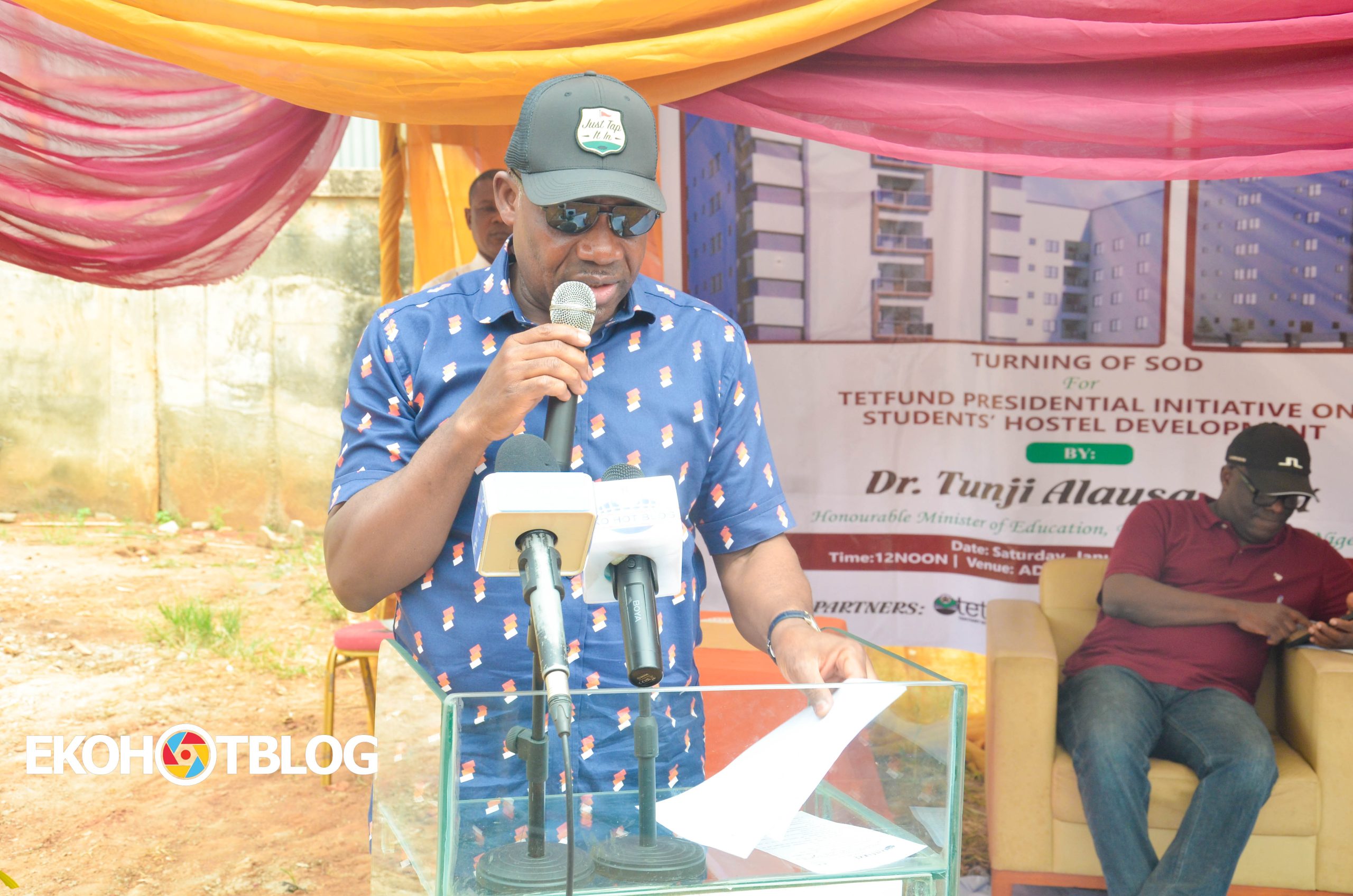
The Minister of Education, Tunji Alausa, has officially performed the groundbreaking ceremony for the construction of a new student hostel at the University of Lagos (UNILAG) under the Tertiary Education Trust Fund (TETFund) Presidential Initiative on Students’ Hostel Development.
Speaking at the event, Eko Hot Blog reports that the minister described UNILAG as one of the best-managed federal universities in the country, praising the Vice-Chancellor and the university’s leadership for what he called data-driven governance and effective collaboration.
EDITOR’S PICK
- Dollar to Naira Exchange Rate Tuesday, 13 January 2026
- Lagos Assembly Approves ₦4.44 Trillion Budget for 2026
- NANS Mobilises Nationwide Protest Over Tax Reform Law
Alausa said the institution’s readiness and administrative efficiency made it a suitable beneficiary of the restructured hostel initiative.
The minister explained that the hostel project evolved from the earlier Public-Private Partnership (PPP) model introduced by TETFund in 2024, which suffered poor uptake by universities.
According to him, although billions of naira were made available, many institutions failed to access the funds due to reluctance to adopt partnership arrangements outside traditional procurement processes.
To address the growing accommodation deficit across federal universities, the Federal Government redesigned the initiative into a Presidential Student Hostel Programme. Under the new framework, TETFund provides seed funding while private developers inject additional capital, with universities contributing land and earning equity in the project.
At UNILAG, Alausa said the project would deliver about 1,200 bed spaces, significantly easing the accommodation pressure on the campus. He disclosed that while the project was structured around a ₦4 billion funding envelope, the private developer committed an additional ₦2.5 billion to ensure high-quality facilities.

The minister commended the project developer, describing his involvement as a demonstration of patriotism and diaspora commitment to national development. He urged Nigerian students to embrace global opportunities but return home to invest their skills and resources, rather than denigrating the country.
Addressing students directly, Alausa highlighted what he described as unprecedented investments in education under President Bola Ahmed Tinubu. He noted that Nigeria had recorded its highest education budget allocations in the past two years, with actual funds released for infrastructure, medical schools, laboratories, and student facilities.
He revealed that TETFund had committed hundreds of billions of naira to rehabilitate medical schools, build international-standard simulation laboratories, expand engineering workshops, and fund innovation and entrepreneurship programmes across universities.
He also announced large-scale funding for student venture capital grants and expanded access to education financing, stressing that no Nigerian student should be denied schooling due to financial hardship.
On student accommodation, Alausa disclosed that UNILAG currently has about 35,000 students but fewer than 11,000 bed spaces, reflecting a nationwide challenge.

Alausa argued that the government alone could no longer shoulder the responsibility of hostel construction and urged vice-chancellors to embrace transparent and efficient public-private partnerships.
He warned that bureaucratic bottlenecks within some universities were slowing down projects aimed at alleviating student hardship, insisting that student welfare remained the Federal Government’s top priority.
He praised UNILAG for avoiding such delays and pledged full government support to ensure timely delivery.
Alausa concluded by charging the developer to complete the hostel within 12 months, assuring that the ministry and TETFund would provide a conducive environment for the project’s successful execution.
FURTHER READING