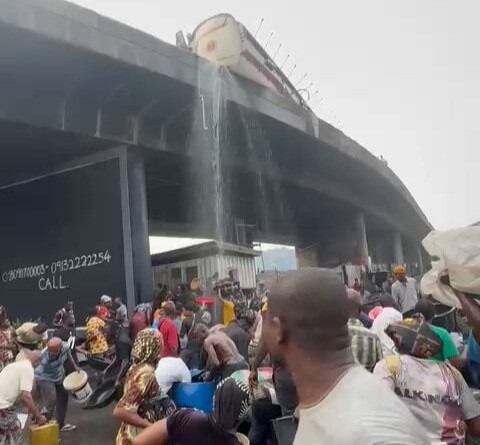
When a diesel-laden tanker overturned on the Tincan Liverpool Bridge in Apapa, Lagos, in the early hours of Monday, the most disturbing images did not come from twisted metal or traffic gridlock. They came from videos of residents and passersby crouching beneath the bridge, jerrycans and plastic containers in hand, scooping fuel from the fallen tanker before emergency services could fully secure the scene.
Predictably, poverty was quickly invoked as the primary explanation.
EDITOR’S PICKS
In a country grappling with inflation, unemployment, and the rising cost of energy, that argument has surface appeal. But poverty alone does not sufficiently explain a behaviour so reckless, so brazen, and so indifferent to the lessons of recent history. What unfolded in Apapa speaks more convincingly to two deeper problems: greed and a troubling disregard for human life, both one’s own and that of others.
Poverty can drive desperation, but it does not compel people to ignore clear and present danger. Diesel is inflammable; petrol even more so. The slightest spark from a running vehicle, smoke from a cigarette, or fire from an ill-intentioned person could have triggered a deadly inferno on a bridge used daily by thousands of motorists.
Happening now at Tincan Liverpool Bridge, Apapa: A tanker overturned, with people scooping contents from underneath the bridge.#CTVTweets pic.twitter.com/EG0TnJmbmy
— Channels Television (@channelstv) January 19, 2026
That residents still rushed in to scoop fuel suggests not merely need, but opportunism: the calculation that quick personal gain outweighs the risk of death or mass casualty. This is greed stripped of subtlety — the urge to exploit a dangerous situation for private benefit, regardless of consequences.
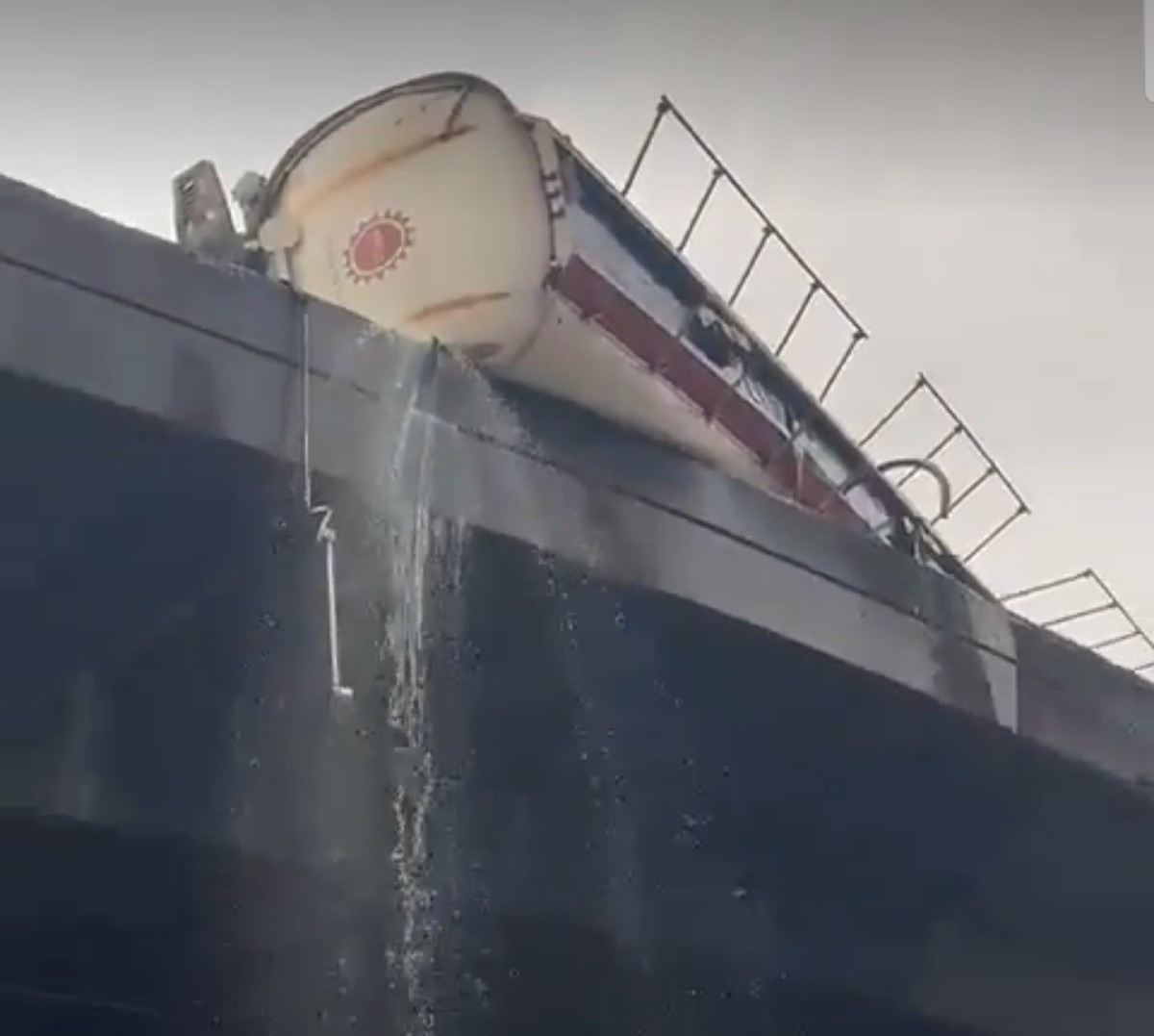
Closely tied to this is a profound disregard for human life. Scooping fuel at such a site does not endanger only the individual involved; it imperils emergency responders, motorists trapped in traffic, and nearby residents. It reflects a mindset in which safety warnings, public order, and collective responsibility carry little weight. That Lagos State Fire Service personnel eventually neutralised the contents without loss of life was not the result of caution by those scooping fuel, but of fortune.
What makes the Apapa incident particularly unsettling is that it occurred in spite of Nigeria’s recent and painful history with similar tragedies.
In October 2024, more than 100 people were killed along the Kano–Hadejia expressway in Jigawa State after a petrol-laden tanker exploded while residents attempted to scoop fuel. In August 2025, the Federal Road Safety Corps (FRSC), Benue Sector Command, reported that 411 Nigerians lost their lives while scooping fuel from fallen tankers in 2024. Barely two months later, in October 2025, another tanker explosion in the Essa community along the Agaie–Bida road in Niger State claimed at least 30 lives under similar circumstances. In both cases, victims were not unaware of the danger; they were drawn by the prospect of free fuel.
These were national tragedies, widely reported and mourned. Yet they failed to deter a repeat of the same behaviour in Lagos, Nigeria’s commercial nerve centre, where access to information is hardly limited. This persistence points to a deeper moral failure. When repeated loss of life does not prompt restraint, reflection, or change, it suggests a troubling erosion of values — a moral bankruptcy in which immediate gain eclipses human worth and communal memory.
It is important to be clear: structural poverty remains a serious issue and must be addressed. But to attribute incidents like the Apapa fuel scooping solely to hardship is to absolve individuals of responsibility and to overlook the role of personal choice. Many Nigerians are poor; most do not risk death on a busy bridge to siphon fuel from a fallen tanker. The distinction matters.
The Apapa incident ended without fatalities, but it should not be mistaken for a harmless episode. It was a near-disaster, one that could easily have mirrored the deadly explosions of Jigawa or Niger State, especially had the tanker been carrying petrol rather than diesel. That it did not explode is no validation of the behaviour witnessed, only a reminder of how thin the line was between spectacle and catastrophe.
FURTHER READING
Until greed and disregard for life are confronted alongside economic hardship, such scenes will continue to recur and one day, luck may not intervene.
Philip Ibitoye is a Special Correspondent with EKO HOT BLOG. Click here to find daily analysis and critical insight on trending issues in Lagos and other parts of Nigeria.
Click here to watch the video of the week below: