- Jonny Baxter also described the partnership as a practical solution to Nigeria’s limited tertiary education capacity
- Ogunsola, in her remarks, said the partnership reflects UNILAG’s commitment to equitable global collaborations
- According to Alausa, the transnational education initiative will unlock new research opportunities
The University of Lagos has taken a major step in expanding its global academic footprint following the signing of a Memorandum of Understanding (MoU) with the University of Birmingham, United Kingdom.
Eko Hot Blog reports that the agreement, signed on Thursday, will pave the way for the establishment of a Transnational Education (TNE) Unit at UNILAG, aimed at delivering internationally recognised academic programmes within Nigeria.
EDITOR’S PICK
- ADC Requests INEC to Postpone FCT Area Council Elections
- Tope Alabi Welcomes Grandchild
- CBN to Introduce New Policy to Regulate Debit Card Issuance, ATM Operations
Under the MoU, both institutions, in collaboration with Nigeria’s Ministry of Education, will develop comprehensive proposals for the TNE Unit, with plans to commence programme delivery by 2027.
The proposed unit is expected to offer courses in strategic and future-driven areas such as Applied Intelligence, Digital Communications and Media, Health Sciences, Engineering, Artificial Intelligence, Renewable Energy and Data Science.
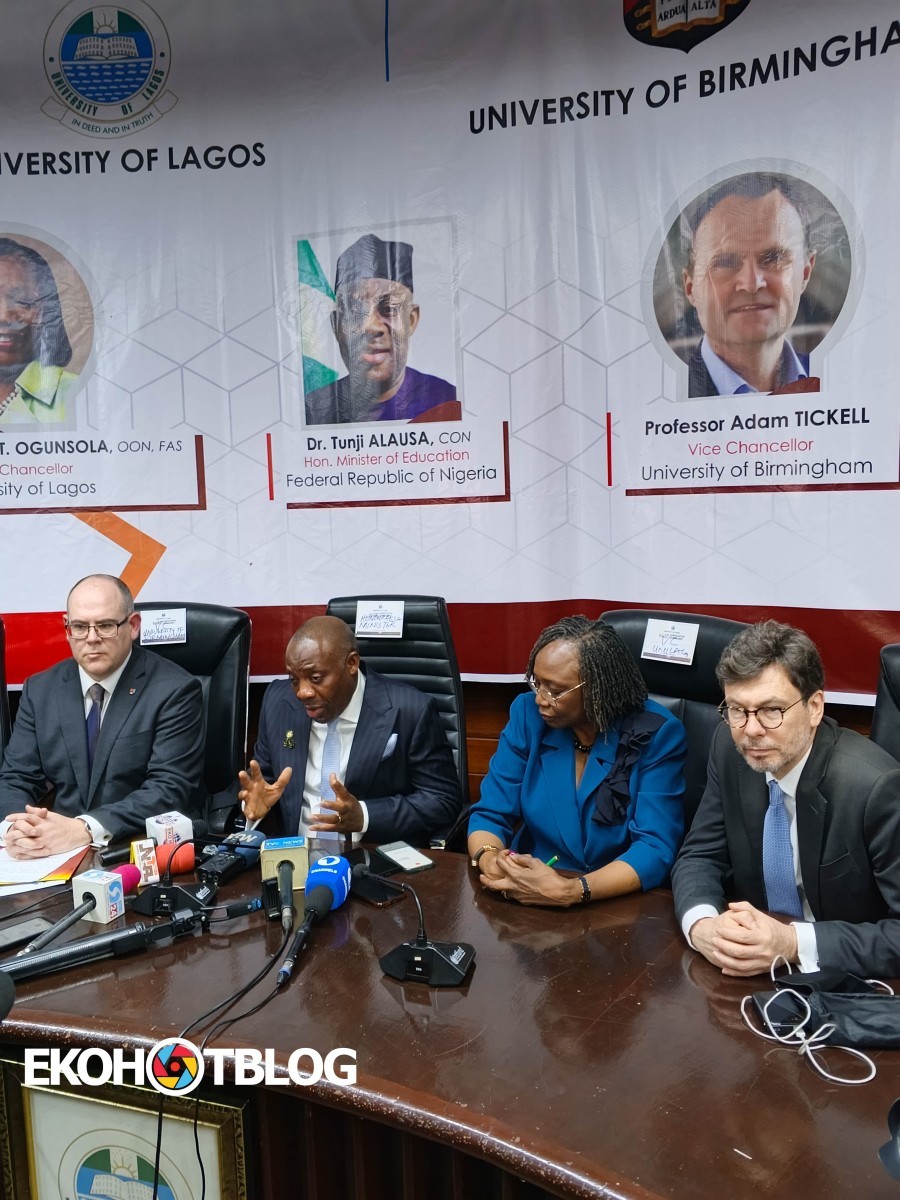
The MoU was signed at the Senate Chamber of the University of Lagos by the Vice-Chancellor, Professor Folasade Ogunsola, and the Provost of the University of Birmingham, Professor Nick Vaughan-Williams.
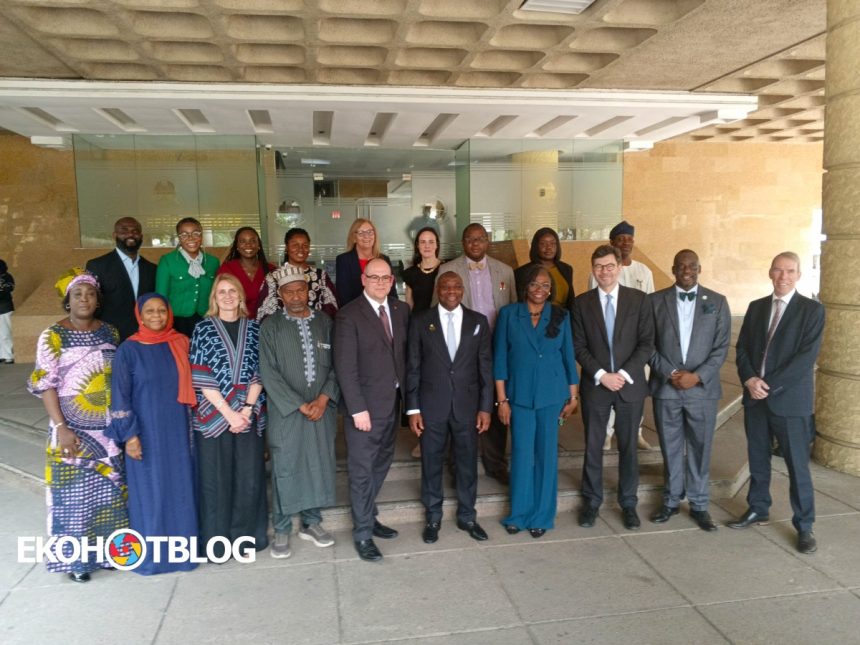
The event was witnessed by the Minister of Education, Dr Tunji Alausa; the UK Deputy High Commissioner to Nigeria, Jonny Baxter; the Executive Secretary of the National Universities Commission (NUC), Professor Abdullahi Ribadu; TETFund’s Director of Academic Staff Training and Development, Dr Hadiza Ismail, alongside other key stakeholders in the education sector.
Speaking at the event, the Minister of Education described the partnership as a strategic move that aligns with the Federal Government’s vision of producing globally competitive graduates who can drive national development.
According to Alausa, the transnational education initiative will unlock new research opportunities in critical areas such as artificial intelligence, healthcare, renewable energy and technology, while expanding access to globally recognised academic programmes for Nigerian students.
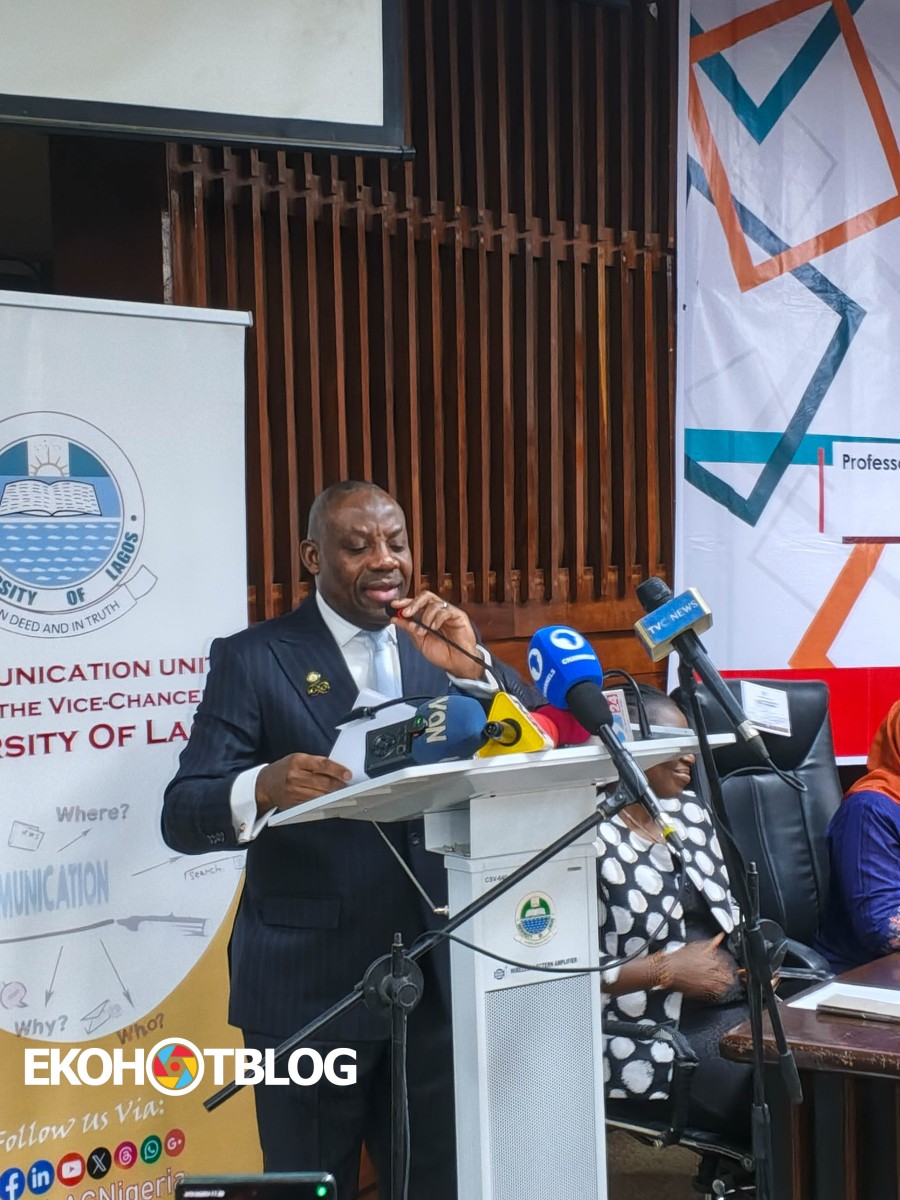
He noted that the collaboration would allow students to gain international exposure without leaving the country, improve employability, enhance curriculum quality, and strengthen skills acquisition across disciplines.
“This partnership allows our students to receive a world-class education here in Nigeria. It also supports capacity development for Nigerian faculty and promotes collaborative research that can be scaled to the international level,” the minister said, adding that the first set of students is expected to be admitted by 2027.
Professor Ogunsola, in her remarks, said the partnership reflects UNILAG’s commitment to equitable global collaborations and its response to the growing demand for internationally competitive education.
She explained that while UNILAG has worked with the University of Birmingham for over a decade, the new agreement significantly broadens the scope of collaboration to cover multiple academic programmes that directly support Nigeria’s development priorities.
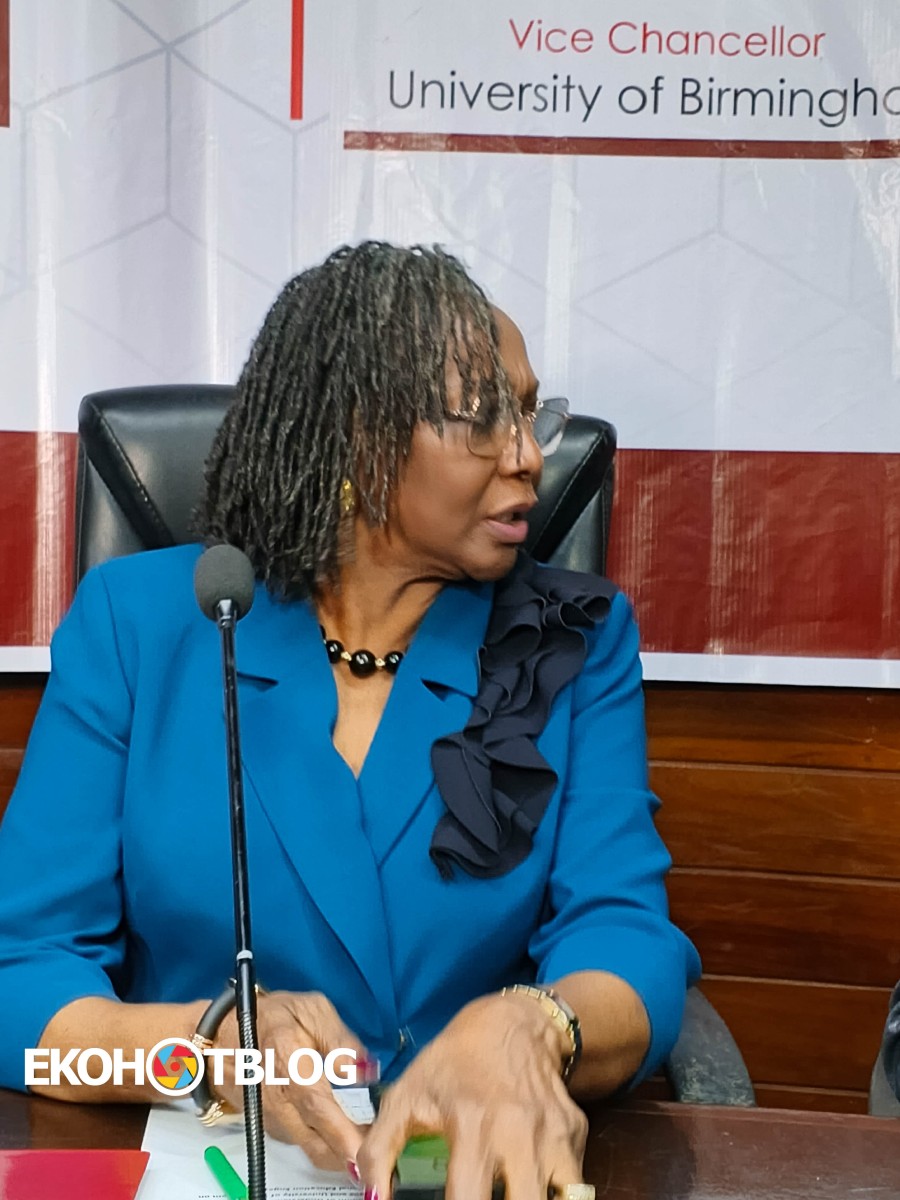
“This partnership strengthens our curriculum, enhances our global visibility, and deepens our research capacity in areas such as AI, health sciences and engineering. It offers students an accessible pathway to world-class education while remaining deeply connected to local realities,” she stated.
The Provost of the University of Birmingham, Professor Vaughan-Williams, said the UK institution deliberately chose UNILAG due to shared values, shared ambition, and a mutual commitment to community development and global excellence.
He noted that both universities have successfully collaborated for over 10 years on a global surgery initiative and are now expanding the relationship into the transnational education space to prepare future-ready graduates.
“Our goal is to equip students with the skills they need to lead, innovate and create jobs that will support Nigeria’s economy and society,” he said.
UK Deputy High Commissioner Jonny Baxter also described the partnership as a practical solution to Nigeria’s limited tertiary education capacity, noting that it would bring high-quality British education directly to Nigerian students.
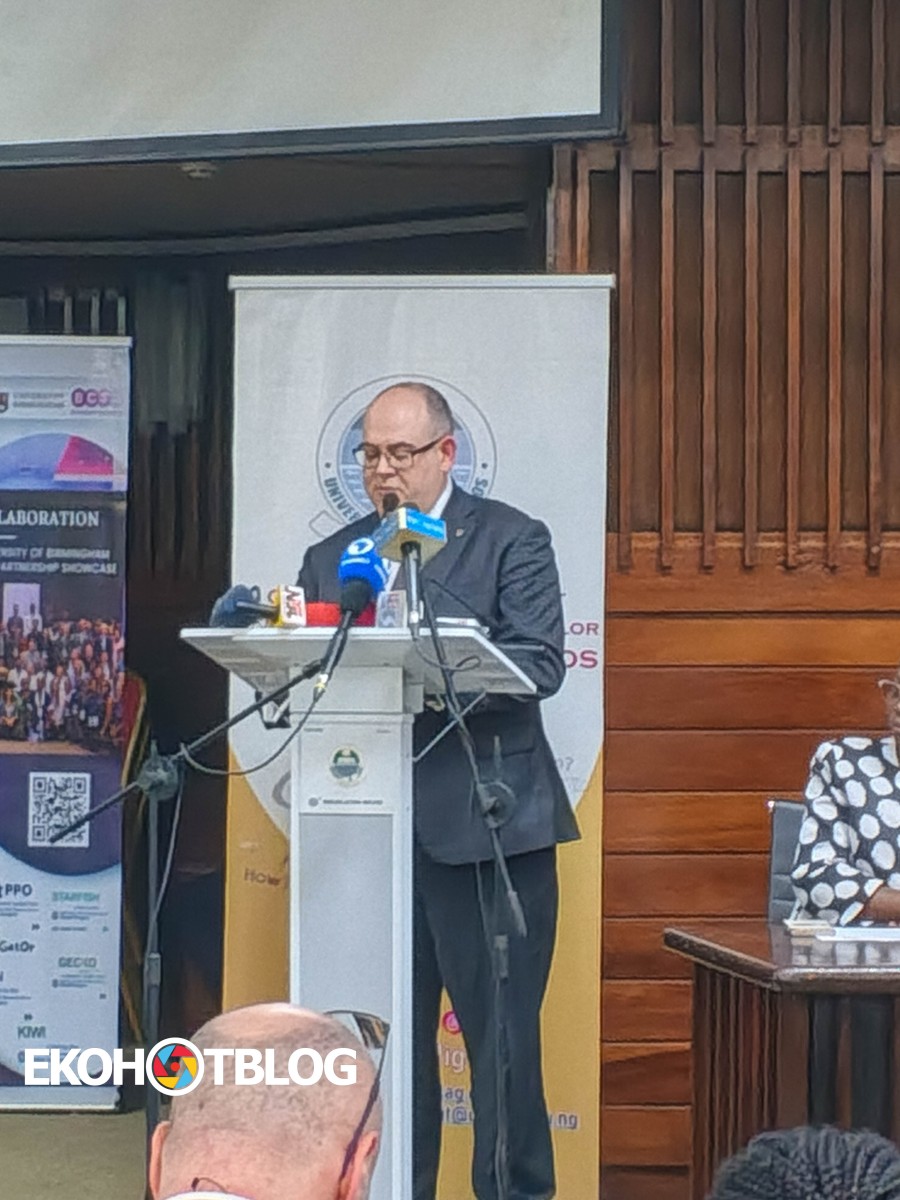
According to him, the collaboration demonstrates how UK–Nigeria partnerships can widen access to quality education, foster innovation and support academic exchange in fast-growing fields like artificial intelligence and digital technology.
The NUC Executive Secretary, Professor Ribadu, highlighted the benefits of the partnership, including joint research initiatives, staff and student exchanges, and knowledge-sharing platforms to address global challenges.
Meanwhile, Dr Hadiza Ismail, speaking on behalf of the TETFund Executive Secretary, noted that the initiative would help sustain access to quality international degrees within Nigeria, reduce academic migration, and retain talent following the suspension of the foreign scholarship scheme in 2024.
The partnership marks a significant milestone in UNILAG’s quest to deliver globally competitive education while strengthening Nigeria’s higher education system through innovation, collaboration and sustainability.
FURTHER READING