- Iran responded to the strikes with attacks targeting locations in Bahrain, Kuwait, Qatar and the United Arab Emirates
- At least one person has died and 11 others were injured in incidents linked to the disruption at airports in Dubai and Abu Dhabi
- Airlines across Europe, Asia and the Middle East have adjusted routes, with many flights between Europe
Airlines are continuing to suspend and reroute services across the Middle East following US and Israeli strikes on Iran, with widespread airspace closures disrupting global travel.
Eko Hot Blog gathered major carriers, including British Airways and Virgin Atlantic, have halted flights to several destinations in the region. Operations at Dubai International and Al Maktoum International airports were temporarily stopped, compounding delays and cancellations.
EDITOR’S PICK
- Nigeria Awaits FIFA Verdict On DR Congo Player Eligibility Dispute
- Trump Says Diplomacy Is “Much Easier” Now After Decapitating Strikes on Iran
- Senate Targets 2026 for State Police Amendment
The situation has also affected long-haul routes beyond the Middle East, as aircraft are forced to avoid restricted airspace. London Heathrow has advised passengers to confirm flight details with their airlines before heading to the airport.
Iran responded to the strikes with attacks targeting locations in Bahrain, Kuwait, Qatar and the United Arab Emirates. The UK Foreign Office has urged British nationals in affected countries to remain indoors and follow local safety guidance.
At least one person has died and 11 others were injured in incidents linked to the disruption at airports in Dubai and Abu Dhabi. Four airport workers were among those hurt at Dubai International.
Emirates paused all flights to and from Dubai until Sunday afternoon local time due to regional airspace restrictions, while Etihad suspended departures from Abu Dhabi for several hours.
British Airways has cancelled flights to Tel Aviv and Bahrain until midweek and warned that services between Heathrow and several Middle Eastern cities could face further disruption.
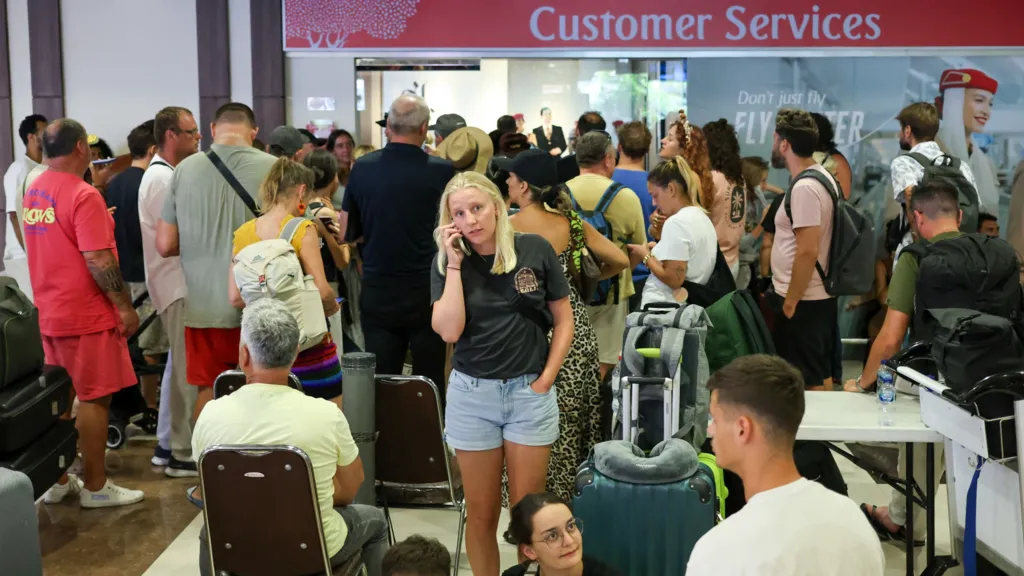
Passengers have described confusion and uncertainty. One traveller returning from Dubai said her aircraft was preparing for takeoff when the pilot announced the flight would not depart, leaving passengers waiting onboard for hours.
Airspace over Iran, Israel, Iraq, Qatar, Bahrain, Kuwait, Syria and the UAE remains closed, while Saudi Arabia has imposed partial restrictions. Although Jordan and Lebanon have kept their skies open, flight activity remains limited.
Virgin Atlantic has cancelled services between Heathrow and Riyadh and earlier scrapped flights to Dubai. It warned that routes to destinations such as India, Saudi Arabia and the Maldives may take longer due to diversions.
Airlines across Europe, Asia and the Middle East have adjusted routes, with many flights between Europe and Asia now passing through Saudi Arabia or the Caucasus to bypass the conflict zone.
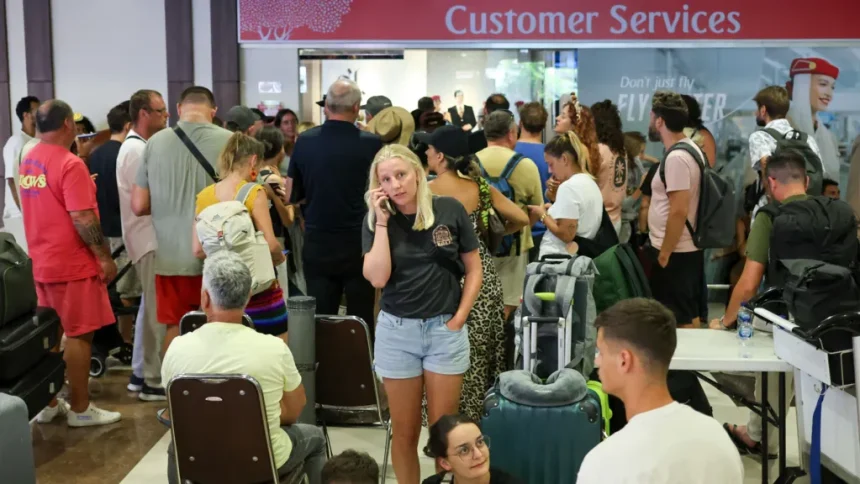
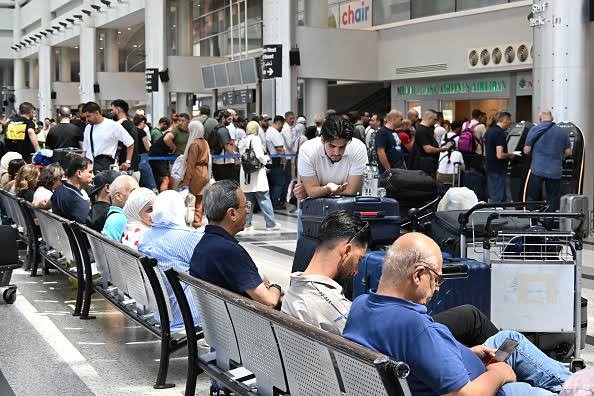
Travellers transiting through Dubai and Doha have reported being stranded after connecting flights were cancelled, with limited information on when normal operations will resume.
Qatar Airways confirmed a temporary halt to flights in and out of Doha following the closure of its airspace, later indicating plans to restart services once restrictions ease.
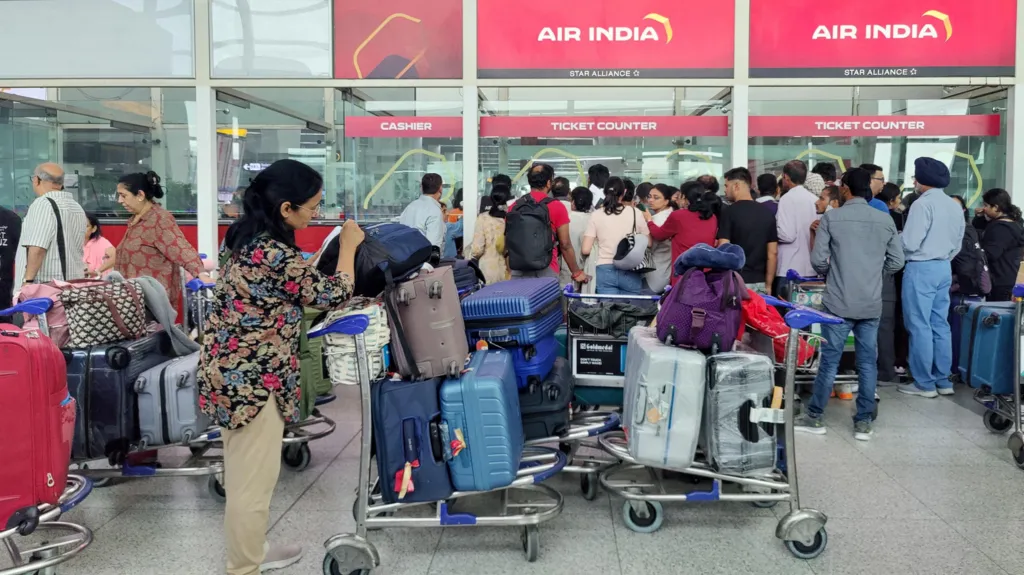
Several other international carriers, including Air Canada, Lufthansa, Turkish Airlines, KLM, Wizz Air and Air India, have cancelled or suspended routes to destinations such as Tel Aviv, Dubai, Riyadh and Beirut, while others are avoiding Israeli, Iranian and Iraqi airspace entirely.
Regional authorities have reported intercepting missiles and drones, with explosions heard in multiple cities. Governments in the Gulf have confirmed defensive actions in response to incoming threats.
The UK Foreign Office has advised against all travel to Israel and the Palestinian territories and instructed British citizens in Bahrain, Qatar, Kuwait and the UAE to seek shelter.
Nationals in Saudi Arabia have been told to stay indoors, while those in neighbouring countries have been urged to remain alert and follow official instructions.
US President Donald Trump cited stalled negotiations over Iran’s nuclear programme as a factor behind the strikes. UK Prime Minister Sir Keir Starmer confirmed that British aircraft were operating in the region in a defensive capacity and, alongside French and German leaders, called on Iran to avoid further escalation.
With airspace closures still in place, airlines and governments continue to monitor the rapidly evolving situation, while thousands of passengers face ongoing uncertainty over their travel plans.
FURTHER READING