- Nigeria Was Tilting Towards Bankruptcy in 2023 – Tinubu
- Tinubu defended the removal of fuel subsidy and other policy adjustments introduced early in his administration
- Tinubu also addressed concerns raised by media organisations regarding tariffs on imported materials used in newspaper production and broadcasting
President Bola Ahmed Tinubu has said Nigeria was close to financial collapse when he assumed office in May 2023, insisting that difficult economic reforms introduced by his administration helped prevent the country from sliding into bankruptcy.
Eko Hot Blog reports on the President made the remarks on Friday during a Ramadan dinner with media executives at the Presidential Villa in Abuja.
EDITOR’S PICK
- Ogun Begins Crackdown on Illegal Parks at Sango Border Over Rising Accidents
- Police Nab 30-Year-Old ‘Super M’ During Stop-and-Search in Lagos
- LASG Launches Investigation Into Cosmetic Surgery Death
Tinubu defended the removal of fuel subsidy and other policy adjustments introduced early in his administration, describing them as critical decisions aimed at stabilising the nation’s finances and preventing an economic crisis.
According to him, Nigeria’s financial situation at the time required immediate and bold action.
“At the time we confronted the subsidy issue, Nigeria was tilting on the edge of bankruptcy,” the President said.
He explained that leadership often requires difficult choices, especially during moments of national crisis.
“Having asked for the job and receiving the mandate, I could not look back. I had to make the necessary corrections to save the nation. Today, I can confidently say that we have pulled the country back from that brink,” Tinubu stated.
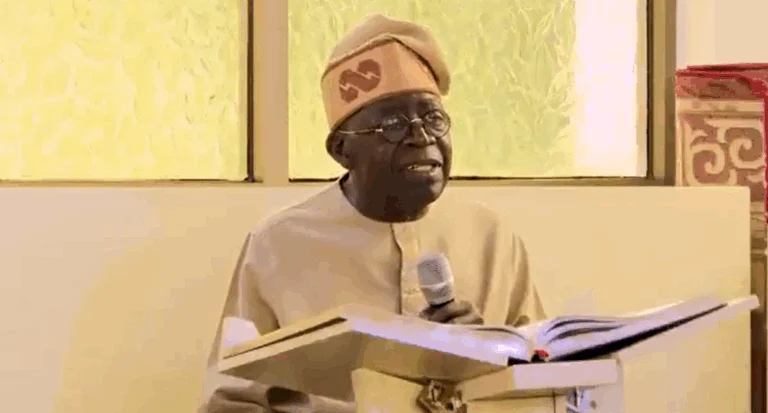
The President acknowledged the intense scrutiny his administration has faced from journalists and opinion leaders, noting that the criticism helped sharpen his resolve to perform.
He revealed that reading newspapers has become part of his daily routine.
“There is no morning I leave my house without going through the newspapers. It has become an addiction. I read all of you, sometimes just the headlines that catch my attention,” he said.
Tinubu admitted that he initially reacted strongly to media criticism during the early days of his administration.
“At the beginning of this government, I was a little stubborn because of the intense criticism from the papers and various opinion leaders. But those criticisms challenged me and stimulated the intellectual curiosity of a leader who must deliver,” he added.
The President emphasised that he does not see critics as enemies but as contributors to the process of nation-building.
“I do not categorise anyone as an arch critic. I see them as stimulators who can help build a better country,” he said.
Tinubu also addressed concerns raised by media organisations regarding tariffs on imported materials used in newspaper production and broadcasting.
He noted that the issue of tariff waivers on items such as newsprint, printing ink and broadcast equipment had already been discussed with relevant stakeholders and promised to review the matter.
Earlier, the Minister of Information and National Orientation, Mohammed Idris Malagi, disclosed that the Federal Government had begun engagements with major technology companies over their growing influence on the media industry.
According to him, regulatory authorities are already holding discussions with global digital platforms such as Google and Meta Platforms to ensure they operate responsibly within Nigeria’s media ecosystem.
“The President will not allow anyone to come into our country, benefit from our economy and simply walk away,” the minister said.
Speaking on behalf of media owners and editors, publisher of BusinessDay Media, Frank Aigbogun, appealed to the President to approve tariff exemptions on imported newsprint, ink and broadcasting equipment.
He warned that rising production costs were placing significant pressure on traditional media organisations and threatening the sustainability of the industry.
Aigbogun also urged the government to address the increasing dominance of global technology companies whose digital platforms now capture a large share of advertising revenue that previously sustained conventional media outlets.
“Tonight is not to interrogate government policies, but to let you know that the media industry is in pain,” he said.
“There is no child who meets his father and does not cry when he is hurting.”