The reported killing of Abu-Bilal al-Manuki, one of the Islamic State’s most influential commanders linked to operations in West Africa, has raised a familiar global question: does eliminating a terror leader truly weaken terrorism, or does it simply create another opening for violence to evolve?
For governments, military authorities and civilians exhausted by years of insurgency, the death of a high-profile extremist often represents justice, relief and strategic victory. But history across Africa, the Middle East and Asia shows that terrorist organisations rarely collapse simply because their leaders are killed.
EDITOR’S PICKS
- LASG Funds 80 Researchers, 75 Startups With N900m
- NLC, TUC Raise Alarm Over Workers’ Rights Violations In Nigeria
- Alex Ekubo’s Family Confirms Actor Died Of Advanced Kidney Cancer
Instead, many adapt, reorganise and sometimes become even more unpredictable.
From Osama bin Laden to Abu Bakr al-Baghdadi and multiple Boko Haram commanders, the global war against terrorism has repeatedly demonstrated that extremist movements are no longer built around one man alone. They operate through networks, ideology, financing systems, propaganda channels and decentralised command structures capable of surviving leadership losses.
Security analysts say the death of Abu-Bilal al-Manuki may significantly disrupt ISWAP operations in the short term, but whether it weakens the broader insurgency in the Lake Chad region depends on what happens next.
Osama Bin Laden
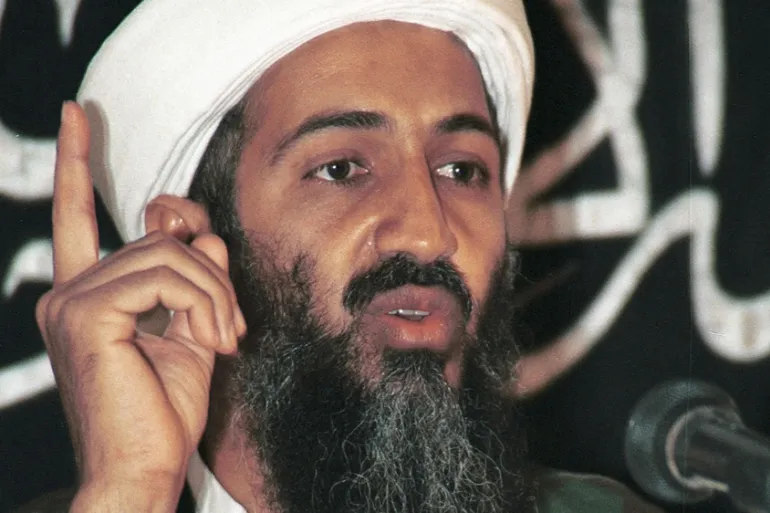
When United States forces killed Osama bin Laden in Pakistan in May 2011, many believed Al-Qaeda would gradually disappear. At the time, the operation was described as one of the biggest counterterrorism victories in modern history.
Yet more than a decade later, Al-Qaeda affiliates remain active across parts of Africa, the Middle East and Asia.
According to data from the Global Terrorism Index and the United Nations Security Council monitoring teams, extremist groups linked to Al-Qaeda and ISIS have expanded significantly across the Sahel region over the past decade, particularly in Mali, Burkina Faso and Niger.
ISIS Survived Baghdadi Too
A similar pattern followed the death of Abu Bakr al-Baghdadi, the former ISIS leader killed during a US military operation in Syria in 2019.
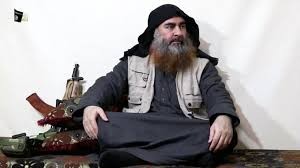
At the time, then US President Donald Trump declared that Baghdadi “died like a coward,” while many global leaders described the operation as a turning point against ISIS.
But despite losing its self-declared caliphate in Iraq and Syria, ISIS evolved into a dispersed global insurgency.
Today, ISIS affiliates remain active in Afghanistan, Somalia, Mozambique and West Africa.
The Islamic State West Africa Province, ISWAP, became one of its strongest branches globally after years of expansion around the Lake Chad Basin.
According to the Africa Center for Strategic Studies, extremist violence linked to ISIS and Al-Qaeda affiliates caused thousands of deaths across the Sahel and Lake Chad regions in recent years, making Africa one of the world’s most active terrorism theatres.
Boko Haram’s Endless Leadership Cycle
Nigeria’s insurgency has also shown how extremist groups survive repeated leadership losses.
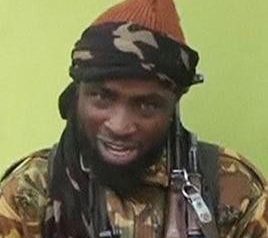
Since the Boko Haram conflict intensified in 2009, several senior commanders have been killed during military operations. Mohammed Yusuf, the group’s founder, died in police custody in 2009. His successor, Abubakar Shekau, reportedly died in 2021 after clashes with rival ISWAP fighters.
Yet the insurgency did not disappear.
Instead, the conflict fragmented into multiple factions, particularly ISWAP, which adopted more structured military tactics and stronger links with ISIS central leadership.
What Abu-Bilal al-Manuki’s Death Means
The reported elimination of Abu-Bilal al-Manuki still carries major strategic importance.
Security analysts believe he played a critical role in strengthening ISWAP’s tactical coordination, foreign fighter integration, financing systems and links to ISIS international operations.
His removal could disrupt communication channels, weaken operational planning and create distrust within militant networks, especially if insiders are suspected of leaking intelligence.
It would also slow the group’s evolving battlefield tactics, including coordinated night raids, drone-assisted surveillance and sophisticated attacks on military formations.
The killing of Abu-Bilal al-Manuki is an important tactical victory. Whether it becomes a long-term strategic turning point will depend not only on military pressure, but on what governments do after the guns fall silent.
FURTHER READING
- Oshiomhole – Atiku Now APC’s ‘Best Campaigner’
- Presidential Air Fleet Maintenance Gulps ₦4.24bn In Six Months, Reports Says
- Nigeria, Germany Finalise New Bilateral Cooperation Framework