- Moscow is actively looking to expand its geopolitical footprint beyond the landlocked Sahel region and into the Gulf of Guinea by forging deep commercial and security alliances with Togo.
- In response to Russia’s growing presence, Paris deployed its Foreign Minister, Jean-Noël Barrot, to Lomé to repair strained relations and counter the Kremlin’s maritime expansion plans.
- Both international powers are competing for control over the Port of Lomé, which stands as the deepest and most advanced maritime transport and logistics hub in West Africa.
Togo is systematically opening up its borders to Russian security and economic partnerships, prompting France to send its foreign minister to Lomé for the first time in 24 years.
Eko Hot Blog reports that the official diplomatic visit by French Foreign Minister Jean-Noël Barrot comes at a critical juncture as Paris watches its historical influence erode across West Africa.
EDITOR’S PICK
- Fresh Details Emerge on Death of Odomola Monarch, Oba Adebowale Adeshina
- Sanwo-Olu Applauds LASU’s Academic Excellence After JAMB Ranking
- NRC Moves 176,820 Tonnes Of Cargo Through Lagos Ports In Q1
With neighboring military juntas in Burkina Faso, Mali, and Niger having already severed ties with France in favor of closer ties with Moscow, French diplomatic advisors openly acknowledged that the mission was aimed at stemming the steady loss of its regional footprint.
The Kremlin’s advance toward the Atlantic coast follows a series of defense pacts signed with the government of Council President Faure Gnassingbé.
Under these frameworks, Moscow has deployed military instructors, naval vessels, and aircraft to Togo under the guise of helping local forces combat rising jihadist insurgencies along its northern borders.
This expanding security footprint has raised alarms in Western capitals, as it potentially opens the door for the Russian paramilitary Africa Corps, the successor to the Wagner mercenary group, to secure operational bases within the mineral-rich coastal nation.
Beyond defense cooperation, the core of the geopolitical struggle centers on the strategic Port of Lomé.
Boasting the deepest natural harbor in West Africa, the port is eyed by Moscow as a vital logistics hub to import Russian goods and distribute them directly to landlocked Sahelian nations via a planned railway network and oil pipeline.
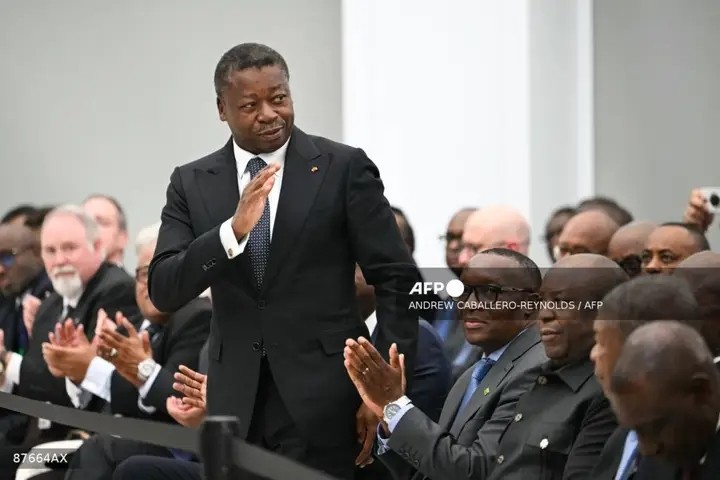
To counter Moscow’s psychological strategy, which relies on anti-Western rhetoric and rapid security deployments, France is leaning heavily on its hard economic clout, financing state-of-the-art university hospital renovations and launching regional centers for artificial intelligence.
Rather than choosing a single global ally, the Togolese presidency is deliberately playing both sides to maximize national benefits.
While Gnassingbé recently dispatched parliamentary leaders to participate in a French-African summit in Kenya, he is simultaneously finalizing arrangements to travel to Moscow for a high-profile Russia-Africa summit later this year.
As both European and Russian forces face mixed reviews regarding their ability to permanently quash regional jihadist violence, Togo’s calculated neutrality allows the coastal nation to attract heavy investments from competing global powers without aligning exclusively with either side.