- Pope Leo XIV has made history by issuing a direct institutional apology for the Vatican’s historical role in regulating and legally validating the enslavement of human beings.
- Unlike past papal statements that focused on individual transgressions by Christians, the new manifesto explicitly cites the Holy See’s direct involvement in endorsing the subjugation of non-Christian populations.
- Embedded within the historic text, “Magnifica Humanitas,” is a sharp warning regarding the global digital economy, which the Pontiff cautions is fostering deceptive new forms of modern exploitation.
Pope Leo XIV on Monday issued an unprecedented apology for the Vatican’s role in justifying slavery and said the delay in condemning the practice was “a wound in Christian memory”.
Eko Hot Blog reports that in a major text warning about the risk of “new forms of slavery” behind the digital economy, Leo said Church institutions owned slaves until the Middle Ages.
EDITOR’S PICK
- Fresh Details Emerge on Death of Odomola Monarch, Oba Adebowale Adeshina
- Sanwo-Olu Applauds LASU’s Academic Excellence After JAMB Ranking
- NRC Moves 176,820 Tonnes Of Cargo Through Lagos Ports In Q1
In the early modern period, the Apostolic See of Rome, responding to requests from sovereigns, intervened several times in order to regulate and legitimize forms of subjugation, and, in certain cases, the enslavement of non-believers.
It was only in the 19th century that a formal, absolute and universal condemnation of the practice was clearly articulated by the institution.
While previous leaders of the Catholic Church have offered formal regrets regarding the participation of individual Christians in the slave trade, this latest manifesto represents a significant escalation in institutional accountability.
Pope John Paul II denounced it in 1992 before issuing a sweeping request for forgiveness for historical injustices in 2000, and Pope Francis repeatedly condemned contemporary human trafficking.
However, Leo’s words went much further by directly addressing the central administrative machinery of the Vatican and its historical actions in legitimising the global trade.
The papal text balances historical context with moral clarity, asserting that while past events cannot be judged entirely anachronistically, the institutional delay in dismantling the system remains a deep wound in Christian memory from which modern believers cannot consider themselves detached.
The Pontiff wrote that the historical failure to stand as an early moral vanguard against human bondage requires a sincere ask for pardon in the name of the Church.
The admission marks an essential step toward cleansing the collective historical memory of global Christianity.
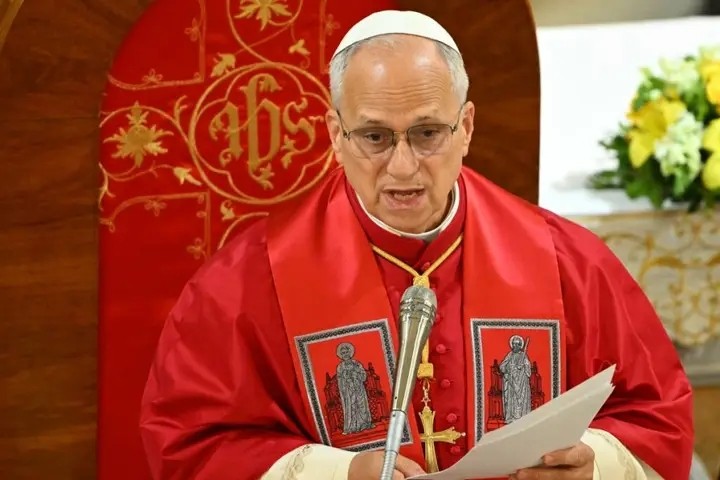
The expansive manifesto concludes with an urgent plea directed at modern tech industries and global economic planners to prevent the re-emergence of human exploitation through modern means.
Pope Leo XIV warned that raw digital capitalism, algorithmic worker management, and opaque international supply chains are subtly establishing secondary forms of human subjugation that mimic historical abuses.
The Holy See urged international bodies to implement strict humanitarian guardrails around emerging digital frameworks, maintaining that the global community must remain hyper-vigilant to ensure that technological advancements do not outpace basic human rights and dignity.