- Tehran demands sanctions relief, assets, and Hormuz recognition
- Israel struck Iran despite Trump’s call to avoid escalation
- The move followed Iranian missile attacks on Israel
Israel has confirmed it carried out fresh airstrikes on military sites in western and central Iran on Monday, even as reports emerged that U.S. President Donald Trump had urged Israeli Prime Minister Benjamin Netanyahu to hold back from further escalation.
Eko Hot Blog gathered that the latest strikes came amid heightened diplomatic pressure from Washington, where Trump reportedly told Netanyahu during a recent call to avoid additional military action, arguing that negotiations with Tehran were nearing a possible breakthrough.
EDITOR’S PICK
- Akpabio Dismisses Reports of Promising APC Tickets to Defeated Senators
- Court Discharges Baba Adinni of Lagos, Upholds No-Case Submission
- “Verify Information Before Spreading It” — Alara Warns on Security
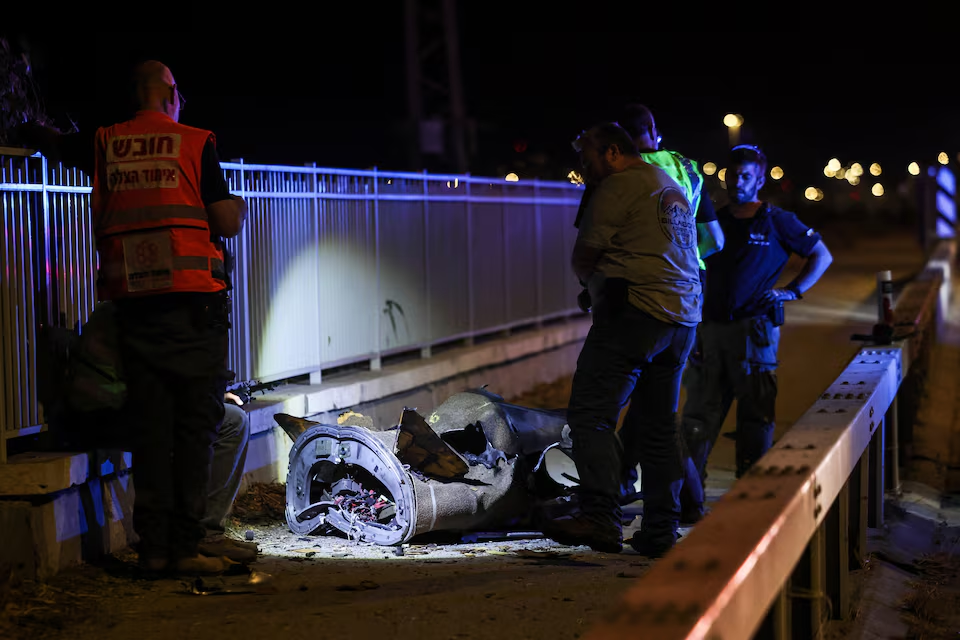
Despite that appeal, Israel’s military said it had targeted Iranian military installations, while Iran’s Islamic Revolutionary Guard Corps claimed Israeli forces used air-launched ballistic missiles in the operation.
Earlier, Trump downplayed the impact of renewed hostilities on ongoing U.S.–Iran diplomatic efforts, insisting that peace discussions remained on track. He also suggested that Netanyahu was not in control of the broader strategic direction, saying decisions ultimately rested with Washington.
The U.S. president, speaking in an interview, maintained that a deal with Iran was still achievable and dismissed concerns that the fighting would derail negotiations.
Shortly after those remarks, further exchanges of fire were reported. Iranian forces launched missiles toward Israeli positions, with Tehran claiming it had targeted the Ramat David air base near Nazareth. The Israeli military said its air defense systems intercepted incoming projectiles.
The escalation pushed global oil prices higher, with Brent crude rising more than 3 percent in early trading as markets reacted to renewed instability in the region.
Tensions have continued to build despite ongoing diplomatic efforts involving the United States and Iran, with Israel also conducting separate military operations in neighboring Lebanon against Hezbollah positions. Those strikes resumed even after Washington announced a proposed truce framework for the wider region.
Iranian officials have defended their actions, arguing that Israeli and U.S. assets remain legitimate targets in response to what they describe as violations of previous understandings and continued attacks on allied groups.
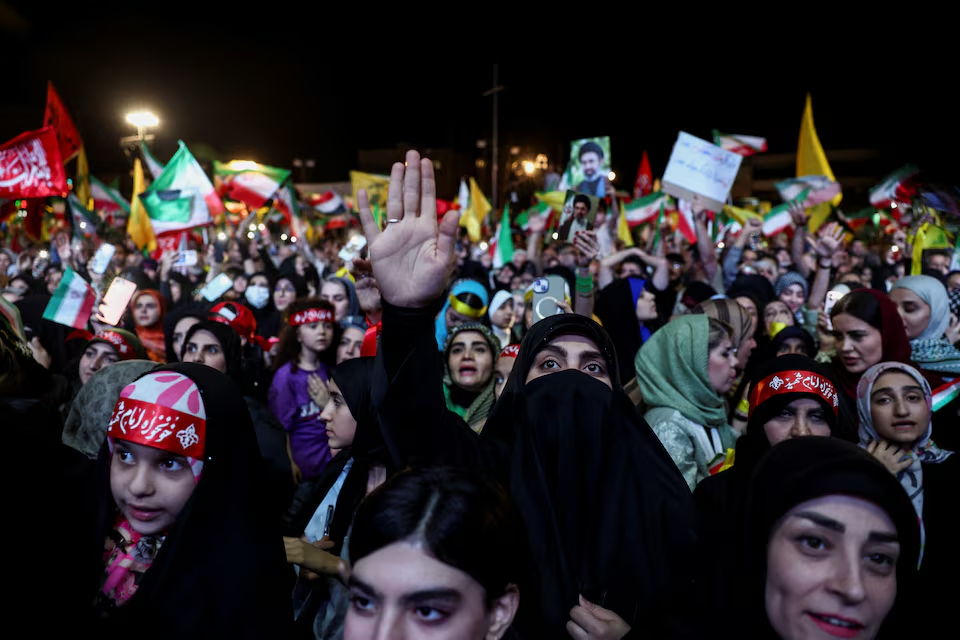
Meanwhile, U.S.–Iran negotiations remain fragile. Washington has insisted any final agreement must prevent Iran from acquiring nuclear weapons, while Tehran is demanding sanctions relief, access to frozen assets, and broader recognition of its regional interests.
Although both sides have at times signaled progress toward a preliminary understanding, repeated cycles of retaliation have undermined confidence in a lasting settlement.
The latest flare-up underscores the volatility of the conflict, with military exchanges, diplomatic pressure, and stalled negotiations all unfolding simultaneously across multiple fronts in the Middle East.
FURTHER READING