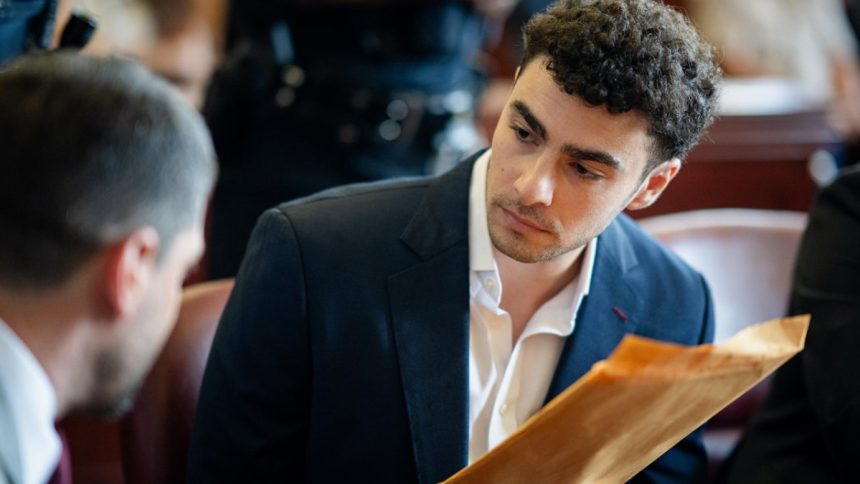
- In an unexpected courtroom twist, the legal defense team representing Luigi Mangione has officially withdrawn its notice to pursue a psychiatric defense at his upcoming New York state murder trial.
- The dramatic pull-back occurred just 24 hours after Mangione’s lawyers initially informed Manhattan Supreme Court Judge Gregory Carro of their explicit intentions to utilize an “extreme emotional disturbance” defense framework.
- Legal analysts suggest the strategic abandonment avoids severe legal vulnerability in Mangione’s separate federal interstate stalking case, where a state-level psychiatric concession could be heavily leveraged by federal prosecutors.
The defense team representing accused killer Luigi Mangione executed a massive legal about-face on Thursday, formalizing a sudden withdrawal of their intent to introduce a psychiatric defense during his high-profile state murder trial.
The unexpected tactical adjustment comes less than 24 hours after his prominent lead attorneys, Karen Friedman Agnifilo and Marc Agnifilo, stood before Manhattan Supreme Court Judge Gregory Carro to confirm they would argue the 28-year-old Ivy League graduate was experiencing severe mental duress during the high-profile incident.
EDITOR’S PICK
- Hamzat Appoints Obanikoro as Campaign DG Ahead of 2027 Lagos Governorship Race
- Tinubu’s State Police Plan Gains Momentum as Amendment Looms
- Residents Raise Alarm After Two Bodies Found in Lagos Waterway
The precise operational factors prompting this sudden pivot remain closely guarded by his inner defense circle.
The initial defense strategy rested heavily on New York’s specialized “extreme emotional disturbance” statutory provision. Under state criminal code, successfully proving this mental state does not completely absolve a defendant of criminal wrongdoing like a standard insanity defense.
Instead, it serves as an affirmative mitigating mechanism that legally compels a trial jury to reduce a top-tier second-degree murder indictment down to first-degree manslaughter.
For Mangione, a successful psychiatric argument would have effectively slashed his maximum potential sentencing liability from life imprisonment without parole down to a maximum cap of 25 years.
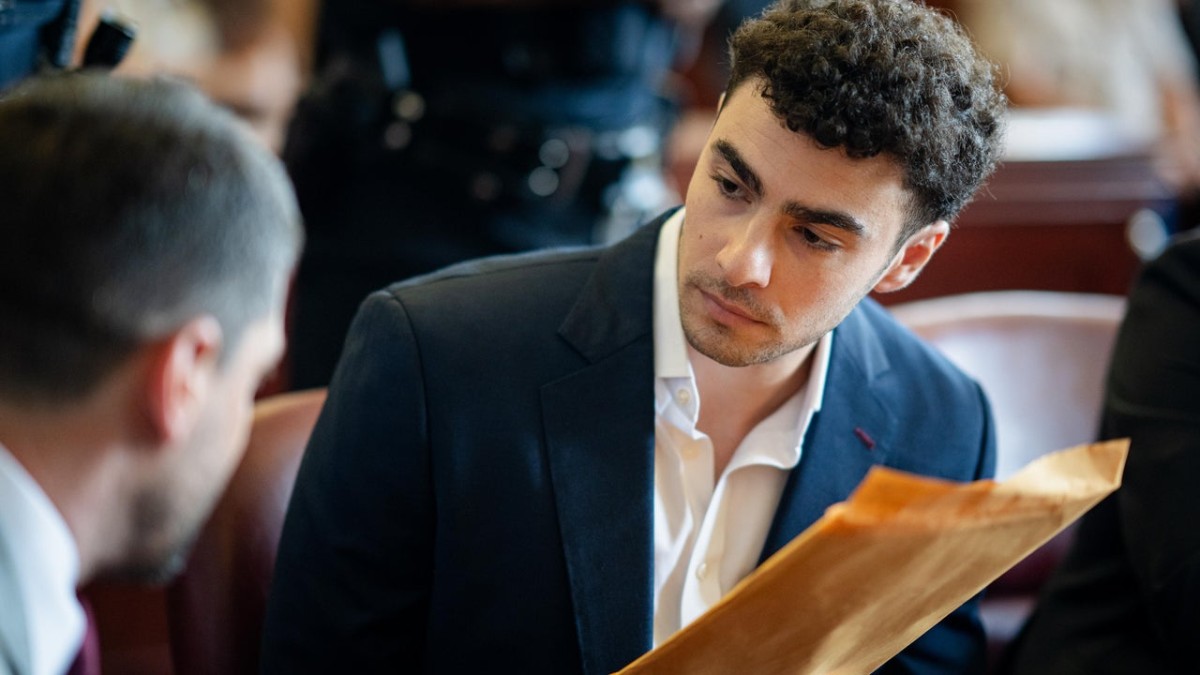
However, invoking the emotional disturbance defense requires a major legal tradeoff that ultimately threatened his broader multi-jurisdictional defense strategy.
To successfully proffer psychiatric evidence under state law, a defendant must essentially concede to committing the physical act of the killing while focusing entirely on mitigating their underlying mental culpability.
Independent legal experts notes that any such implicit or explicit admission of guilt advanced inside the state courtroom would instantly be weaponized by the United States Department of Justice in Mangione’s separate, parallel federal prosecution.
Furthermore, the defense faced intense structural pressure from the bench immediately prior to dropping the notice.
During Wednesday’s heated hearing, Assistant Manhattan District Attorney Joel Seidemann heavily castigated Mangione’s lawyers, accusing the defense of outright “stonewalling” by withholding psychiatric evaluations, expert names, and diagnostic medical records from state prosecutors.
In response, Judge Carro issued a strict ultimatum demanding that the defense immediately turn over their complete evidentiary files to the state, declaring he would not tolerate a blindside on the eve of trial.
Rather than exposing their internal medical evaluations and expert theories to aggressive cross-examination, the defense opted to completely rescind the motion.
Mangione faces severe allegations of tracking down and gunning down UnitedHealthcare Chief Executive Officer Brian Thompson outside a Midtown Manhattan hotel in December 2024 as the executive walked toward an annual investor conference.
Investigative authorities previously recovered a 3D-printed handgun matching ballistic fragments from the scene alongside handwritten journals targeting corporate health insurance infrastructure.
With the psychiatric avenue officially closed “at this time,” Mangione maintains his formal not-guilty plea as his state criminal trial remains firmly on track for jury selection starting September 8, 2026, followed closely by his federal interstate stalking trial slated for mid-October.