Weeks later, other vessels return carrying refined petroleum products, chocolate, cosmetics, pharmaceuticals, textiles, batteries and countless other finished goods—many of them produced from the same raw materials that originated in Africa.
For decades, this pattern has remained one of the continent’s biggest economic paradoxes. Africa is blessed with abundant natural resources, yet it earns only a fraction of their actual value because much of what it produces leaves its shores without processing.
EDITOR’S PICK
- Tinubu Approves Army Expansion, Recruitment of 28,000 Personnel
- Aregbesola Claims Record as First Nigerian Governor to Serve Eight Years Without Owning a House
- Ikosi-Ejinrin LCDA Commissions Fully Equipped NSCDC Divisional Headquarters, Donates Patrol Vehicle and Motorcycle to Boost Security
While industries in Europe, Asia and America transform these commodities into products worth several times their original prices, many African countries continue to depend on exporting raw materials and importing finished goods at premium costs.
The result has been slow industrialisation, rising unemployment, weak manufacturing sectors and economies that remain vulnerable whenever global commodity prices decline.
The issue has again attracted public attention following Vice-President Kashim Shettima’s recent visit to the Glo-Djigbé Industrial Zone in Benin Republic. During the visit, he urged African countries to stop exporting raw materials and instead develop industries capable of processing them locally.
His message has revived an important debate across the continent: can Africa achieve lasting economic prosperity without transforming the way it uses its natural resources?
For many economists, the answer is simple. Africa cannot build sustainable wealth by exporting opportunities alongside its raw materials.
The High Cost of Exporting Raw Materials
Africa’s economy has, for decades, revolved around the export of commodities.
Nigeria exports crude oil, cocoa, sesame, ginger, cashew nuts and several solid minerals. Ghana remains one of the world’s biggest cocoa producers. Zambia exports copper, while South Africa is rich in gold, platinum and diamonds. The Democratic Republic of Congo supplies much of the world’s cobalt, an essential component in electric vehicle batteries.
Yet the greatest financial rewards from these resources are often realised outside Africa.
Nigeria provides one of the clearest examples.
For years, the country exported millions of barrels of crude oil daily while importing refined petrol, diesel and aviation fuel. The same crude oil extracted from Nigerian soil generated more economic value after being refined abroad than it did when it left the country.
The story is similar in agriculture.
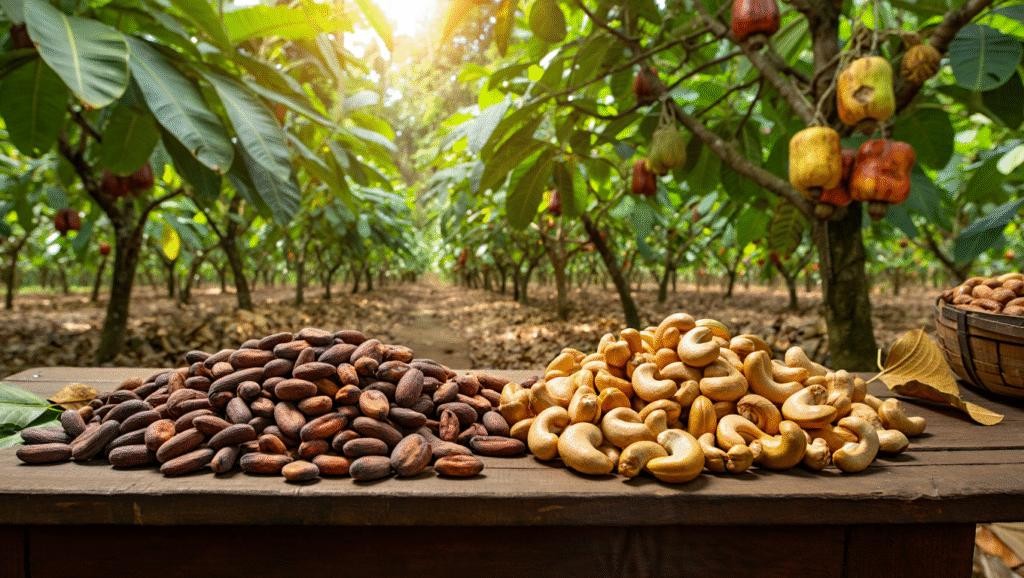
West Africa produces more than two-thirds of the world’s cocoa, but multinational companies outside the continent dominate the global chocolate industry. African farmers receive only a small share of the profits, while manufacturers and retailers abroad earn substantially more from processing, packaging and marketing finished products.
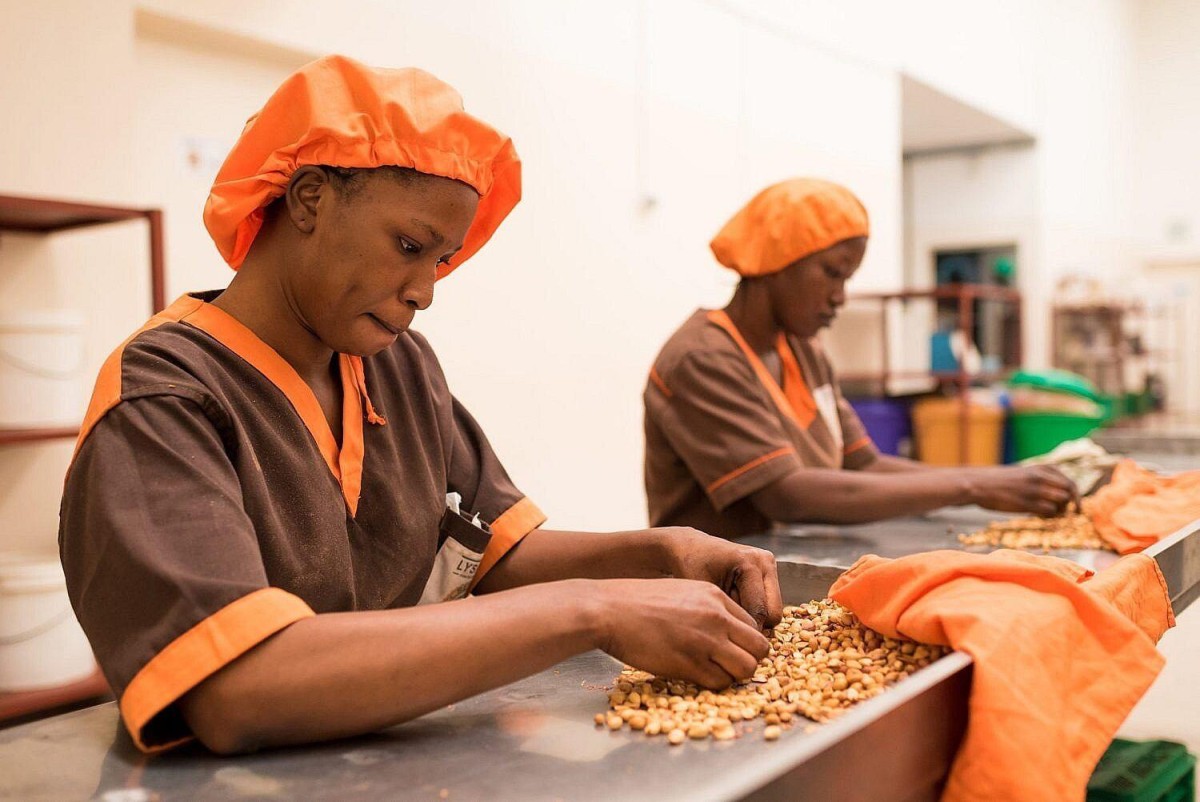
Nigeria also exports large quantities of cashew nuts every year. Much of the crop is processed in Asia before returning to international markets as packaged food products with significantly higher commercial value.
The same trend exists in cotton production.
Despite producing cotton, Nigeria’s once-thriving textile industry has declined over the years. Today, fabrics and clothing imported from Asia dominate local markets, while many textile factories that once employed thousands of Nigerians have either shut down or operate below capacity.
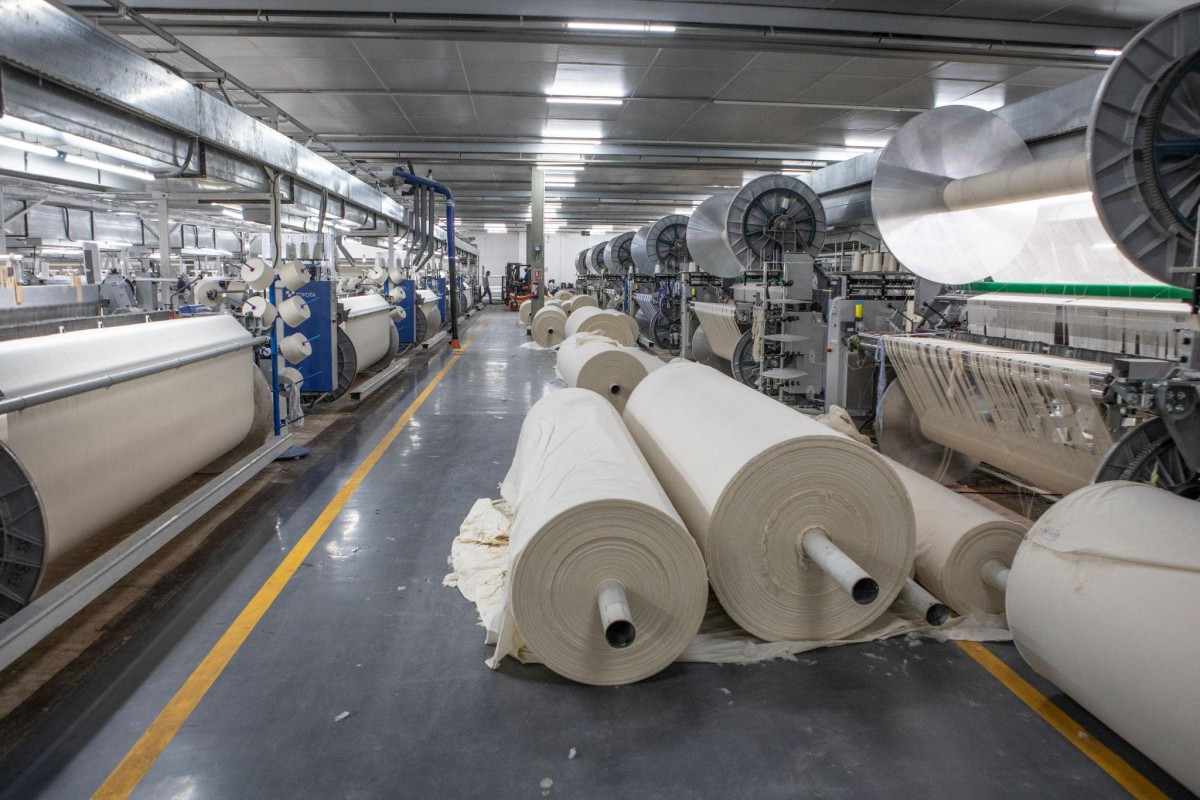
Industry analysts describe this as a classic example of the “commodity trap”—an economic situation where countries depend heavily on exporting raw materials while importing higher-value manufactured goods.
According to economic experts, countries trapped in this cycle often struggle to create enough employment because processing industries that generate skilled jobs are located elsewhere.
This dependence also exposes economies to external shocks.
Whenever oil prices fall, Nigeria’s foreign exchange earnings decline sharply. Government revenue comes under pressure, the naira weakens and inflation rises, affecting millions of households.
The country’s experience during previous oil price crashes demonstrates the dangers of relying heavily on one unprocessed commodity for national income.
The situation extends beyond petroleum.
Nigeria possesses significant deposits of lithium, iron ore, gold, limestone, tin and other strategic minerals increasingly needed for modern industries. Yet much of these resources still leave the country without significant value addition.
As global demand for electric vehicles and renewable energy technologies continues to grow, countries that process lithium into batteries stand to earn far more than those exporting raw ore.
Experts say Nigeria risks missing another industrial opportunity unless it develops local processing industries.
Lessons From History and Benin’s New Example
Long before colonial rule reshaped African economies, many kingdoms across the continent understood the importance of adding value to locally available resources.
One remarkable example is the ancient Benin Kingdom in present-day Edo State.
Centuries ago, Benin craftsmen transformed ordinary brass and bronze into some of Africa’s finest artistic masterpieces now known as the Benin Bronzes.
These works were admired not because of the raw materials used in making them, but because of the skill, innovation and craftsmanship invested in their production.
Today, many of those bronzes are displayed in museums across Europe and North America, attracting global attention and carrying enormous historical and financial value.
The lesson remains relevant today.
Natural resources alone rarely create lasting prosperity. Wealth comes from transforming those resources into products people are willing to buy.
However, colonial economic policies gradually altered that model.
Across much of Africa, colonial administrations encouraged the export of agricultural produce and minerals while manufacturing activities remained concentrated in Europe.
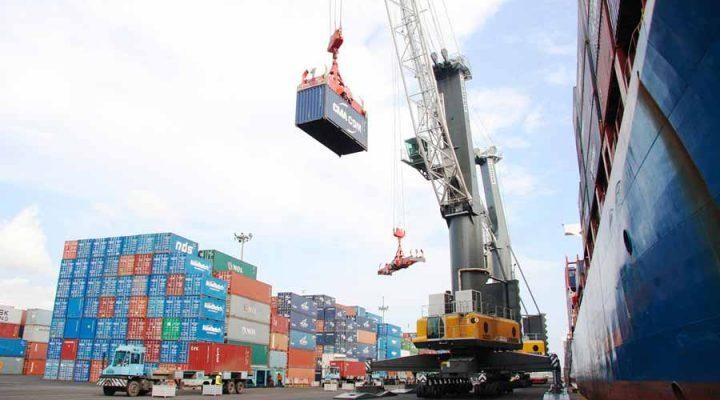
Roads, railways and ports were largely designed to transport raw materials from inland communities to coastal ports for export.
Although African countries gained political independence decades ago, many retained the same economic structure.
Nigeria still exports crude oil before importing refined products. Cocoa leaves as beans before returning as chocolate. Cotton is exported while finished fabrics are imported.
That pattern has become deeply embedded in many African economies.
It is against this backdrop that Benin Republic has attracted increasing attention.
Though much smaller than Nigeria, Benin has invested significantly in value addition through the Glo-Djigbé Industrial Zone.
Instead of exporting raw cotton alone, factories within the industrial hub convert locally produced cotton into yarn, textiles and finished garments.
Cashew nuts are processed before export, while agricultural products such as soya beans undergo further processing locally.
The industrial zone has helped attract investment, create employment and increase export earnings.
During his visit, Vice-President Shettima described the facility as an example of how African countries can maximise their natural resources through industrialisation rather than remaining suppliers of raw commodities.
He noted that Africa accounts for only a tiny fraction of the global textile market despite producing substantial quantities of cotton.
According to him, reversing that trend requires deliberate investment in industries capable of transforming agricultural produce into finished products.
His remarks also align with the Federal Government’s plan to establish agro-industrial processing zones across several Nigerian states.
If successfully implemented, such projects could encourage investment, reduce post-harvest losses and improve local manufacturing.
The Dangote Refinery has also strengthened arguments in favour of domestic value addition.
For decades, many questioned whether Nigeria could successfully refine petroleum products locally on a large scale.
Today, Africa’s largest refinery has demonstrated that large industrial projects are achievable within the country.
Economists believe similar investments are needed in agriculture, mining, petrochemicals, pharmaceuticals and steel production if Nigeria hopes to diversify its economy beyond crude oil.
Can Nigeria Break the Cycle?
Despite its abundant natural resources, Nigeria continues to face significant obstacles to industrialisation.
Manufacturers frequently complain about unreliable electricity, poor transport infrastructure, multiple taxation, insecurity and high production costs.
These challenges increase the cost of doing business and reduce the competitiveness of locally manufactured goods.
Many industries spend huge amounts on diesel-powered generators because of unstable electricity supply.
Small and medium-sized enterprises also struggle to access affordable financing needed to expand production.
Security challenges in farming communities have affected agricultural output, while poor road networks increase transportation costs for manufacturers.
Economic analysts argue that solving these problems is just as important as encouraging local production.
Industrialisation requires more than factories.
It depends on reliable power supply, efficient transport systems, stable government policies, skilled manpower, access to technology and an environment that encourages private investment.
Education also plays a critical role.
Countries that transformed their economies through manufacturing invested heavily in technical education, engineering, vocational training and scientific research.
Nigeria will need similar investments if it hopes to compete in today’s global economy.
The African Continental Free Trade Area (AfCFTA) also presents a major opportunity.
With access to one of the world’s largest free trade markets, Nigerian manufacturers have the potential to supply products across the continent.
However, experts warn that the benefits of AfCFTA will remain limited if African countries continue exporting raw materials while importing finished products from outside the continent.
For Nigeria, industrialisation is no longer simply an economic aspiration—it has become an urgent necessity.
A growing population means millions of young people will enter the labour market in the coming years.
Creating enough employment will require expanding manufacturing, encouraging entrepreneurship and developing industries capable of absorbing skilled and semi-skilled workers.
The country’s abundant natural resources provide a strong foundation.
What remains is the political will to consistently implement policies that support local industries, encourage innovation and attract long-term investment.
Vice-President Shettima’s message in Benin Republic serves as a reminder that Africa’s future will not be determined by the quantity of crude oil, cocoa, cotton or minerals it exports.
Rather, it will depend on how effectively the continent transforms those resources into products that create wealth, generate employment and improve living standards.
For too long, Africa has exported its raw materials while importing prosperity.
Breaking that cycle may prove to be one of the continent’s most important economic decisions in the decades ahead.
FURTHER READING