- The U.S. banned imports of new Chinese robots and power inverters
- Washington said the move aims to protect AI infrastructure and national security
- China criticised the restrictions and vowed to respond to measures affecting its interests
The administration of U.S. President Donald Trump has announced new restrictions on imports of Chinese-made robots and power inverters, citing national security concerns and efforts to strengthen domestic manufacturing in critical technology sectors.
Eko Hot Blog gathered that the measures, unveiled on Tuesday by the Federal Communications Commission (FCC), ban the import of new humanoid and quadruped robots from China, as well as connected power inverters used in renewable energy systems, battery storage and data centres.
EDITOR’S PICK
- Tinubu Approves Army Expansion, Recruitment of 28,000 Personnel
- Aregbesola Claims Record as First Nigerian Governor to Serve Eight Years Without Owning a House
- Ikosi-Ejinrin LCDA Commissions Fully Equipped NSCDC Divisional Headquarters, Donates Patrol Vehicle and Motorcycle to Boost Security
According to the FCC, the restrictions are intended to protect the United States’ artificial intelligence infrastructure and critical supply chains from potential cyber threats, data breaches and supply disruptions.
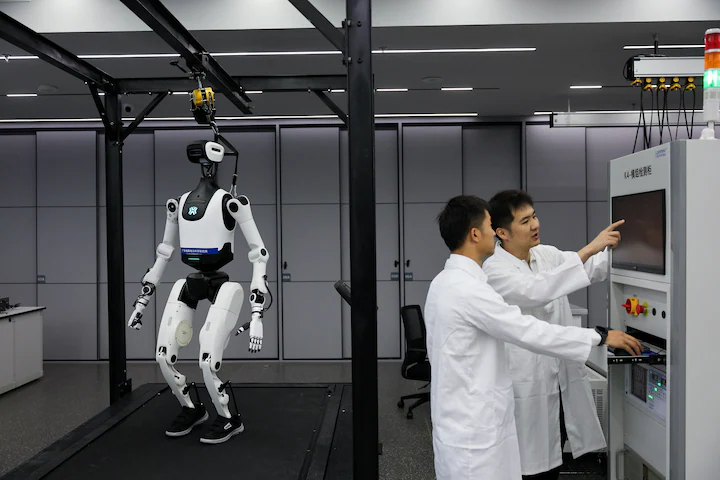
In a statement, the commission warned that the affected technologies could expose critical infrastructure to cybersecurity risks and create vulnerabilities that may threaten the country’s economic and national security. FCC Chairman Brendan Carr said the agency would continue taking steps to safeguard America’s technology supply chain.
Reacting to the decision, the Chinese Embassy in Washington urged the United States to stop targeting Chinese companies, calling on both countries to listen to business communities advocating stronger economic cooperation. Beijing also warned it would take necessary measures to protect its interests if its businesses were harmed.
The move reflects growing U.S. efforts to reduce dependence on Chinese technology as demand for artificial intelligence infrastructure and advanced robotics continues to rise. Officials have also expressed concerns about China’s dominance in critical technology supply chains, including rare earth minerals.
The restrictions take effect immediately but apply only to new robot and inverter models that have not yet been approved for sale in the United States. The FCC, however, retains the authority to withdraw approval for products already authorised if necessary.
Industry analysts believe the measures could significantly affect Chinese robotics manufacturer Unitree, one of the world’s leading producers of humanoid robots. The company was recently added to the Pentagon’s list of firms alleged to have links with the Chinese military, a designation that often precedes tougher U.S. restrictions.
U.S. lawmakers have argued that advanced robots equipped with artificial intelligence could be used for espionage, data collection or disruption of sensitive infrastructure. The FCC echoed those concerns, warning that such technologies could be exploited by hostile actors to gather intelligence or interfere with critical systems.
The new policy also targets China’s dominance in the inverter market, where companies such as Huawei and Sungrow have expanded rapidly by offering lower-priced products. U.S. authorities say the restrictions are aimed at reducing cybersecurity risks and protecting critical infrastructure from potential foreign interference.
FURTHER READING