- The Federal Government borrowed N12.62tn in 2024, exceeding its target by N4.79tn
- A revenue shortfall widened the fiscal deficit to N13.51tn, above budget projections
- Economists urged prudent borrowing and stronger revenue generation to reduce debt dependence
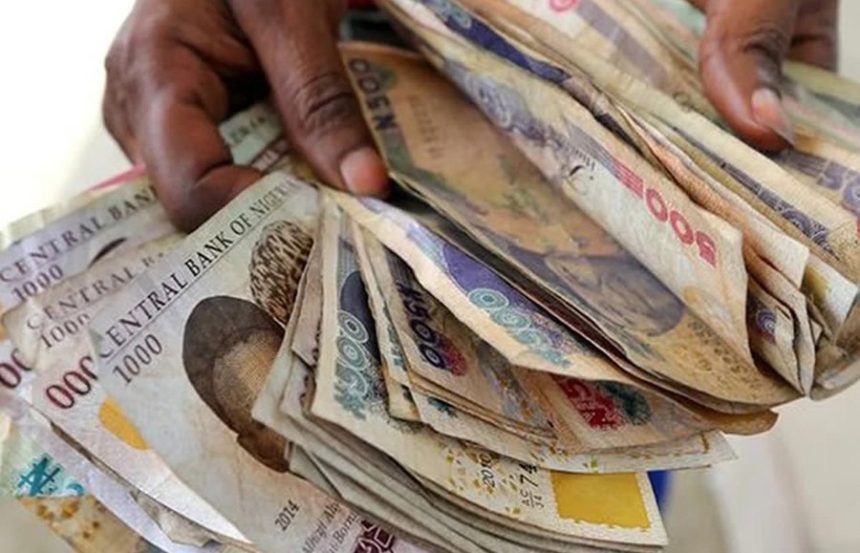
The Federal Government borrowed far more than planned in 2024 after weaker-than-expected revenue widened the budget deficit, according to the Budget Office of the Federation.
Eko Hot Blog reports that the Budget Office’s Fourth Quarter and Consolidated Budget Implementation Report for 2024 showed that fresh borrowings reached N12.62tn, exceeding the approved target of N7.83tn by N4.79tn, representing a 61.2 per cent increase.
EDITOR’S PICK
- Tinubu Approves Army Expansion, Recruitment of 28,000 Personnel
- Aregbesola Claims Record as First Nigerian Governor to Serve Eight Years Without Owning a House
- Ikosi-Ejinrin LCDA Commissions Fully Equipped NSCDC Divisional Headquarters, Donates Patrol Vehicle and Motorcycle to Boost Security
The report attributed the higher borrowing to a significant revenue gap, which pushed the fiscal deficit to N13.51tn, compared with the budgeted N9.18tn.
Government revenue for the year stood at N20.98tn, falling N4.90tn short of the projected N25.88tn.
Meanwhile, total expenditure amounted to N34.49tn, only N561.29bn below the approved budget of N35.06tn, indicating that the larger deficit resulted mainly from lower revenue rather than increased spending.
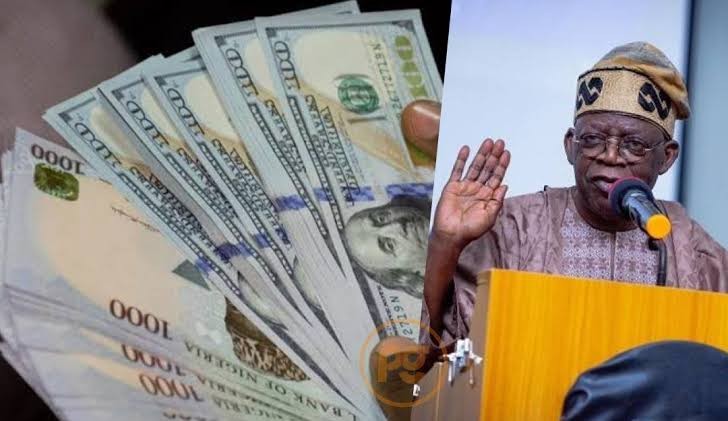
According to the report, the 2024 fiscal deficit exceeded projections by N4.34tn, or 47.33 per cent, and was also higher than the N10.55tn recorded in 2023, reflecting mounting pressure on the nation’s finances.
An analysis of the financing structure showed that domestic borrowing remained at the approved N6.06tn, while foreign borrowing rose to N3.37tn, surpassing the budget estimate of N1.77tn by N1.60tn.
The government also obtained N3.19tn in budget support, despite making no provision for it in the 2024 budget. The report did not disclose the source of the funding, which was classified as part of new borrowings.
Combined with domestic and foreign loans, total borrowings climbed to N12.62tn, meaning debt financed roughly 36 per cent of the 2024 federal budget.
In addition, multilateral and bilateral project-tied loans reached N1.98tn, compared with the projected N1.05tn, while the expected N298.49bn from privatisation was not realised.
The report stated that the fiscal deficit was financed through project-tied loans, domestic borrowing, foreign borrowing and budget support.
Although government revenue increased by 68.11 per cent from N12.48tn in 2023 to N20.98tn in 2024, it still fell 18.92 per cent below the annual target.
Oil earnings remained below expectations, with gross oil revenue standing at N15.07tn, about N4.93tn less than the projected N19.99tn.
The Budget Office linked the shortfall to an average crude oil price of $74.65 per barrel, below the budget benchmark of $77.96, and average daily production of 1.54 million barrels, compared with the projected 1.78 million barrels.
However, non-oil revenue outperformed expectations, rising to N16.09tn, exceeding the target of N10.81tn by N5.29tn. The improvement was driven by stronger collections from Company Income Tax, Value Added Tax, Electronic Money Transfer Levy and Customs duties.
Government spending remained largely within budget, with total expenditure reaching N34.49tn, just 1.6 per cent below the approved estimate. However, spending increased by 49.7 per cent compared with N23.04tn recorded in 2023.
Debt servicing costs also surged during the year. The report showed that N12.36tn was spent on servicing debt, exceeding the budgeted N8.27tn by 52.71 per cent.
Capital project funding also faced challenges. Although N5.81tn was released and cash-backed for capital projects, Ministries, Departments and Agencies had utilised N3.27tn, representing 81.91 per cent of the funds released as of June 30, 2025.
The report further revealed that Nigeria’s total public debt rose to N144.67tn by the end of December 2024, pushing the debt-to-GDP ratio to 61.22 per cent.
According to the Budget Office, the ratio now exceeds Nigeria’s 40 per cent debt threshold as well as the 56 per cent benchmark for comparable economies.
Despite the fiscal challenges, the Budget Office expressed optimism that reforms aimed at strengthening tax administration, boosting non-oil revenue, reducing leakages and improving remittances from government-owned enterprises would lessen dependence on borrowing in the medium term.
Development economist and Chief Executive Officer of CSA Advisory, Aliyu Ilias, warned that the increased borrowing could worsen inflation and raise the cost of living if not carefully managed.
He said borrowing itself was not the problem but stressed that growing debt servicing obligations and the risk of injecting excess liquidity into the economy remained major concerns.
Ilias urged the government to focus on increasing crude oil production and improving trade performance to reduce its dependence on loans.
Similarly, the Chief Economist and Director of Research at the Nigerian Economic Summit Group, Olusegun Omisakin, argued that the critical issue was how borrowed funds were utilised rather than the borrowing itself.
He maintained that investments in productive infrastructure would justify additional debt if they generated returns above borrowing costs.
The Chief Executive Officer of the Centre for the Promotion of Private Enterprise, Muda Yusuf, also called for stronger fiscal discipline and improved revenue generation to keep Nigeria’s debt profile sustainable.
The issue has continued to generate debate following concerns raised by the Emir of Kano, Muhammadu Sanusi II, who questioned the government’s continued borrowing despite the removal of petrol subsidy.
The Presidency defended the borrowing programme, saying the funds were directed toward critical infrastructure, while Finance Minister Taiwo Oyedele argued that borrowing should be judged by its purpose, cost and expected returns rather than its size alone.
Oyedele also maintained that Nigeria must gradually move away from relying heavily on debt by building a more sustainable fiscal system capable of financing national development.
FURTHER READING