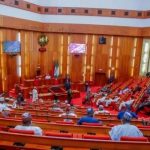
- FG Begins Process To Establish State Police In Nigeria
- A seven week programme will produce the National Policing Bill.
- State police remains non operational pending constitutional approval.
The Federal Government has commenced the process of developing the legal and operational framework required for the establishment of state police in Nigeria.
EDITOR’S PICKS
- Olodo Uprising: Sanwo-Olu Advises Youths to Embrace Knowledge, Curiosity
- BBN Season 11 Kicks Off with Unveiling of 24 Housemates Competing for ₦160m Grand Prize
- Why Africa Must Stop Exporting Raw Materials, Lessons From Benin for Nigeria
EKO HOT BLOG reports that as part of the initiative, the government has launched a seven week programme to produce a comprehensive National Policing Bill that will guide the country’s transition to a dual federal and state policing system.
The Chairman of the Presidential Working Group on the National Policing Bill and Chief of Staff to the President, Femi Gbajabiamila, disclosed this while addressing journalists in Abuja on Monday.
Gbajabiamila said the programme would be driven by clearly defined milestones to ensure the proposed legislation outlines the structure, powers and operations of both federal and state police institutions.
He clarified that no state police service is currently operational in Nigeria despite the progress made by the National Assembly on the proposed constitutional amendment.
According to him, the Nigeria Police Force remains the only constitutionally recognised policing institution until the constitutional amendment establishing state police is fully completed.
“There is no operational state police service anywhere in Nigeria today. The Nigerian Police Force remains the constitutionally recognised police institution,” he said.
Gbajabiamila explained that while the constitutional amendment would provide the legal authority and broad framework for state policing, a separate law would be required to establish its operational structure.
“The constitutional amendment creates the authority and broad architecture for federal and state policing, but it does not by itself provide the complete operating framework,” he stated.
The presidential aide disclosed that the Senate approved the constitutional amendment on June 24, 2026, while the House of Representatives passed the Executive State Police Bill on July 23, 2026.
He, however, noted that the amendment would only take effect after receiving the constitutionally required approval of state Houses of Assembly.

According to Gbajabiamila, the proposed National Policing Bill will define the responsibilities, command structure, funding, oversight and accountability mechanisms for the proposed state police system.
He added that the framework would also clarify the relationship between federal and state police authorities while providing safeguards against abuse, political interference and overlapping responsibilities.
Gbajabiamila maintained that the ongoing process is aimed at ensuring the proposed policing arrangement is properly structured before implementation.
FURTHER READING
- Reps Probe N1.32bn Foreign Investment Council
- Abike Dabiri-Erewa Urges Nigerian Youths to Dream Big, Embrace Resilience
- Obi or Tinubu? Fresh Claims Emerge Over Obasanjo’s 2027 Political Allegiance