- Federal Government approves new financing framework for hospital electrification.
- About 100 hospitals already powered through solar energy projects nationwide.
- Private sector partnerships to drive 24-hour electricity in healthcare facilities.
The Federal Government has approved a new financing framework and institutional reforms aimed at delivering reliable 24-hour electricity to at least 30 per cent of Nigeria’s health facilities by the end of 2027.
Eko Hot Blog reports that the approval was granted on Tuesday during the third meeting of the Inter-Ministerial Steering Committee of the Nigeria Power for Health Initiative, a presidential programme jointly coordinated by the Federal Ministry of Health and Social Welfare and the Federal Ministry of Power.
EDITOR’S PICK
- Tinubu Approves Army Expansion, Recruitment of 28,000 Personnel
- Aregbesola Claims Record as First Nigerian Governor to Serve Eight Years Without Owning a House
- Ikosi-Ejinrin LCDA Commissions Fully Equipped NSCDC Divisional Headquarters, Donates Patrol Vehicle and Motorcycle to Boost Security
Speaking after the meeting, the Minister of State for Health and Social Welfare, Dr. Iziaq Salako, said the committee adopted measures that would accelerate the electrification of public health institutions across the country.
According to him, the committee approved a financing framework to attract investments into healthcare electrification, endorsed new governance structures, and cleared eight private sector proposals for further engagement after they emerged from about 70 submissions received during the National Healthcare Electrification Investor Matchmaking Week held in Lagos.
Salako said the initiative is designed to ensure uninterrupted electricity in hospitals through public-private partnerships.
He noted that the programme was established by President Bola Tinubu following the National Dialogue on Power for Health held in December 2025.
“The steering committee considered the report of the technical committee, and members were particularly happy with the progress made so far,” Salako said.
He explained that the committee also approved a facility energy management framework to ensure hospitals can sustainably manage their energy infrastructure.
According to the minister, Energy Management Teams have already been established in federal tertiary hospitals, while state governments have been encouraged to create similar structures in their own health facilities.
Salako added that the initiative would now be institutionalised through dedicated budgetary provisions and a full-time Project Coordination Unit that will oversee implementation nationwide.
He said the Federal Government’s goal is to provide reliable electricity to at least 30 per cent of Nigeria’s health facilities by the end of 2027 using public-private partnership models centred on energy-as-a-service.
The minister explained that different energy technologies would be deployed depending on the needs of each facility.
“There is no one-size-fits-all approach. Some facilities will use mini-grids, others may adopt gas-powered systems or other solutions. We will deploy whatever technology best suits each location,” he said.
Providing an update on implementation, Salako disclosed that governance structures had largely been established while electrification projects continued across primary, secondary and tertiary healthcare facilities.
He revealed that the Rural Electrification Agency has already installed containerised solar power systems in about 100 hospitals nationwide.
“We have used the eight months to build the governance structure. At the same time, electrification projects are ongoing at primary healthcare centres, secondary facilities through state governments and tertiary hospitals. The REA alone has energised about 100 hospitals nationwide,” he said.
Responding to concerns over persistent power outages in hospitals, Salako said the healthcare electrification initiative forms part of the Federal Government’s broader electricity sector reforms.
He expressed confidence that Nigeria would gradually overcome the country’s longstanding electricity challenges as reforms in the power sector continue.
Minister of Power, Joseph Tegbe, described the Nigeria Power for Health Initiative as one of the Tinubu administration’s flagship programmes, saying the focus would now shift from planning to project delivery.
He said the government wants Nigerians to begin seeing fully electrified teaching hospitals, state hospitals and primary healthcare centres across the country.
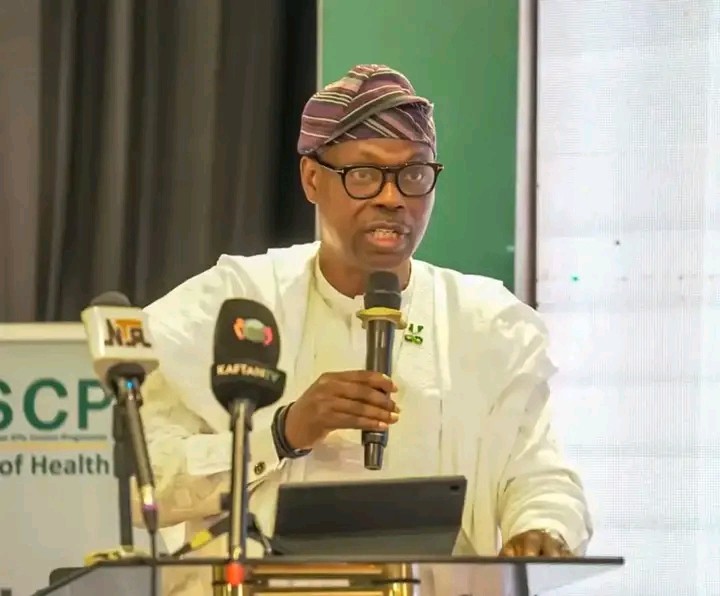
Tegbe added that reliable electricity would improve patient care, reduce dependence on diesel generators during emergencies, and strengthen healthcare delivery nationwide.
Permanent Secretary of the Federal Ministry of Power, Mahmuda Mamman, also stressed that stable electricity is critical for powering medical equipment, preserving vaccines, supporting laboratory services and improving emergency response systems.
Nigeria’s public hospitals have long struggled with unreliable electricity, forcing many facilities to depend heavily on diesel generators to power operating theatres, intensive care units, laboratories, oxygen plants and cold-chain systems.
The Nigeria Power for Health Initiative, approved by President Tinubu in December 2025, seeks to address the challenge through public-private partnerships that will deploy solar mini-grids, gas-powered systems and other renewable energy solutions while creating a national database of healthcare electrification projects.
FURTHER READING