- Abbas urged greater youth participation in leadership
- He backed increased political opportunities for women
- The LEAD Fellowship will train 1,000 student leaders
Speaker of the House of Representatives, Tajudeen Abbas, has called for greater inclusion of young Nigerians in leadership, saying the country can no longer afford to regard them merely as leaders of the future.
Eko Hot Blog gathered that Abbas made the call on Tuesday during the launch of the Leadership for Equity, Advocacy and Development (LEAD) Fellowship organised by the Gender Mobile Initiative at the National Assembly in Abuja.
EDITOR’S PICK
- APC Youth Wing Opens Applications for 2026 Zacch Adedeji Taxation, Fiscal Policy Fellowship
- ‘Make Him President, Let’s See If Nigerians Become Millionaires’ – Presidency Mocks Obi
- Super Falcons Shift Focus to Zambia Clash After Malawi Defeat
Represented by the Chairman of the House Committee on Women Affairs and Social Development, Kafilat Ogbara, the Speaker stressed that Nigeria’s democratic future depends on grooming a new generation of ethical, competent and responsible leaders.
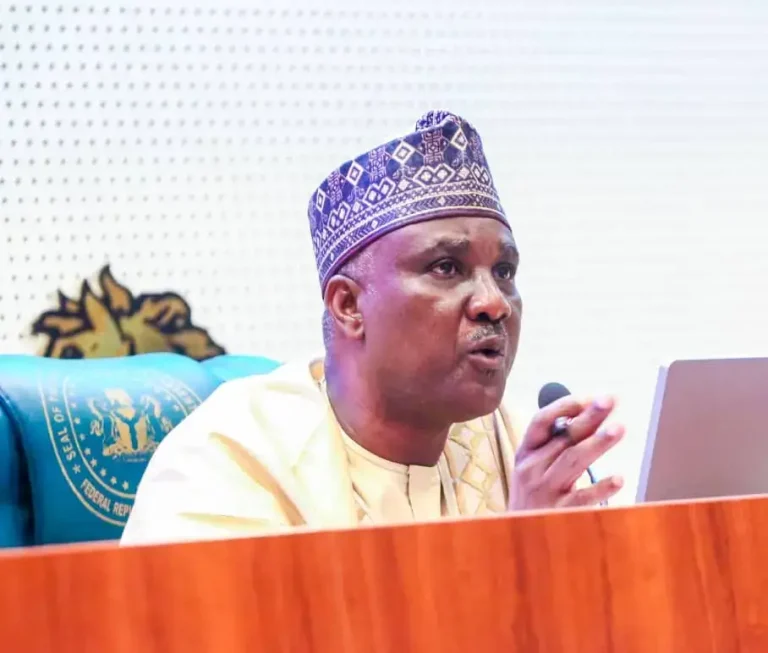
He noted that leadership extends beyond occupying public office, describing it as a responsibility that requires accountability, integrity and respect for democratic institutions.
According to him, young people must be intentionally prepared to take on leadership positions and equipped with the knowledge needed to use public office for national development.
Abbas said Nigeria’s large youth population is already playing significant roles as voters, innovators, entrepreneurs and community leaders, adding that they should be actively involved in shaping decisions that affect the country’s future.
He maintained that the era of referring to youths solely as “leaders of tomorrow” should end, insisting that they have a vital role to play in governance today.
The Speaker also reaffirmed the House of Representatives’ commitment to increasing women’s political participation through the proposed constitutional amendment seeking reserved seats for women in the National Assembly and state Houses of Assembly.
He explained that the initiative is aimed at removing barriers that prevent qualified women from contesting elective positions, rather than lowering leadership standards.
Abbas identified financial constraints, exclusion from party structures, cultural stereotypes and electoral violence as major obstacles limiting women’s participation in politics.
The LEAD Fellowship is an 18-month leadership development programme designed to train 1,000 student leaders from 10 tertiary institutions in ethical leadership, democratic governance, public policy and public service.
Speaking at the event, Executive Lead of the Gender Mobile Initiative, Omowumi Ogunrotimi, said the fellowship was created to bridge the gap between student leadership and meaningful participation in governance after graduation.
She explained that the programme was inspired by concerns raised by a female student leader about the lack of opportunities for ethical young leaders after leaving school.
According to Ogunrotimi, the fellowship will expose participants to policymakers, democratic institutions, academics and civil society organisations while promoting leadership built on ethics, constitutional values and evidence-based decision-making.
Also speaking, House spokesman Akin Rotimi described the initiative as a strategic investment in Nigeria’s democratic future, urging participants to prioritise character, competence and integrity over political ambition.
The Director-General of the National Institute for Legislative and Democratic Studies, Prof. Abubakar Sulaiman, represented by Dr. Shuaibu Danwanka, also emphasised the importance of nurturing ethical leadership from an early stage, saying strong democratic institutions require leaders with integrity, patriotism and sound judgment.
The LEAD Fellowship is being implemented by the Gender Mobile Initiative in collaboration with the Office of the Speaker of the House of Representatives, the National Institute for Legislative and Democratic Studies and the Office of the Senior Special Assistant to the President on Student Engagement, with support from the Open Society Foundations.
FURTHER READING