- FCT will remain under federal policing
- Senate says Abuja lacks a state structure
- State police reforms are still underway
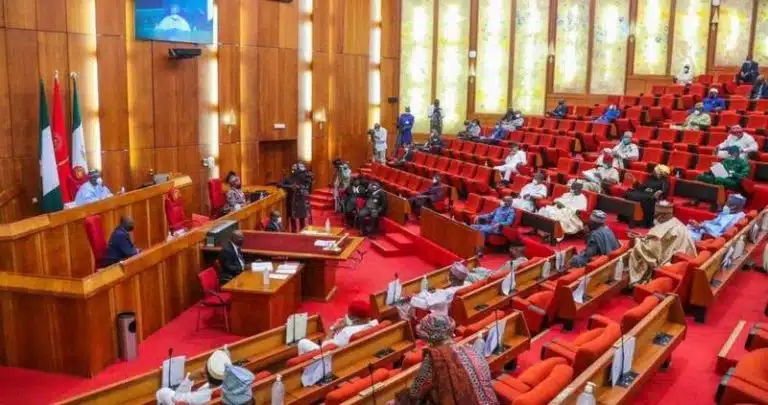
The Federal Capital Territory will not be covered by the proposed state police system because its administrative structure differs from that of Nigeria’s 36 states, the Senate has said.
Eko Hot Blog gathered that the Chairman of the Senate Committee on Media and Publicity, Yemi Adaramodu, explained on Friday that the FCT is administered by the Federal Government rather than an elected state government.
EDITOR’S PICK
- APC Youth Wing Opens Applications for 2026 Zacch Adedeji Taxation, Fiscal Policy Fellowship
- ‘Make Him President, Let’s See If Nigerians Become Millionaires’ – Presidency Mocks Obi
- Super Falcons Shift Focus to Zambia Clash After Malawi Defeat
Speaking against the backdrop of questions surrounding the proposed policing reforms, the Ekiti lawmaker noted that the territory has no governor or State House of Assembly. Instead, its affairs are overseen by a minister who operates within the Federal Executive Council.
Adaramodu further explained that legislative authority over the FCT rests with the National Assembly. For this reason, he said, policing within the nation’s capital would remain under the Federal Police rather than a separate state police structure.
The clarification comes amid ongoing efforts by the Federal Government to introduce a decentralised policing system in response to increasing demands for state-controlled police formations.
President Bola Tinubu is expected to receive the draft Executive National Policing Bill on September 3, according to the Presidency. The proposed legislation is part of a broader plan to reform Nigeria’s policing system.
The development was disclosed by the President’s Chief of Staff, Femi Gbajabiamila, who chairs the Presidential Working Group on the National Policing Bill, following a meeting of the committee at the Presidential Villa in Abuja.
Gbajabiamila also announced a public portal where Nigerians can submit memoranda and position papers that could contribute to the development of the proposed legislation before it is presented to the President and subsequently forwarded to the National Assembly.
The constitutional amendments supporting state police are expected to establish the legal basis for the new system, while the Executive Bill would provide the procedures and operational framework required for its implementation.
Under the proposed arrangement, state Houses of Assembly would be responsible for the creation, administration, financing, and oversight of state police organisations.
States would carry the main financial burden for their police formations, although the Federal Government could provide grants or other assistance.
A proposed constitutional provision, Section 216A, would allow federal support to state police following recommendations from the National Police Council and approval by the National Assembly.
However, the provision does not establish a fixed federal contribution or a specific formula for distributing financial assistance.
The National Police Council, chaired by the President and comprising key federal and state officials, would therefore play an important role in determining access to federal support.
For the FCT, however, the existing constitutional arrangement means the territory would continue to fall under federal policing unless its administrative structure is changed.
As discussions on the new policing framework continue, the unique constitutional status of Abuja is expected to remain a key factor in determining how security is managed within the nation’s capital.
FURTHER READING