- The World Health Organization (WHO) has warned that the Trump administration’s directive to overhaul childhood immunization policies in the United States directly contradicts decades of established global scientific consensus.
- WHO Director-General Tedros Adhanom Ghebreyesus affirmed that vaccines, including the combined Measles, Mumps, and Rubella (MMR) shot, are safe, effective, and do not cause autism.
- Health authorities warned that separating combination vaccines or delaying routine immunization schedules needlessly leaves children exposed to dangerous, preventable diseases during ongoing outbreaks.
The World Health Organization (WHO) issued a firm warning on Wednesday regarding United States President Donald Trump’s executive order aimed at restructuring childhood vaccination guidelines, stating the policy shift runs counter to decades of rigorous scientific evidence.
Eko Hot Blog reports that the executive order, signed earlier in the week, pushes for a review of school vaccine mandates and recommends splitting the combined Measles, Mumps, and Rubella (MMR) vaccine into three separate, individual shots spread across multiple medical visits.
EDITOR’S PICK
- Tinubu Approves Army Expansion, Recruitment of 28,000 Personnel
- Aregbesola Claims Record as First Nigerian Governor to Serve Eight Years Without Owning a House
- Ikosi-Ejinrin LCDA Commissions Fully Equipped NSCDC Divisional Headquarters, Donates Patrol Vehicle and Motorcycle to Boost Security
The policy direction aligns closely with long-held assertions by U.S. Health and Human Services Secretary Robert F. Kennedy Jr., who has frequently promoted disproven theories linking combination vaccines to autism.
Responding to the executive directive, WHO Director-General Tedros Adhanom Ghebreyesus emphasized via a public statement on X (formerly Twitter) that public health policies must remain grounded in independent science rather than political influence.
He reiterated that global medical research has unequivocally established the safety of the MMR vaccine and confirmed that it carries no link to autism.
Dr. Tedros noted that the WHO remains deeply concerned by changes to U.S. immunization schedules that diverge from established medical practices.
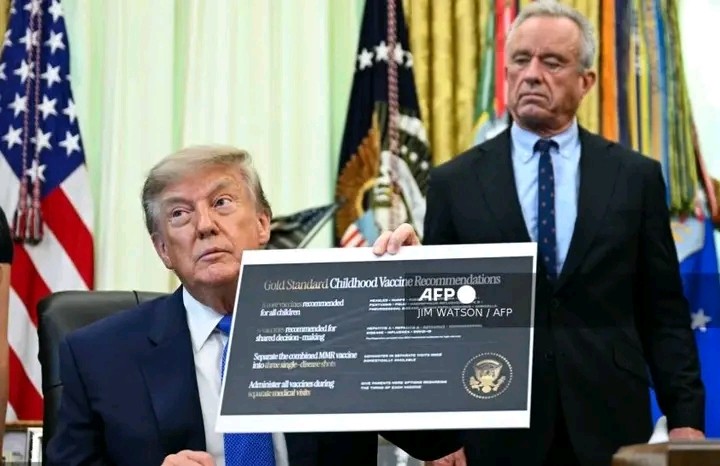
He cautioned that unnecessarily delaying doses or unbundling combination shots fails to make vaccination safer and instead increases the window of vulnerability for young children.
The policy debate comes at a critical time as health agencies report heightened concern over localized measles outbreaks across several regions. International health experts continue to urge parents to follow evidence-based vaccination schedules to ensure comprehensive protection for children and maintain public immunity.
FURTHER READING