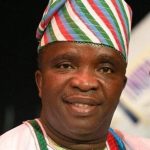
Nigeria’s Super Falcons crashed out of the 2026 Women’s Africa Cup of Nations on Sunday, beaten 1-0 by Cameroon in the quarter-final in Casablanca.
It is the first time in the tournament’s history that the nine-time champions have failed to reach the semi-finals, and the defeat cost them automatic qualification for the 2027 FIFA Women’s World Cup in Brazil. They must now fight through a play-off route just to keep the dream alive.
EDITOR’S PICKS
An hour had barely passed since the WAFCON humiliation when Burkina Faso thrashed the Flying Eagles 4-1 in the WAFU-B Under-20 final in Yamoussoukro, ending Nigeria’s hopes of qualifying for the 2027 U-20 Africa Cup of Nations and, by extension, the pathway to the FIFA U-20 World Cup.
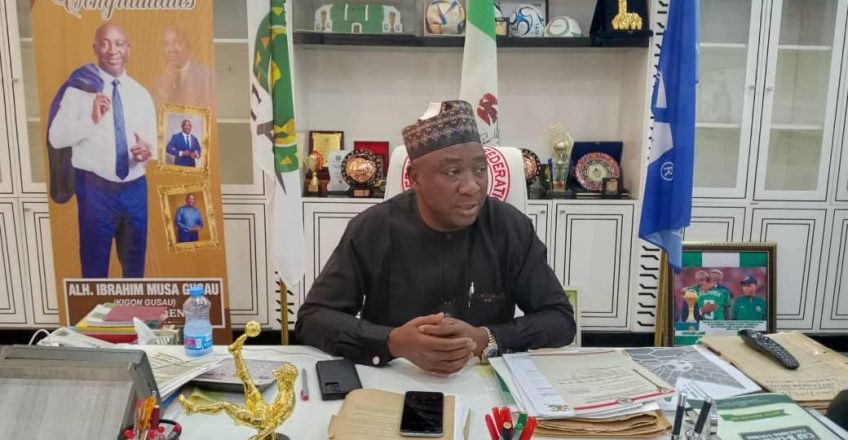
Nigeria Football Federation (NFF) president Ibrahim Gusau, who doubles as WAFU Zone B president, watched it happen from the stands.
A Pattern, Not an Accident
Veteran sports journalist Shina Oludare captured the mood of a frustrated football nation this week, accusing colleagues of “quietly campaigning” for Gusau to secure a second term despite a tenure he described as marked by “audacity” and a “lack of accountability.”
Under the current NFF, Nigeria have failed to qualify for three consecutive U17 World Cups, the Super Falcons suffered their worst-ever WAFCON performance, & we’ve now missed out on both the U20 AFCON and FIFA U20 World Cup. Yet some of my colleagues are quietly campaigning for…
— Shina Oludare 🇳🇬 (@sportingshina) August 9, 2026
His list of grievances is not exaggerated. Under the current NFF leadership, elected in September 2022, Nigeria has failed to qualify for three consecutive FIFA U-17 World Cups: 2023, 2025 and now 2026, after the Golden Eaglets were shut out of the U-17 AFCON altogether.
The Super Falcons have just recorded their worst-ever WAFCON showing. And the Flying Eagles’ defeat to Burkina Faso has all but ended Nigeria’s route to the 2027 U-20 AFCON and its accompanying World Cup slot, pending a CAF ruling on additional qualification slots.
Four different failed national teams, four different age grades and genders, one common denominator: administration under Gusau.
The Fall From Grace
For a country that built its football identity on age-grade dominance, this is close to unrecognisable.
Nigeria’s Golden Eaglets are five-time FIFA U-17 world champions — more titles than any other nation in the competition’s history — with triumphs stretching from 1985 to 2015. The Flying Eagles have lifted the U-20 AFCON seven times, more than any other West African side. These were never fringe achievements; they were the pipeline that fed the Super Eagles and made Nigeria a permanent fixture on football’s global stage.
That pipeline has run dry. Nigeria has not featured at a FIFA U-17 World Cup since 2015 qualification cycles began slipping, and now cannot even get past regional qualifiers to reach the continental stage.
The senior men’s team, the Super Eagles, has not been to a World Cup since Russia 2018, missing out on two consecutive tournaments. And now the Super Falcons, long considered the one dependable pillar of Nigerian football, have joined the collapse. What was once an anomaly for Nigerian football has become the norm.
A Leadership Reckoning
All of this arrives five weeks before the NFF’s elective congress, scheduled for Lafia, Nasarawa State, on September 27.
Gusau, elected in 2022, is seeking a second term, and has secured endorsements from FA chairmen across the North-Central, North-West and other zones. Only two challengers — David Buhari Doherty and Segun Solanke — have so far picked up nomination forms to face him.
The federation has apologised to President Bola Tinubu and to Nigerians over the WAFCON exit, promising an internal review of preparation, technical planning and logistics. But apologies have not quieted a mounting chorus, including reported unease within the Presidency itself over the Super Eagles’ World Cup failure, and calls from younger administrators for Gusau to step aside.
FURTHER READING
The question delegates in Lafia will have to answer is no longer about zoning, tenure or political loyalty. It is simpler than that: after U-17, U-20, WAFCON and World Cup failures stacked one on top of another, will Nigerian football reward this record with a second term or finally demand change?
Philip Ibitoye is a Special Correspondent with EKO HOT BLOG. Click here to find daily analysis and critical insight on trending issues in Lagos and other parts of Nigeria.
Click to watch the video of the week below: