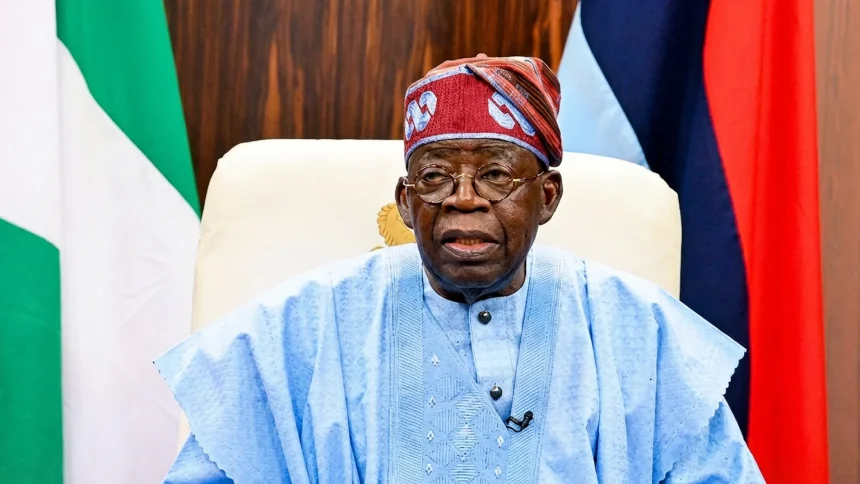
President Bola Tinubu, on Wednesday, directed security agencies to strengthen early warning systems, boost community-level intelligence gathering, and improve rapid response capabilities nationwide.
The directive followed the release of 308 Nigerians abducted in separate attacks in Niger and Kwara states.
EDITOR’S PICKS
Special adviser on information and strategy, Bayo Onanuga, said 163 of the victims were freed from the Woro community in Kaiama LGA, Kwara State, while 145 were rescued from Niger State.
The victims reportedly regained freedom during a coordinated operation in the Kainji Lake National Park forest in New Bussa, led by the National Counter-Terrorism Centre alongside the armed forces, the Department of State Services, and the police. Onanuga described it as the largest rescue operation ever carried out in a single day by the joint security team.
The freed victims are now receiving first aid at the Wawa cantonment before being handed over to their state governments for reunification with their families.
Prevention Over Cure
Beyond celebrating the rescue, Tinubu’s directive points to something more important: prevention.
The Woro residents were held in captivity for close to 200 days. No family should have to endure that kind of wait, wondering if their loved ones will return alive. A rescue, however well executed, comes after enormous suffering has already occurred.
This is why the emphasis on early warning systems is the right call. Kidnapping for ransom rarely happens without warning signs. Armed groups need time to plan, move, and settle into forest camps. A functioning early warning system, built on community intelligence, could catch these movements before an attack happens, not months after victims have already been dragged into the bush.

Communities Know First
Onanuga’s statement specifically mentioned community-level intelligence gathering, and this deserves attention. Villagers in Kwara and Niger states often notice unfamiliar movements, strange camps, or unusual activity long before any attack takes place. But without trust between these communities and security agencies, that information rarely reaches the right hands in time.
Strengthening this link is not just a technical fix. It requires security agencies to build genuine relationships with rural communities, protect informants, and act quickly on tips rather than treating them as an afterthought.
If this directive is followed through with real investment, rather than just remaining a statement, it could meaningfully reduce the window criminal groups currently exploit.
A Bittersweet Victory
The scale of this rescue is worth acknowledging. Freeing 308 people in one coordinated operation is no small feat, and it reflects improved collaboration between the NCTC, the military, the DSS, and the police.
Onanuga may be right to call it the largest same-day rescue operation carried out by the joint security team.
But scale should not be confused with speed. The bigger question is why it took repeated, sustained attacks and nearly 200 days before an operation of this size was mounted.
The Real Test Ahead
Tinubu’s directive gets the diagnosis right: prevention beats cure. Nigeria cannot keep measuring success by how many people it rescues after months in captivity. It must be measured by how many abductions never happen in the first place.
The real test now is implementation. Directives from Abuja have a way of fading once the news cycle moves on. Security agencies must be given the resources, training, and community partnerships needed to make early warning systems work in practice, not just in press statements.
FURTHER READING
If this rescue becomes the trigger for a genuine prevention strategy, rather than just another chapter in a cycle of attack and rescue, then Tinubu’s directive will have achieved something far more valuable than one dramatic operation.
Philip Ibitoye is a Special Correspondent with EKO HOT BLOG. Click here to find daily analysis and critical insight on trending issues in Lagos and other parts of Nigeria.
Click to watch the video of the week below: