- FG urged South Africa to stop attacks on African nationals
- Nigeria said about 90 Nigerians have died since 2022
- The government called for stronger migration and security measures
The Federal Government has urged South Africa to take decisive steps to stop xenophobic and Afrophobic attacks targeting African nationals in the country.
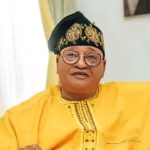
Eko Hot Blog gathered that the Minister of State for Foreign Affairs, Sola Enikanolaiye, made the call on Tuesday during a virtual roundtable organised by the Nigerian Institute of International Affairs to examine xenophobia in South Africa.
EDITOR’S PICK
- Osun Election: INEC Reports 94.5% Polling Units Opened on Time
- THEDSF Visits Alara of Ilara Kingdom, Seeks Royal Support for Youth Mobilisation
- Super Falcons Miss Women’s World Cup for First Time
In a statement released on Wednesday by his Special Adviser on Digital Media and Public Diplomacy, Raphael Oni, the minister said Nigeria considered the recurring attacks a serious issue that should be addressed through practical measures rather than denial or exaggeration.

Enikanolaiye argued that the term Afrophobia better described the nature of the violence because many of those targeted were fellow Africans. He said the attacks reflected the complex realities of South Africa’s post-colonial and post-apartheid experience.
The minister also expressed concern that nationals of countries that supported South Africa during its struggle against apartheid were now being treated as outsiders.
He said Nigeria’s historical contribution to South Africa’s liberation should not be forgotten. According to him, the Foreign Affairs Ministry had asked the NIIA to conduct a detailed study documenting Nigeria’s support for the anti-apartheid struggle.
Enikanolaiye said Nigeria’s contribution included more than $60 billion in financial support, the nationalisation of British Petroleum, scholarships for South Africans and the provision of accommodation and other assistance to South African leaders during the liberation struggle.
He stressed that the relationship between Nigeria and South Africa was built on decades of sacrifice and solidarity and should not be viewed solely through the lens of trade or diplomatic relations.
The minister disclosed that approximately 90 Nigerians had lost their lives in Afrophobic attacks in South Africa since June 2022, with additional incidents of violence and displacement recorded in 2026.
He warned that continued attacks could damage South Africa’s international image, discourage investment and weaken efforts towards deeper regional integration.
To tackle the situation, Enikanolaiye called on the South African government to establish more transparent and humane migration systems while ensuring that immigration laws were enforced by state authorities rather than vigilante groups.
He also appealed to South African political leaders to moderate their language when discussing migration. According to him, portraying foreigners as criminals or people taking away jobs could fuel resentment and create conditions for violence.
The minister further urged governments, media organisations and members of the public to rely on verified information instead of rumours and misleading claims circulating on social media.
He called for the effective use of existing Nigeria-South Africa early-warning and rapid-response mechanisms to identify tensions early and prevent them from developing into violent attacks.
Beyond government action, Enikanolaiye advocated stronger people-to-people engagement involving businesses, universities, religious bodies, traditional institutions, youth groups, civil society organisations and the media.
He said stronger interaction between citizens of both countries could help rebuild trust and reinforce the idea of a shared African identity.
The minister also revealed that Nigeria, alongside Ghana, plans to raise the issue at the next African Union Assembly of Heads of State and Government.
While acknowledging that South Africa had shown willingness to discuss the factors driving migration, he stressed that greater attention must be paid to preventing hate-motivated attacks against African migrants.
Enikanolaiye said Africa must move beyond simply tolerating migrants and work towards creating a continent where citizens can live and work across borders with dignity and security.
He reaffirmed President Bola Tinubu’s commitment to protecting Nigerians living abroad, pointing to the government’s recent efforts to facilitate the voluntary return of Nigerians from South Africa.
The minister commended Nigerian diplomatic officials in Pretoria and Johannesburg, as well as other stakeholders, for their role in ensuring the repatriation exercise was completed efficiently.
He said Nigeria would continue working with South Africa, the African Union, ECOWAS and other partners to strengthen continental integration and ensure that African unity is reflected not only in policy but also in the treatment of African citizens across the continent.
FURTHER READING