- Arab leaders approve a $53 billion plan to rebuild Gaza, rejecting Trump’s proposal for U.S. control and Palestinian displacement.
- The plan includes a temporary governance committee, UN peacekeeper deployment, and a multi-phase reconstruction process.
- Wealthy Gulf states may fund the project, but concerns remain over stability as a fragile ceasefire hangs in the balance.
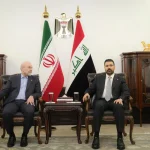
Arab leaders have approved a $53 billion (£41.4 billion) reconstruction plan for Gaza, positioning it as a counterproposal to President Donald Trump’s controversial idea of the U.S. “taking over Gaza” and relocating over two million Palestinians. The decision was made at an emergency summit in Cairo, Egypt.
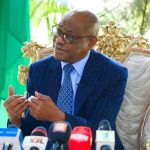
“The Egypt plan is now an Arab plan,” declared Arab League Secretary General Ahmed Aboul Gheit at the conclusion of the hours-long summit. While avoiding direct reference to Trump’s proposal, he emphasised that the Arab stance opposes any form of Palestinian displacement, voluntary or forced.
EDITOR’S PICKS
- 45% of Nigerian Girls Become Mothers Before 18 — World Bank
- ECOWAS Faces Historic Defection as Three West African Nations Withdraw
- Netanyahu to Meet Trump at White House Next Week
Egypt’s proposal includes a detailed 91-page document showcasing a vision of leafy neighbourhoods and grand public buildings, a stark contrast to the U.S. concept dubbed the “Middle East Riviera”, which had sparked outrage across the Arab world. However, this new plan is about more than just rebuilding homes—it is deeply rooted in political goals and Palestinian rights.
In his opening remarks, Egyptian President Abdul Fattah al-Sisi underscored the need for a parallel political roadmap alongside physical reconstruction, advocating for a two-state solution—a Palestinian state coexisting with Israel. While this remains the preferred resolution for Arab nations and many in the international community, Israeli Prime Minister Benjamin Netanyahu and his allies have firmly rejected it.
Governance and Security
The plan proposes that Gaza would be temporarily managed by a “Gaza management committee” under the Palestinian government, made up of independent technocrats. However, it remains vague on Hamas’s role, referring only to the “obstacle” of militant groups and suggesting that their influence would diminish if the root causes of the Israeli-Palestinian conflict were addressed.
Some Arab states support Hamas’s complete dismantling, while others argue that Palestinians should decide their own leadership. Hamas has reportedly accepted that it will not govern Gaza, but it remains unwilling to disarm—something Netanyahu has adamantly opposed. Israel’s leadership has ruled out any role for Hamas or the Palestinian Authority in Gaza’s future governance.
Security concerns are addressed by calling on the UN Security Council to deploy international peacekeepers. Additionally, a major international conference is planned for next month to secure funding for the reconstruction effort. While wealthy Gulf nations have expressed willingness to contribute, many investors remain hesitant, fearing that any new development could be destroyed in another conflict.
FURTHER READING
- [VIDEO] Commotion Rocks PDP BoT Meeting as Faction Confront Each Other
- NiDCOM Prepares for Deportation of Nigerians from U.S
- BREAKING: Sowore Pleads Not Guilty to Cybercrime Charges Filed by Police IG
Three-Phase Reconstruction Plan
The rebuilding effort would take place in three stages:
- Early Recovery Stage (First Six Months) – Clearing massive debris and removing unexploded ordnance.
- Second and Third Phases (Several Years) – Full-scale reconstruction, including long-term infrastructure rebuilding.
During the process, 1.5 million displaced Palestinians would be housed in temporary container units, which the glossy proposal presents as well-built homes surrounded by landscaped areas.
Meanwhile, President Trump has continued to question why Palestinians would not want to relocate, describing Gaza as a “demolition site”. His comments underscore the devastation—with the UN reporting that 90% of homes have been damaged or destroyed and basic services such as schools, hospitals, sewage systems, and electricity grids left in ruins.