- Igwe accused ASUU of resuming “out of shame.”
- He noted that Tinubu’s government met key ASUU demands, including pay and allowances.
- ASUU ended its two-week strike on October 22, 2025.
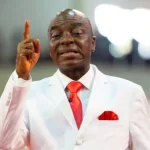
Onovughe Igwe has slammed the Academic Staff Union of Universities (ASUU) over its recent warning strike, accusing the union of acting out of “shame” despite the Federal Government’s efforts to meet its long-standing demands.
In a statement seen by EKO HOT BLOG, Igwe claimed that new ASUU President, Professor Chris Piwuna, led the strike for attention so that Nigerians can know his name.
EDITOR’S PICKS
“ASUU resumed out of shame,” he said. “Are the infrastructures in the universities now world-class? Have the government increased their salary to be at par with that of Senators? They only succeeded in punishing the students as the time lost can never be retrieved.”
Igwe argued that President Bola Tinubu’s administration had already implemented most of ASUU’s demands before the union embarked on the two-week warning strike.
He listed several concessions made by the government, including removing universities from the Integrated Payroll and Personnel Information System (IPPIS), halting the approval of new federal universities, and releasing over ₦50 billion in earned academic allowances.
Igwe also noted that lecturers had benefitted from a 35 percent salary increase, inclusion in the minimum wage adjustment, and payment of four months’ salaries withheld during the Buhari administration, in addition to a significant boost in TETFUND allocations for infrastructure and research.
“The new ASUU president just marked register with this strike so that Nigerians can know his name. Now Nigerians know your name, Prof [Piwuna],” he added mockingly.
Some critics have echoed Igwe’s sentiment, accusing ASUU of punishing students unnecessarily and undermining the credibility of its advocacy.
Background
ASUU declared a two-week warning strike on October 13, 2025, after the expiration of a 14-day ultimatum to the Federal Government. The union cited the government’s alleged failure to fully implement the 2009 FGN-ASUU Agreement and the 2020 Memorandum of Action, including demands for earned academic allowances, revitalisation funds, and payment of outstanding salaries.
The government, however, countered that it had addressed most of these issues and invoked its “no work, no pay” policy during the strike. The House of Representatives later intervened in the dispute, facilitating talks between both parties.
On October 22, 2025, ASUU suspended the warning strike after what it described as “useful engagements” with government committees but warned that it might resume action if pending promises were not met.
FURTHER READING
Under Tinubu’s administration, the Federal Government claims it has made unprecedented investments in the tertiary education sector, including increased TETFUND allocations, wage adjustments, and new research grants.
Click here to watch the video of the week below: