- Opeyemi Bamidele said state police will fail without adequate funding
- He called for legal safeguards to prevent political and private interference
- The senator also stressed the need for stronger laws and local government autonomy
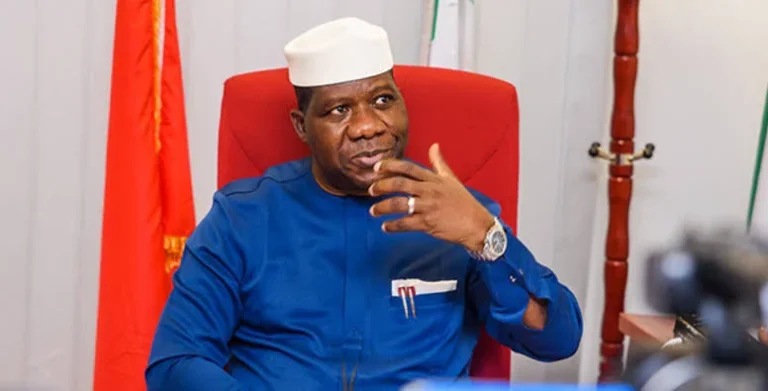
Senate Majority Leader Opeyemi Bamidele has warned that the proposed establishment of state police may fail to achieve its objectives unless it is backed by adequate funding and guaranteed financial independence.
Speaking on Thursday during the ARISE NEWS Townhall on State Police, Eko Hot Blog gathered that Bamidele said a poorly funded state police system could become vulnerable to manipulation by politicians, influential individuals, business interests and criminal groups.
EDITOR’S PICK
- UN Mobilizes Humanitarian Aid For Venezuela Following Twin Earthquakes
- Dollar To Naira Exchange Rate Today, June 26, 2026
- Concerns As Repentant Boko Haram Members Allegedly Join Army Recruitment
According to him, sustainable financing will determine whether the proposed policing structure succeeds or fails.
“If the state police is not well funded, it may as well be a highway to nowhere,” he said.
The senator explained that the constitutional amendment currently before the National Assembly is intended to give states the legal authority to establish their own police services rather than compel every state to create one immediately.
He said the proposal seeks to transfer policing from the Exclusive Legislative List to the Concurrent Legislative List, allowing interested states to establish state police within a constitutional framework.
Bamidele acknowledged public concerns over the possible misuse of state police, describing such fears as legitimate and deserving of serious attention.
He stressed that lawmakers must build strong safeguards into the legal framework to prevent abuse, ensure accountability and protect the independence of the proposed security outfits.
The Senate leader noted that accountability would require not only effective legislation but also active oversight by citizens and civil society organisations.
He further warned that political office holders would not be the only potential source of interference, arguing that financially weak state police could also fall under the influence of private businesses, wealthy individuals and criminal networks.
To prevent this, Bamidele proposed constitutional and statutory provisions that would guarantee stable funding for state police outside the control of state governors.
He suggested that the law should earmark a fixed percentage of state budgets for policing while establishing clear guidelines on how the funds would be managed and disbursed.
According to him, financial independence is necessary to prevent police authorities from being subjected to the preferences of any sitting governor.
Bamidele also said constitutional amendments alone would not be sufficient to establish an effective state police system, adding that existing laws, including the Police Act, would require further review to define the structure, operations and responsibilities of state police.
He added that lawmakers would also need to determine how state police would work alongside existing paramilitary organisations and other security agencies.
The senator maintained that the primary objective of state police is to strengthen community policing and improve security at the grassroots level.
However, he argued that the benefits of decentralised policing would remain limited without genuine autonomy for local governments.
Bamidele said the National Assembly had studied international best practices while developing proposals that would provide minimum national standards for the operation of state police across Nigeria.
He concluded that although the country has reached a stage where state police has become necessary, its success will depend on strong legislation, sustainable funding and effective safeguards against abuse.
FURTHER READING