- Andy Burnham has become the UK’s new prime minister
- He promised reforms to ease living costs.
- Burnham also pledged economic and political renewal
Andy Burnham officially assumed office as the United Kingdom’s Prime Minister on Monday, promising sweeping reforms aimed at reducing the cost of living, rebuilding the economy and restoring political stability after replacing Keir Starmer as Labour leader.
Eko Hot Blog gathered that the 56-year-old was formally invited by King Charles III at Buckingham Palace to form a new government before arriving at 10 Downing Street with his wife, Marie-France van Heel, where he was welcomed by supporters.
EDITOR’S PICK
- 175th Kayokayo Festival Grand Finale: Epe Celebrates 175 Years of Faith, Heritage, Unity and Prosperity
- Wale Raji Reaffirms Commitment at KayoKayo Finale
- India: Massive Garbage Heap Collapse Kills Nine Workers at Waste-to-Energy Plant.
In his first address as prime minister, Burnham acknowledged becoming Britain’s seventh leader since 2016 and pledged to chart a new political and economic direction for the country.
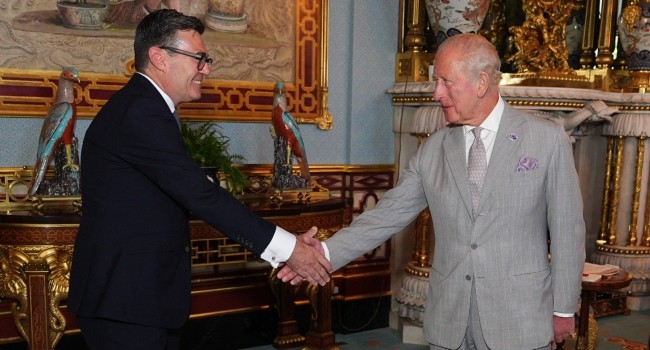
He said his administration would introduce a comprehensive 10-year national development strategy focused on strengthening the economy, revitalising industry and restoring public confidence in government.
Burnham also announced that his government would immediately begin rolling out measures to ease the financial burden on households, with further details expected from Tuesday.
Among his first priorities, he vowed to eliminate rough sleeping across the country, describing it as a key objective of his administration. He also outlined plans to increase public housing, revive domestic industries through government procurement policies and devolve more powers away from Westminster to regional authorities.
The new prime minister argued that previous economic decisions made decades ago had weakened Britain’s industrial base and promised policies that would place essential public services under stronger public oversight to improve affordability.
Shortly after entering Downing Street, Burnham held a telephone conversation with United States President Donald Trump, according to officials from both governments.
He also said he would reassure Ukrainian President Volodymyr Zelensky of Britain’s continued support, stressing that his government remained fully committed to Ukraine.
Earlier in the day, outgoing Prime Minister Keir Starmer delivered a farewell speech outside Downing Street, saying his government had made Britain “stronger and fairer” during its time in office before formally tendering his resignation to King Charles III.
Burnham inherits a series of pressing challenges, including slow economic growth, rising public debt, increasing welfare costs, irregular migration across the English Channel and unstable global energy prices linked to international conflicts.
His administration must also navigate complex relations with the United States and prepare for the next general election, expected in 2029.
The political transition also triggered changes within the Cabinet, with Finance Minister Rachel Reeves and Deputy Prime Minister David Lammy announcing their departures from government.
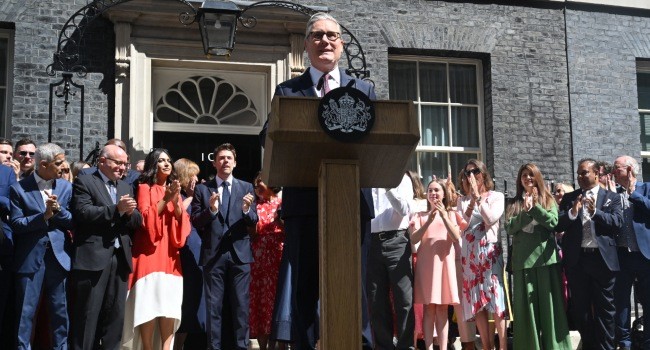
Burnham, the former Mayor of Greater Manchester and a former Cabinet minister under Tony Blair and Gordon Brown, returned to Parliament only weeks ago before being selected by Labour MPs to replace Starmer.
His rapid elevation to the country’s top political office, without a leadership contest, has drawn criticism from opposition parties, with some calling for an early general election.
International leaders were quick to congratulate the new British leader. European Commission President Ursula von der Leyen expressed hope for stronger cooperation between the European Union and the United Kingdom, while German Chancellor Friedrich Merz invited Burnham to Berlin to deepen bilateral relations. French President Emmanuel Macron also welcomed his appointment and called for renewed momentum in UK-EU ties.
FURTHER READING