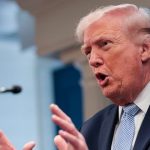
- Global crude oil prices extended a strong rally on Tuesday, climbing significantly as prospects for a quick diplomatic resolution to reopen the strategic Strait of Hormuz continue to diminish.
- United States President Donald Trump announced that Washington will seek conflict compensation from Iran as a condition for peace negotiations, countering Tehran’s prior demand for American war reparations.
- Elevated energy costs are rekindling fears of global inflation, prompting financial markets to re-evaluate potential interest rate adjustments by the U.S. Federal Reserve ahead of upcoming inflation data releases.
Global energy markets faced renewed instability on Tuesday as international crude oil prices surged, driven by fading expectations of an immediate diplomatic breakthrough between the United States and Iran to reopen the Strait of Hormuz.
Eko Hot Blog reports that the essential maritime corridor, through which a significant portion of the world’s petroleum and liquefied natural gas supplies normally transits, remains locked in a high-stakes standoff between Washington and Tehran.
EDITOR’S PICK
- Tinubu Approves Army Expansion, Recruitment of 28,000 Personnel
- Aregbesola Claims Record as First Nigerian Governor to Serve Eight Years Without Owning a House
- Ikosi-Ejinrin LCDA Commissions Fully Equipped NSCDC Divisional Headquarters, Donates Patrol Vehicle and Motorcycle to Boost Security
Over the past week, crude prices have climbed by approximately 10 percent, reversing earlier market optimism that had followed brief diplomatic signals from the White House.
The latest upward movement was triggered by a fresh round of retaliatory demands exchanged between the two nations, extinguishing hopes for a swift return to normal shipping operations through the Persian Gulf.
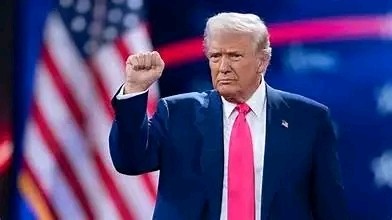
The geopolitical impasse worsened after U.S. President Donald Trump publicly declared that his administration would demand conflict compensation from Iran as part of any formal peace negotiations.
Trump cited decades of alleged state-backed hostiles, military attacks, and loss of life attributed to Tehran as the justification for the claim.
The demand served as a direct counter-position to Tehran’s standing prerequisite that Washington pay war reparations and lift economic sanctions before Iran permits the full reopening of the vital shipping route.
President Trump’s firm stance followed comments made over the weekend where he described his diplomatic approach to the regional crisis as “low-keying,” signaling a willingness to leverage prolonged economic and trade pressures rather than executing immediate additional military strikes.
However, financial analysts note that the heightened rhetoric from both capitals effectively locks both parties into a protracted economic stalemate, using global energy distribution as strategic leverage.
In early trading on Tuesday, West Texas Intermediate (WTI) crude futures rose by 1.5 percent to trade around $83.37 per barrel, while Brent North Sea crude gained 1.3 percent to reach $88.85 per barrel.
The steady price increases follow a sharp five percent jump in both benchmark crude contracts recorded during Monday’s trading session.
Market strategists observe that in the absence of tangible progress or formal agreements on maritime access, upward pressure on energy commodities is likely to persist.
The sustained rise in crude oil costs has re-ignited broader economic concerns regarding global inflation. Central banks, particularly the U.S. Federal Reserve, are closely monitoring the energy sector, as prolonged elevated oil prices risk spilling over into general consumer goods and transport costs.
Although recent labor market statistics showed a surprising drop in U.S. employment figures, persistent energy price spikes could complicate monetary policy decisions and increase the likelihood of benchmark interest rate hikes.
Addressing the economic outlook, Cleveland Federal Reserve President Beth Hammack noted that isolated interest rate adjustments of 25 basis points may have limited overall impact on broader macroeconomic trends, indicating that central bankers remain attentive to underlying inflationary indicators.
Global investors and commodity traders now await the upcoming release of key consumer price index data, which is expected to offer further guidance on central bank policy directions amid the ongoing Middle Eastern geopolitical uncertainty.
Equity markets across Asia and Europe exhibited mixed reactions to the crude price movement.
While several Asian stock exchanges experienced modest contractions due to inflation concerns, major European indexes opened with slight gains as energy sector stocks rallied.
Currency markets also reflected cautious trading, with the U.S. dollar maintaining strength against major international currencies as traders navigate ongoing volatility in the global commodity sector.
FURTHER READING