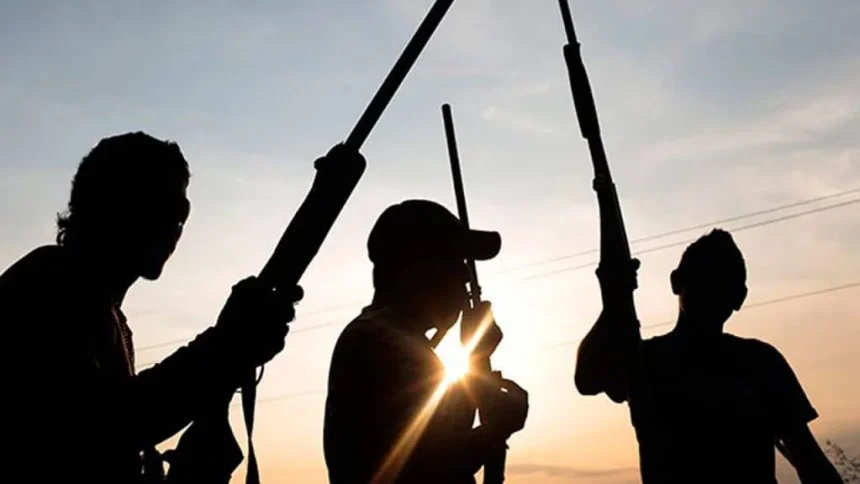
The recent rescue of abducted worshippers in Eruku, Kwara, and schoolgirls in Kebbi has again highlighted Nigeria’s increasing reliance on non-kinetic strategies — using no force — when confronting armed groups.
Federal government officials defended the approach, arguing that negotiation and pressure, rather than direct combat, were necessary to prevent casualties, especially since captives are often used as human shields. The successful return of all victims supports that logic in the immediate sense.
EDITOR’S PICKS
“What sometimes restrains them from going after them is the risk of collateral damage. They go about abducting our people and use them as a shield so that they will not be attacked,” President Bola Tinubu’s spokesperson, Bayo Onanuga, said on Arise News on Monday.
DSS And Military Were Involved In The Rescue Of The 38 Worshippers In Eruku, Kwara State.
They made contact with the bandits to secure the release of the captives. Security agencies have systems for tracking these criminals, allowing them to monitor developments in real time.… pic.twitter.com/Kos6d7hHwn
— ARISE NEWS (@ARISEtv) November 24, 2025
Yet the relief has been tempered by public unease.
Rapper Folarin Falana, popularly known as Falz, questioned why nothing has been disclosed about the abductors, demanding to know who had been arrested.
He wrote on X: “HOW CAN YOU CONDUCT A RESCUE OPERATION & YOU ARE SAYING ABSOLUTELY NOTHING ABOUT THE ABDUCTORS?!! WHO HAS BEEN ARRESTED SO FAR?!”
HOW CAN YOU CONDUCT A RESCUE OPERATION & YOU ARE SAYING ABSOLUTELY NOTHING ABOUT THE ABDUCTORS?!! WHO HAS BEEN ARRESTED SO FAR?! https://t.co/EC591oM9Hp
— Bop Daddy (@falzthebahdguy) November 25, 2025
In a statement on Wednesday, former Vice-president Atiku Abubakar expressed similar concerns, calling it troubling that kidnappers seem able to operate freely, negotiate openly and, in his words, “dictate terms” while the government issues statements celebrating the safe return of victims.
“Truth be told, the release of abducted Nigerians is not a trophy moment; it is a damning reminder that terrorists now operate freely, negotiate openly, and dictate terms while this administration issues press statements to save face,” the statement reads.

These reactions capture a broader fear that negotiation may be becoming a default response, rather than an emergency measure.
The Pitfalls of Negotiation-Based Security
Negotiation is sometimes unavoidable. In dense forests or remote areas where a firefight could cost the lives of both hostages and security personnel, non-kinetic tactics offer a path that prioritises immediate safety. But this approach carries serious limitations.
The absence of arrests after major rescue operations leaves unanswered questions about deterrence. If security agencies could track kidnappers in real time, as officials claimed, the public naturally asks why the perpetrators were not apprehended or neutralised.
When armed groups are able to abduct dozens, enter talks, release victims and then disappear without consequence, it risks creating a perception that they face little resistance.
Also, there is the concern that the government is paying ransom to secure these releases, further enriches the terror groups to replenish their arsenal and come back stronger to terrorise communities.
Negotiation Alone Cannot End the Threat
While negotiation may save lives in the moment, it is not designed to defeat terrorism or banditry.
At best, it is a temporary measure that prevents tragedy. At worst, it becomes a cycle in which the state responds only after harm has occurred. A sustainable strategy requires balancing non-kinetic engagement with firm, targeted action aimed at permanently weakening these networks.
To achieve this, Nigeria will ultimately need to confront the armed groups directly. That includes degrading their camps, leadership structures, supply chains and financial backers; improving intelligence coordination; strengthening local policing capacity; and ensuring that perpetrators are captured and prosecuted. Only a combination of negotiation when necessary and decisive force when possible can break the cycle of repeated mass abductions.
FURTHER READING
The rescues in Kwara and Kebbi show that negotiation can bring captives home alive. But they also point to a harder truth: a country cannot negotiate its way out of terrorism. The long-term path to safety lies not in managing these groups but in eliminating their ability to threaten communities at all.
Philip Ibitoye is a Special Correspondent with EKO HOT BLOG. Click here to find daily analysis and critical insight on trending issues in Lagos and other parts of Nigeria.
Click here to watch the video of the week below: