- Li noted that diplomatic relations between China and Nigeria began in 1971 and have continued to expand over the decades
- He described Nigeria as a major pillar in China’s engagement with Africa
- He called for stronger partnerships between Chinese and Nigerian media organisations to tell more diverse and accurate stories
China has reaffirmed the strategic importance of Nigeria in its global economic and development agenda, describing the country as its biggest engineering contracting market in Africa as well as a major trade and investment destination on the continent.
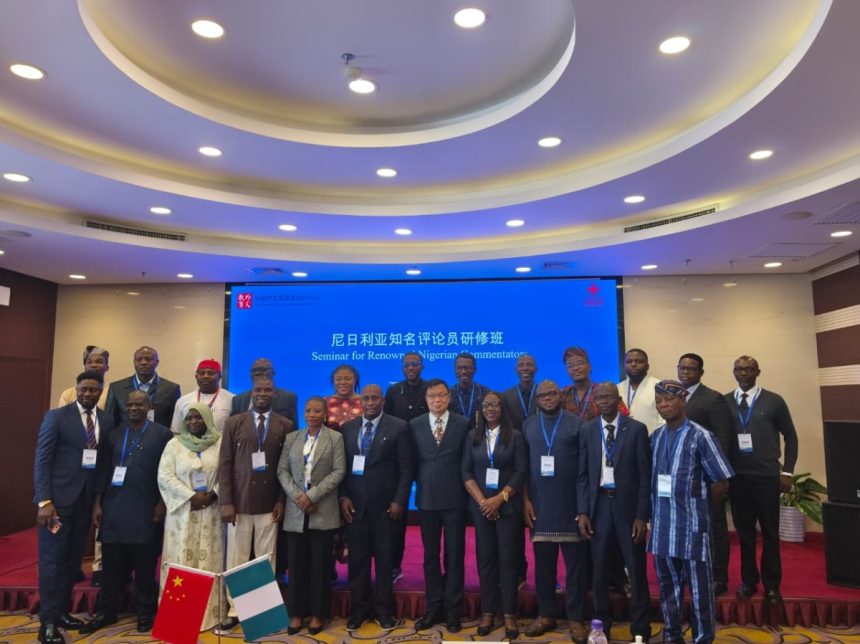
Eko Hot Blog reports that the position was made known on Wednesday in Beijing during the opening ceremony of the Seminar for Renowned Nigerian Commentators, organised by the Institute of International Studies and Advanced Training under the China International Communications Group and sponsored by China’s Ministry of Commerce.
Speaking at the event, Deputy Director of the China International Communications Group, Li Hengtian, said Nigeria remains China’s second-largest export market and third-largest trading partner in Africa, highlighting the growing economic relationship between both nations.
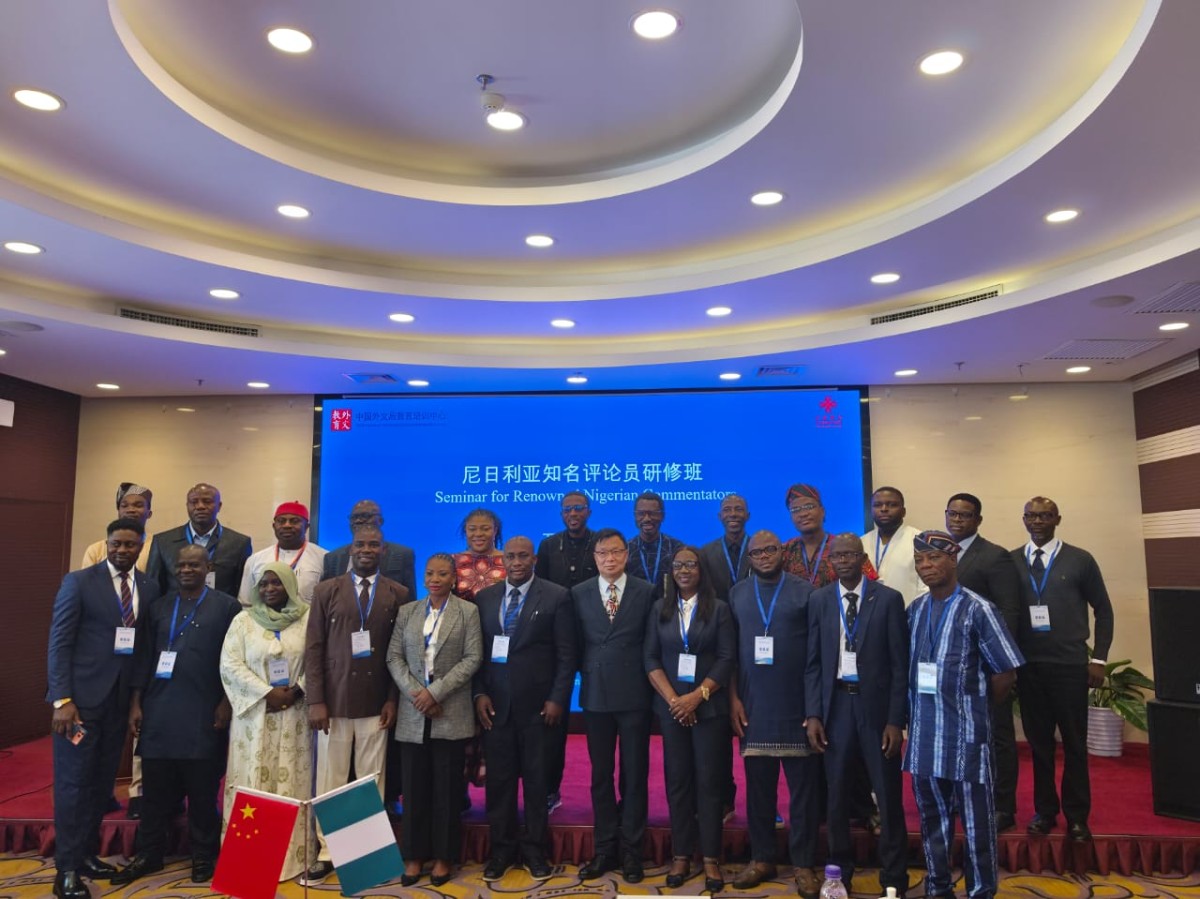
The seminar brought together journalists, officials from Nigeria’s National Assembly and representatives of the Foreign Affairs Ministry to discuss media cooperation, cultural exchange and development partnerships.
Addressing participants, Li said the programme was designed to deepen communication and strengthen mutual understanding between the two countries through storytelling and collaboration in the media sector.
Quoting acclaimed Nigerian author Chimamanda Ngozi Adichie, he described stories as one of the most powerful forms of communication and said the seminar aimed to create a new chapter in China-Nigeria relations.
Li noted that diplomatic relations between China and Nigeria began in 1971 and have continued to expand over the decades through political, economic and cultural cooperation.
He described Nigeria as a major pillar in China’s engagement with Africa, particularly under initiatives such as the Belt and Road Initiative and the Forum on China-Africa Cooperation.
According to him, several landmark infrastructure projects across Nigeria demonstrate the growing partnership between both countries.
These include the Lagos Light Rail, the Abuja Rail Mass Transit, the Lekki Deep Sea Port and the Zungeru Hydropower Station.
Li said cooperation between both nations has also extended into education and cultural exchange, with increasing numbers of Nigerian students studying in Chinese institutions while Chinese professionals continue to participate in development projects in Nigeria.
He stressed the importance of the media in shaping public perception and warned against the dangers of relying on “single narratives” when reporting global affairs.
Again referencing Adichie’s views on stereotypes and representation, Li said journalists play a crucial role in promoting balanced understanding between societies.
He called for stronger partnerships between Chinese and Nigerian media organisations to tell more diverse and accurate stories about both countries and their development efforts.
The Chinese official also highlighted the activities of the China International Communications Group, noting that the organisation publishes thousands of books annually in more than 40 languages and produces multilingual publications distributed globally.
He added that the institute organising the seminar has hosted several exchange programmes involving African media professionals over the years.
Representing the Nigerian delegation, Olunkwa Felix described the seminar as an important avenue for cultural interaction, learning and international cooperation.
He praised the organisers for creating an environment that encourages professional development and knowledge sharing.
According to him, the programme offers participants an opportunity to gain insights into China’s development model while also sharing Nigeria’s perspectives on global issues.
Felix expressed confidence that the experiences and lessons from the seminar would positively impact the participants, their institutions and communities upon their return to Nigeria.
He also acknowledged China’s growing role in global innovation, education and development, describing participation in the seminar as both an honour and a valuable learning experience.
China-Nigeria relations have expanded significantly over the past two decades, particularly in infrastructure development, trade and diplomatic cooperation.
Nigeria’s position as China’s largest engineering contracting market in Africa reflects the scale of Chinese involvement in major rail, port, power and road projects across the country.